

Arthur "Sooky" Sawyer has spent nearly six decades on the water. The longtime Gloucester fisherman started fishing as a teenager, followed his father into the industry, owned a series of groundfish and lobster boats, and has spent the last 40 years helping shape fisheries policy in Massachusetts and beyond. Now, as he thinks about retirement, Sooky is trying to answer a question familiar to many commercial fishermen: “What does retirement look like when fishing has been your life's work?”
"My wife, Laurel, and I talk about this next chapter of our lives quite a bit," Sawyer says. "She retired four years ago from her responsibilities managing a seafood department for a large grocery store chain. We have children and now grandchildren. We also enjoy a camp up in New Hampshire near our daughter, her husband and granddaughter.
Laurel and I like to take the canoe out on the pond, right there at the camp. While she uses her binoculars to find song birds and waterfowl, I am improving my skills to catch largemouth bass that sadly are usually the same size as I'd use for bluefin 'hook baits.'"
For Sawyer, retirement doesn't resemble the clean break that many people experience after decades working for someone else. Having owned his own fishing business and spent a lifetime doing work he genuinely enjoys, he sees retirement less as a destination but rather an evolving change to his daily activities due to an intentional shift in priorities.
"Maybe it's simpler for people who have worked for others, when their retirement date comes and they no longer go to work," he says, “but if you've always liked working, like I have and you own a lobstering business, I think retirement probably looks different.
"Growing up, I always wanted to be a fisherman. My friends fished and I really enjoy all of it, the community of people, the boats and equipment, the changing weather and seasons and most of all, the hunt for fish and lobsters. Successfully figuring out what edge is going to hold steaker pollack on a breezy January day or deciding if it's time to move the lobster gear onto the soft bottom is really satisfying to me. Making the best of those decision opportunities draws on the legacy of what older fishermen have taught me, my own experiences and nuanced clues from how the water looks and feels that I probably can't articulate that well."
Family conversations about retirement often include a humorous story about what might happen when a fisherman hangs up his boots.
"At the dinner table, Laurel and I often joke about the conversation she had at a recent Massachusetts Lobstermen's Association conference with an older lobsterman named Vinnie, who was 79 at the time," Sawyer says. "Knowing that many lobstermen are still fishing in their 70s and early 80s, she had asked Vinnie about a lobsterman's retirement. His advice to her was, 'If your man doesn't have a lot of interests other than fishing, make sure you order the big pine box before he quits lobstering, as you might be needing it soon....'
Gallows humor perhaps, but it underlines the importance of having a mission in life until we close our eyes for the last time.
Sawyer says his own transition toward retirement actually began several years ago.
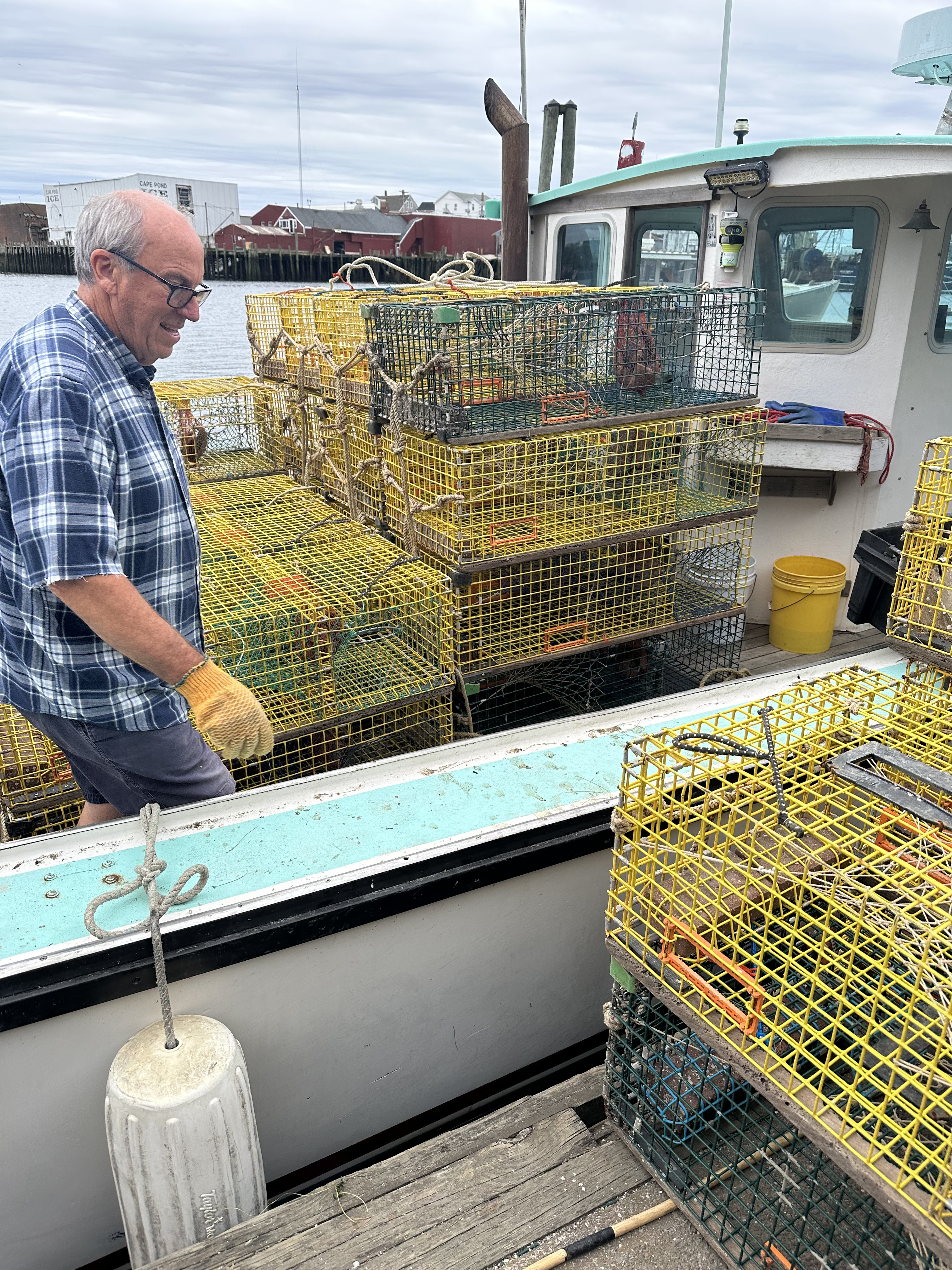
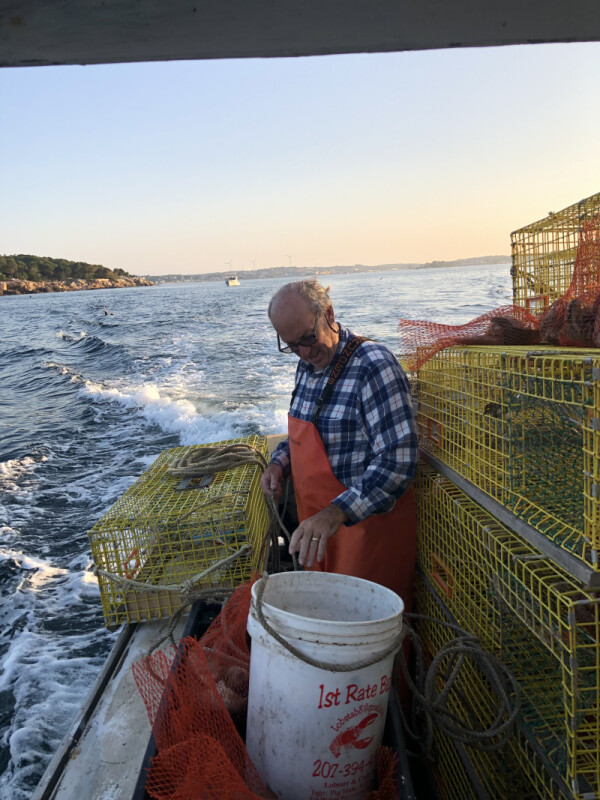
"I sold my 41-foot Novi, my federal lobster permit, my groundfish gillnet permits and quota about five years ago," he says. "I was ready to dial back from managing a business with employees, so I guess that was the beginning of my retirement transition. I bought a pretty 32-foot Mitchell Cove for lobstering, which I can fish single-handed or with my merchant marine friend, Billy, as crew, when he has a couple weeks on shore."
Growing up on Rocky Neck overlooking Gloucester Harbor, Sawyer was immersed in the fishing industry from an early age.
"I grew up in our family's house on Rocky Neck, overlooking Gloucester Harbor," he says. "My dad lobstered for years, then became a lobster dealer. Like a lot of my boyhood friends, I was a 'wharf rat,' hanging around the docks, looking to learn whatever I could and hoping to earn a few dollars."
Sawyer started fishing on his own when he was about 13 years old, tending a dozen lobster pots from a rowed skiff. Although, he has sold his groundfish permits and gear and now focuses exclusively on lobstering, Sooky says he is the happiest when catching fish.
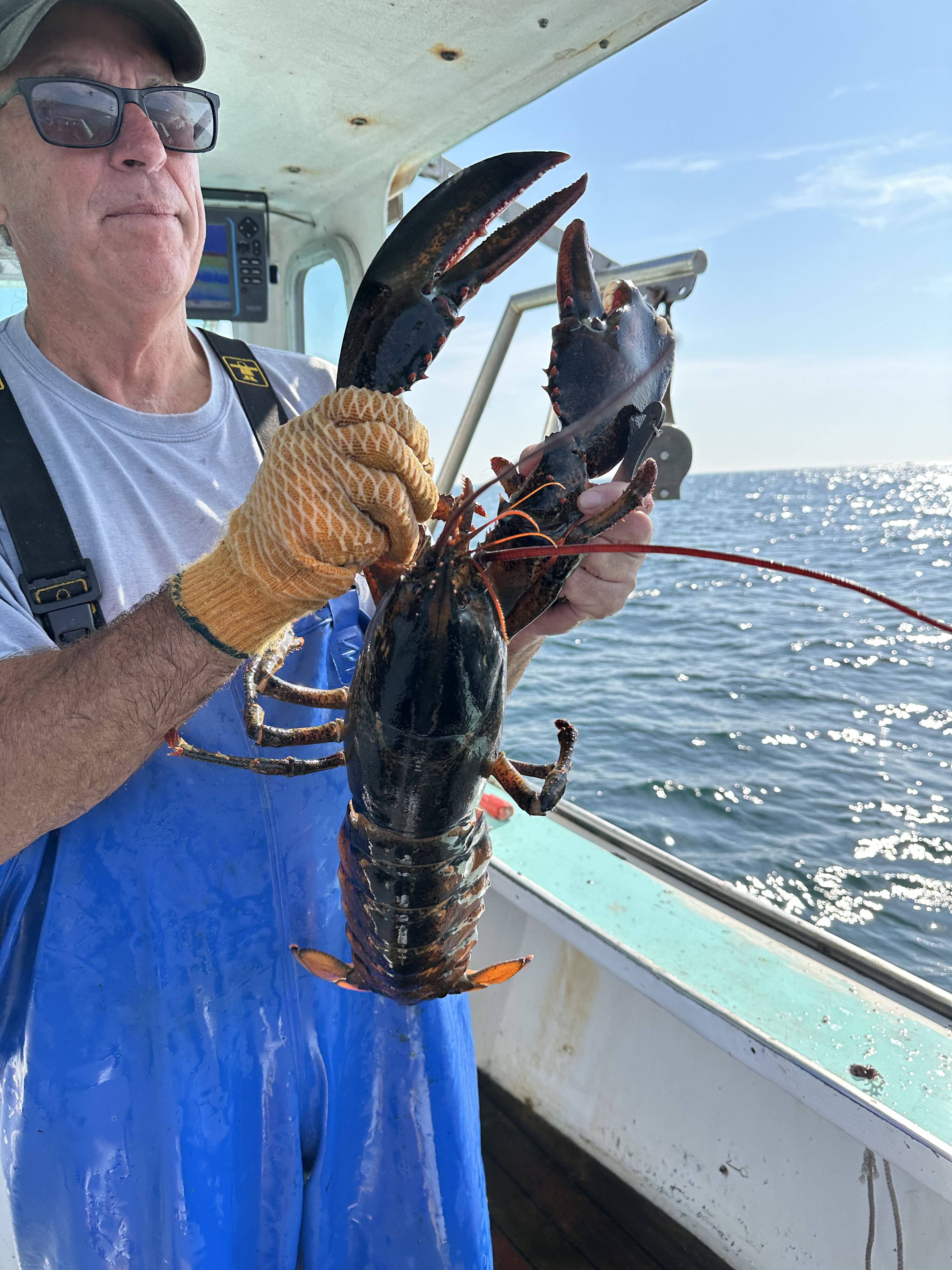
"Some guys don't have a preference for what they fish for, but even though my dad was a lobsterman, I have always preferred to catch fish," he says. "In high school, I would often crew with Hughie Bishop from Marblehead, hooking groundfish with tub gear during the winter.”
"If I had to name one mentor who helped me find my way in the fishing business, I'd say it was Joe Mitchell. Joe knew the bottom better than most and hooked for groundfish from one graceful wooden boat, then another, that Nick Hemeon in Essex had built for him. Learning the bottom from Hughie and Joe was a huge help when I started gillnetting groundfish and tuna fishing on that same bottom."
Although groundfishing occupied much of his career, some of Sawyer's favorite memories come from working mackerel traps just southwest of Gloucester harbor.
"It is a lot of work and there are many possible causes for a poor season, but if you like catching fish as I do, working a mackerel trap is a good fix," he says. "I worked with Jimmy Santapaola at the Kettle Island and Egg Rock sites and ran the traps myself some years when Jimmy wasn't available.
"When you've underrun the trap and driven 10,000 pounds of panicking bright green mackerel into the pocket, there's nothing like it. As you dry up the trap, mackerel will school in such a tight circle that they actually create a whirlpool, with a spinning vortex at the surface. Not to mention all the other types of fish you see as you dip the pocket, like black sea bass, lumpfish, squid, butterfish, scup and herring. It's like a marine aquarium."
Sawyer's commitment to the fishing industry has extended well beyond his own boat. Influenced by parents who believed in giving back to their community, he has spent decades serving on boards, commissions and fisheries management organizations.
"Our parents often shape our expectations by what they do, as much as what they say," he says. "My dad was on the Gloucester Fisheries Commission and active in local Gloucester politics. My mom always volunteered during elections and was the treasurer for the Mount Pleasant Cemetery. I guess I just assumed that you were supposed to get involved civically."
That sense of responsibility led Sawyer to join the Cape Ann Fisherman's Loan Fund board in 1980, followed by the Gloucester Waterways Board in the late 1980s. He became a delegate with the Massachusetts Lobstermen's Association in the early 1990s, a role that eventually led to his current position as president.
"I'd really like to use my time as president of the MLA to help move the conversation about buoy-less lobster gear and whale protections toward a more reasonable set of regulations that more accurately reflect the risk of whale mortality caused by lobster buoy lines," he says.
Sawyer also spent 15 years serving on the federal Large Whale Take Reduction Team.
"We initially had a good balance of scientists, fishermen and lawyers on the team, but unfortunately it seems the balance of input has shifted away from a largely science-based assessment to one based primarily on a legal perspective," he says. "A couple of years ago, I completed my tenure on this team, but I am still hopeful that we can find the means to use good science to assign responsibility for whale mortalities where it belongs, not on the back of the lobster industry."
He continues to serve on the Massachusetts Marine Fisheries Advisory Commission, where members advise the Division of Marine Fisheries on a variety of issues.
“We provide the Division of Marine Fisheries with guidance on issues such as the summer flounder trip limits, the harvest of horseshoe crabs, derelict gear, striped bass regulations, scallop regulations and more," Sawyer says. "It's amazing how many parts of our Massachusetts economy are related to our fisheries, which makes it a real balancing act when you are trying to sustain the resource, while being aware of how it affects people's livelihood."
Like many fishermen, Sooky knows that a career on the water depends as much on physical health as experience.
"When your livelihood is dependent on your physical strength and abilities, your greatest fear is probably having an injury that prevents you from going to work," he says. "In 2017, I was afraid that the pins and needles tingling in my legs and feet were going to prematurely end my fishing career. I was afraid to get near the rail on a breezy day and was losing my stability."
Arthroscopic back surgery ultimately solved the problem, though not before delaying his season.
"Fortunately, arthroscopic surgery to my back provided a solution," Sooky notes. "We couldn't schedule the surgery till springtime, so I didn't get any lobster gear in the water till the fall, but it was, in my mind, a disaster that was narrowly averted. It was also a reminder of how something can arise that changes all your plans."
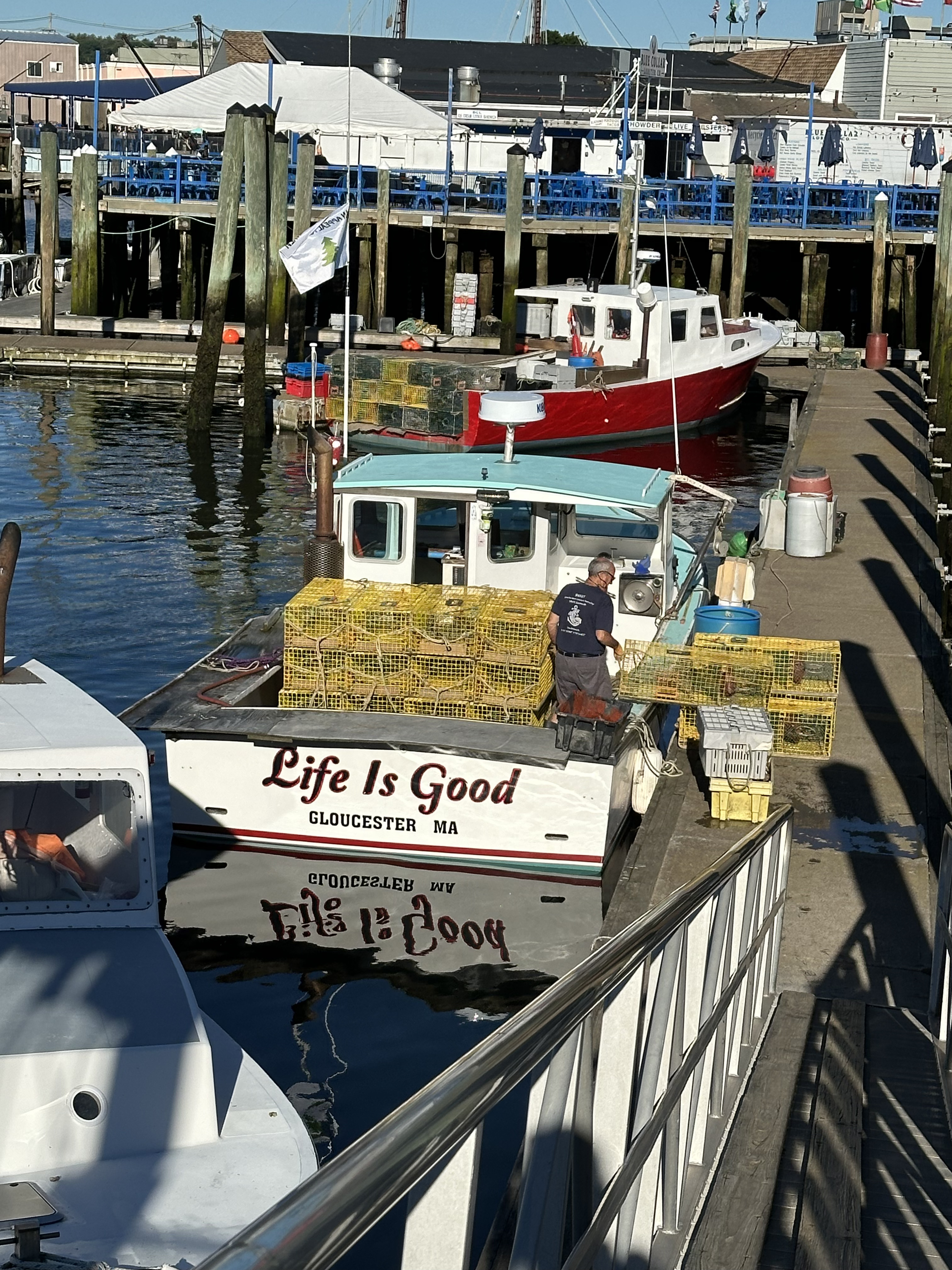
That experience reinforced another lesson Sawyer has learned as he has grown older.
"You can't predict how your perspective on work is going to change in the future, but it will," he says. "As we get older, it seems we find we have more people that are important to us, we would prefer to take some of the urgency out of our day's activities and most of us have less energy than we did just five years ago.
"All of those things and more make it easier to change our daily rhythm to something that could be called retirement, but it doesn't happen on its own. That's one thing I would tell other people approaching retirement age, which is, 'Retirement is an intentional process, you really have to think it through to get what you want.'"
His father's experience also shapes the way Sawyer thinks about this stage of life.
"My dad had to deal with Alzheimer's, so he didn't have the opportunity to manage his retirement years with the same choices that I have," he says. "I am very conscious of my good fortune and want to make the most of this time in my life."
When Sawyer was a young fisherman, retirement looked very different than it does today.
"When I was 20 years old, I thought retirement looked like the older guys standing around nursing a cup of coffee while we offloaded a trip of cod and pollock from my gillnetter," he says. "Now I guess I see my retirement years not just as an opportunity to drink my coffee slowly, but more importantly as part of life's evolving journey that I want to make the best use of."
Sooky looks forward to spending more time with his wife Laurel, his children and grandchildren, enjoying the family's camp in New Hampshire and continuing to improve his largemouth bass fishing.
"I want to spend more time with my wife, my children and my grandchildren and I'd like to get better at catching largemouth bass even though it is so inefficient and it goes against most of my life's work and training to catch so few fish," he says.
While he appreciates the complexity of fisheries management, Sawyer believes it is time for the next generation to assume more of those responsibilities.
"I appreciate the complexity of fisheries management, but am getting ready to let younger minds and bodies take on the challenge of shaping policy and regulations that are science based and respectful to the fishing industry," he says.
All that said, Sooky cannot imagine walking away from being on the water several days a week.
"Unlike those retiring from some other professions, I can't foresee a time when I won't want to be getting gear ready and putting traps in the water," Sawyer says. "Laurel and I have talked about it a lot and I don't see retirement as a time to let go of my interest in fishing, being on the water and being part of the fishing community.”
"I want to make more time for family and relaxation, but also to find the means to continue to fish for as long as my health and family's needs allow me. If I could fish till the day I close my eyes for the last time, that would be fine with me."