



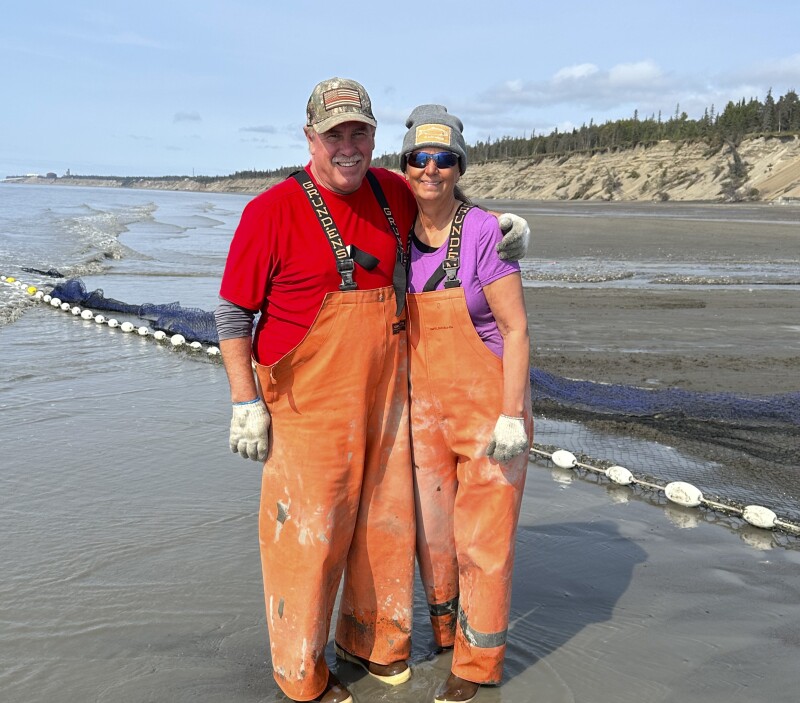
For years, set netters on the eastern shore of Cook Inlet have had little opportunity to fish due to the low numbers of Chinook salmon entering the Kenai River. This year they have been limited to dipnets. “You can’t make a living with a dipnet,” says Lisa Gabriel, who has fished the area all her life. Gabriel and others around Kenai have advocated for a new administrative district to help them sort out their issues, and it has finally been established.
"We tried for years with different bills, but they didn’t get through,” says Gabriel. “But this year, because we are managed uniquely, we asked for our own administrative area. Through the work of Senator Jesse Bjorkman and Representative Louise Stutes, the legislature overwhelmingly passed HB 117. Now we’re working with the CFEC to get everything settled.”
Alaska’s Commercial Fisheries Entry Commission (CFEC) plays a unique and important role in the state’s fisheries, particularly the salmon fisheries. The agency handles permitting of boats and limited entry permit transfers, and by law can recommend new permits or buy back existing permits, depending on the viability of the fishery. “As far as I know, we have never done either one,” says CFEC Commissioner Rick Green. “We haven’t issued new permits, and we’ve never done a buyback. Most of our work is overseeing the transfer of permits and tracking the economics of limited entry and interim use fisheries.”
According to Green, the CFEC’s research staff collects general data from landings reports to determine the economic health of Alaska’s many fisheries. “We look at the amount of money that a fishery brings in and the number of fishermen. We use an optimum number study to determine if fishermen are making enough money, and whether we need to adjust that number up or down.”
While the CFEC has not yet used its authority to change the number of licenses, that may be changing in the case of the eastern Upper Cook Inlet set net fishery. “They have their own administrative district now,” says Green. “And it wouldn’t surprise me if they were looking for a buyback. But they would have to find the funding for that.”
With the new district, Gabriel notes, qualified permit holders will have to decide what they want to do. “Everything will go through the CFEC,” she says. “But with the fishermen. So, people will have to decide what they want to do with their permit, if they want to take their permit outside the new area, or if they want to keep it in. Then we can ask the CFEC to do an optimization study of our fishery and see if we qualify for a fleet reduction, and if there could be a buyback. If we qualify for a buyback, there will be a vote of the fleet as to how we move forward and what a buyback looks like. If they vote for a buyback, then we have to find funding, and there are a few options for that.”
Gabriel adds that there is a timeline for permit qualification determination written into HB 117. “That has to be done through the CFEC by January,” she says. “And if someone does not qualify to get into the new area, they have until March to file an appeal and have a hearing.” With a potential buyback in the future, Gabriel notes that the bill has mechanisms to prevent holders of latent permits from getting into the new area to capitalize on a potential buyback.
"We have to get our permits settled first,” she says. “Then after permits move, and if we qualify for a fleet reduction, the CFEC can look at how many fishermen can make it in the new area.”
The Eastside set net fishery has been greatly affected by Chinook salmon conservation, particularly in the Kenai and Kasilof rivers, and Gabriel notes that although the possible buyback discussion seems to be at the forefront, that’s not the primary advantage of the new district. “The Eastside setnetters will now have a voice that is unique to their situation at the board of fisheries, fisheries disasters, and possible alternative gear,” she says. “The fishery can now speak specifically about their administrative area and determine what happens within it.”
.jpg.small.400x400.jpg)
