

A delegation of commercial fishing leaders from Scotland toured ports across the Northeast last month to study how cooperative research between fishermen and scientists is shaping fisheries management, with hopes of applying similar approaches as Scotland revises its own fisheries policies.
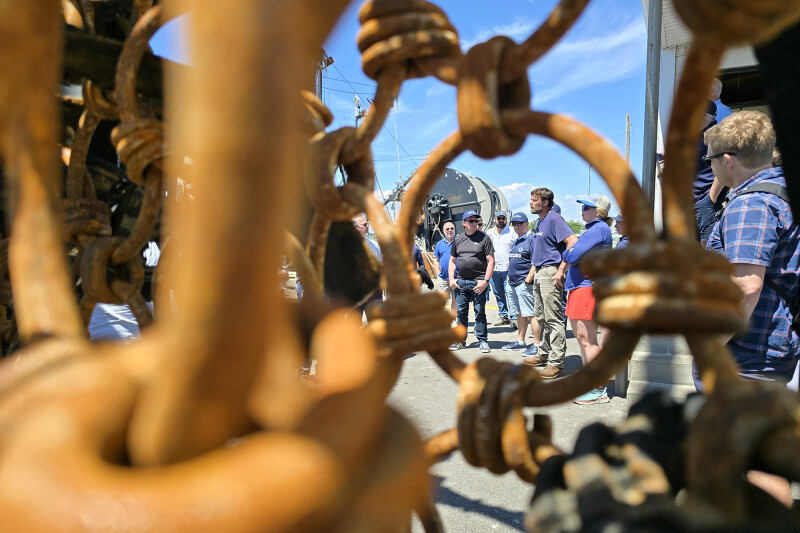
According to NOAA Fisheries, 16 members of the Scottish Fishermen's Organisation participated in the agency's first international cooperative research knowledge exchange, visiting four ports over three days. The group toured 12 commercial fishing vessels, six seafood processing facilities and dealers, a net manufacturing company in Point Judith, R.I., and the New Bedford Fishing Heritage Center.
The delegation focused on fisheries shared by the United States and Scotland, including Atlantic cod, haddock, Atlantic pollock, Atlantic mackerel, Atlantic herring, dogfish, and shortfin and longfin squid.
Beyond vessel tours, participants met with fishermen, scientists, fisheries managers, academics, and nonprofit organizations to discuss how cooperative research can improve fisheries science and management. NOAA Fisheries highlighted several ongoing industry partnerships, including research on squid, Atlantic mackerel, and environmental monitoring aboard lobster boats and trawlers.
Discussions centered on challenges facing fleets on both sides of the Atlantic, including building trust between fishermen and scientists, an aging fleet, barriers to entry for younger fishermen, fleet consolidation, reduced research funding, and the need for more adaptive fisheries management.
Scottish participants also expressed interest in the Northeast's growing use of environmental data to inform management decisions and praised the region's structured collaboration between industry, scientists, and government.
The delegation found particular value in the Northeast's squid research. Scotland has seen growing squid abundance in recent years, and organization members said lessons from U.S. research could help improve understanding of their own fisheries while creating new market opportunities for species that are currently discarded.
NOAA Fisheries said the exchange underscored how cooperative research can help bridge knowledge gaps by combining fishermen's on-the-water experience with scientific expertise, ultimately supporting more informed and adaptive fisheries management for shared stocks.