

For fishermen, some of the most unsettling survival stories are the ones that begin with an ordinary day on the water.
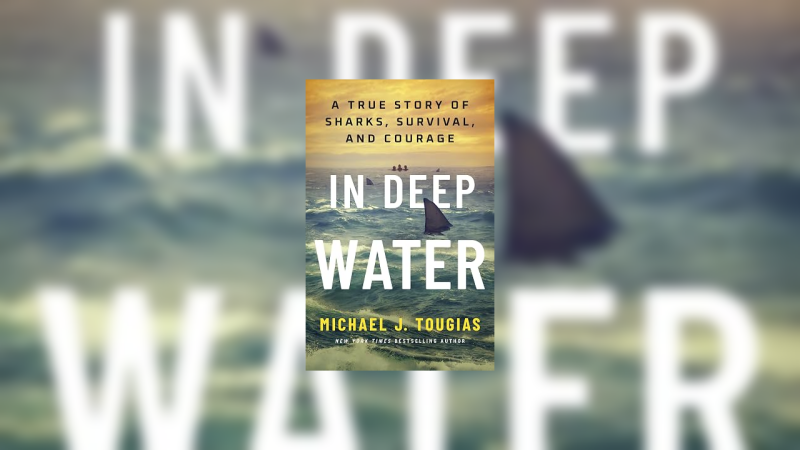
Michael J. Tougias’ latest book, In Deep Water: A True Story of Sharks, Survival, and Courage, begins exactly that way. Three friends head into the Gulf of Mexico off Louisiana on Oct. 8, 2022, looking for red snapper. Before the trip is over, their boat will be gone, and the three men will spend 28 hours fighting to stay alive in open water.
Tougias, the New York Times bestselling author behind The Finest Hours, Fatal Forecast, and a long list of other survival-at-sea accounts, reconstructs the ordeal of Paul Le and his friends Lu and Sonny after Le's 24-foot boat begins taking on water about 15 miles offshore.
The vessel goes down too quickly for the fishermen to transmit a Mayday. With no cell reception, the men are left with life jackets and floating coolers as building seas carry them farther from shore.
What follows is the kind of survival story Tougias has made a career of telling: hypothermia, dehydration, jellyfish, exhaustion, sharks, and a series of decisions that become increasingly consequential as the hours pass. But for fishermen, In Deep Water may be most compelling for what happens before the disaster.
The trip begins with seemingly small decisions and oversights that become much bigger once something goes wrong. The men had not left a detailed float plan with their families, and the life jackets aboard the boat were not all properly fitted. Once the vessel began sinking, there was little time to figure it out.
Those details make In Deep Water more than a shark or rescue story. Beneath the drama is a familiar reminder for anyone who spends time offshore: emergencies rarely announce themselves, and equipment that is aboard the boat isn’t necessarily equipment you will be able to use when you need it.
"But today they are open [locks at Empire marina] as there are no storms predicted, and the men plan to be back before the wind picks up," Tougias wrote, closing out the first chapter.
Tougias tells the story hour by hour while also following the Coast Guard personnel trying to locate the missing fishermen. The story draws on interviews with all three survivors and members of the Jayhawk helicopter crew involved in their rescue, allowing it to move between the men in the water and the search unfolding around them.
That approach also lets readers see how difficult it can be to find three people in open water, especially when rescuers have little information about where to start looking.
"While the Jayhawk crew departs Air Station New Orleans and into the blue skies on a rescue, Paul, Sonny, and Lu are still kicking and drifting. They have been in the water approximately six hours, and no one on land suspects they are in trouble," he wrote.
For commercial fishmen, who don’t need reminding that the ocean can turn an ordinary day into something entirely different, some parts of In Deep Water may hit particularly close to home. But that’s also what makes the true story worth telling.
The sharks make for a gripping title, and the lasting lesson is considerably simpler: preparation, communication, and the decisions made before leaving the dock can matter just as much as courage once everything goes wrong.
St. Martin's Press released In Deep Water: A True Story of Sharks, Survival, and Courage on June 23, 2026. You can purchase it here.