

New findings showing historically poor osprey reproduction in portions of the Chesapeake Bay are renewing debate over Atlantic menhaden availability and whether commercial harvest is contributing to food stress among the birds.
The Center for Conservation Biology (CCB) at William & Mary released results from its 2026 osprey breeding monitoring this week, reporting widespread nesting failures and historically low reproduction rates in higher-salinity portions of the Bay.
Researchers monitored 937 osprey pairs across 23 study areas from March through August, according to information released with the findings. In saltier portions of the Bay, average productivity fell to 0.25 young per pair, well below the roughly one young per pair researchers say is needed to maintain a stable population.
Food stress was identified as a major factor in the nesting failures, continuing concerns raised by earlier research examining the availability of Atlantic menhaden, an important prey species for Chesapeake Bay ospreys.
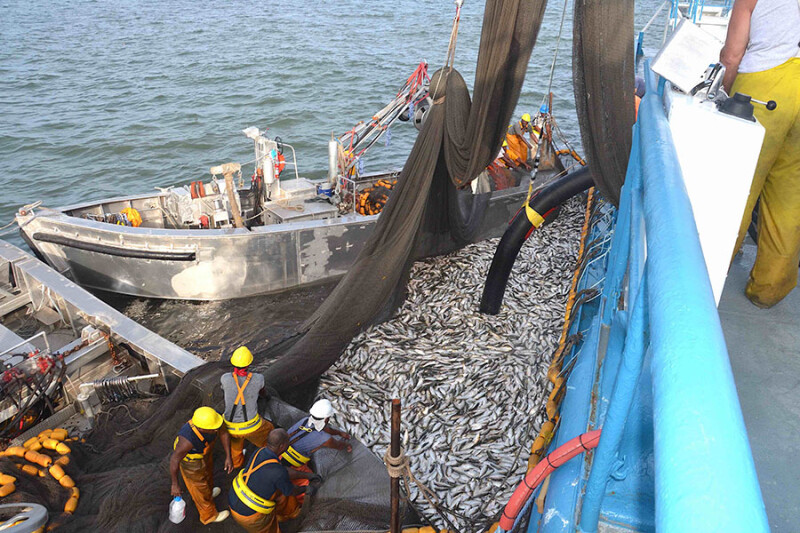
Ocean Harvesters, which operates the purse seine fleet that supplies menhaden to Omega Protein’s Reedville, Va., processing operation, responded Sept. 15 by arguing that the findings do not establish that commercial menhaden harvest caused the food shortage.
"We are not disputing the reproductive conditions reported by the Center," Ocean Harvesters said. "The point is simply that neither CCB nor USGS (U.S. Geological Survey) has established that commercial menhaden fishing caused them."
The distinction has become central to an increasingly contentious debate over the Chesapeake Bay menhaden fishery.
Research published earlier this year in Frontiers in Marine Science documented widespread reproductive deficits among Chesapeake Bay ospreys. Researchers found much poorer breeding performance in higher-salinity waters, where ospreys are more dependent on menhaden, and suggested reduced menhaden availability was a primary driver of poor reproduction.
But determining why fewer menhaden may be available to ospreys is a separate question.
Ocean Harvesters pointed to statements from the Center identifying several possible influences on menhaden availability, including commercial harvest, climate change, changes in distribution, and the timing of the fish’s movement into Chesapeake Bay waters.
The company also cited earlier comments from researcher Dr. Bryan Watts saying the research did not attempt to establish a direct link between poor osprey reproduction and menhaden harvest.
Ocean Harvesters further argued that timing complicates efforts to attribute food stress solely to the purse seine fishery. Chesapeake ospreys begin returning to breeding territories in late February and March and generally begin laying eggs in April, while Virginia’s commercial purse seine season opens in May. Ocean Harvesters said its fleet did not begin fishing in 2026 until early June.
The company also pointed to other factors identified in osprey research that can influence reproductive performance, including weather, heat stress, predation, contaminants, disease, parental condition, competition and prey availability.
The latest findings arrive as menhaden management in Chesapeake Bay is already under increased scrutiny.
The Atlantic States Marine Fisheries Commission is currently considering changes to the Chesapeake Bay reduction fishery cap, including options that could reduce the current 51,000-metric-ton cap by as much as 50 percent and distribute harvest more evenly throughout the fishing season.
Conservation and recreational fishing groups have cited the osprey research as part of their argument for leaving more menhaden in the Bay. Ocean Harvesters contends those groups are drawing conclusions about the commercial fishery that the research itself has not established.
The underlying osprey findings, however, show that reproductive problems in portions of the Chesapeake are continuing.
The Center's earlier Bay-wide research monitored 571 osprey pairs during the 2024 breeding season and found that all high-salinity study areas were functioning as demographic sinks, while lower-salinity areas were functioning as demographic sources. Researchers said measures including nesting failure, brood reduction and nestling loss pointed to greater food stress in high-salinity areas.
The 2026 results extend that concern while leaving the cause of menhaden availability, and the role commercial harvest may play in it, at the center of an ongoing scientific and fisheries-management debate.