A $200,000 grant is helping researchers and commercial growers lay the groundwork for a domestic bay scallop aquaculture industry, with a focus on training East Coast growers and increasing access to hatchery-produced seed.
Researchers at the University of Maryland Eastern Shore (UMES) received the funding from the Northeast Regional Aquaculture Center for a project aimed at expanding commercial-scale bay scallop production. The work will include hands-on training for oyster growers and hatchery personnel, developing new educational materials, and researching ways to improve seed transport and availability.
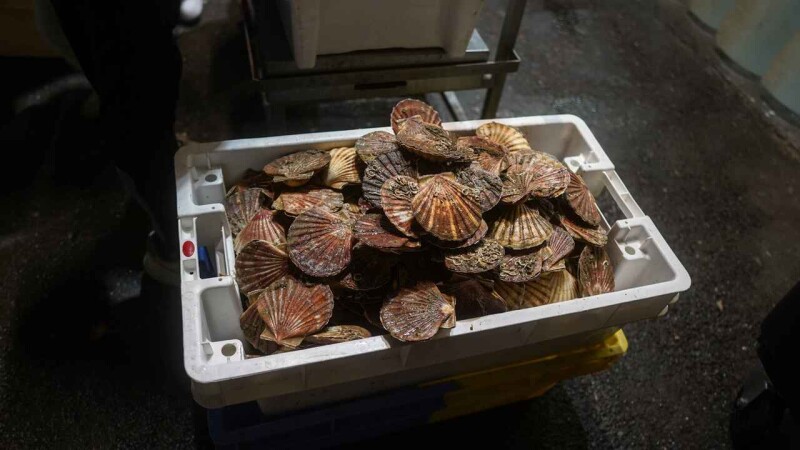
Bay scallops are native to Maryland waters, but commercial-scale bay scallop aquaculture remains largely undeveloped in the United States. Researchers see an opportunity to build on the East Coast's existing shellfish aquaculture infrastructure and give growers another species to bring to market.
“It’s a very exciting project with a strong focus on industry,” said Dr. Stephen Tomasetti, principal investigator and director of the UMES Paul S. Sarbanes Coastal Ecology Center.
The project will include a series of Bay Scallop Aquaculture Bootcamps for oyster growers and hatchery personnel along the East Coast. Researchers will also develop training materials and videos and conduct experiments aimed at improving the transport and availability of hatchery-produced bay scallop seed.
Rutgers University researchers Dr. Michael Acquafredda and Samuel Ratcliff will lead hatchery-focused bootcamps in New Jersey, while Dr. Justine Whitaker of UMES will help analyze molecular results from project experiments and support outreach.
Commercial experience will also play a role in the training. Lee Beauchamp, owner of Baywater Seafood in Snow Hill, Md., will work alongside UMES to lead Maryland bootcamps focused on raising bay scallops from seed to market size.
“Bay scallops offer an exciting opportunity for the East Coast aquaculture industry,” Beauchamp told Daily State News. “As a grower, I’m looking forward to sharing what we’ve learned at Baywater Seafood and working with UMES to tackle the practical challenges of raising scallops from seed to market.”
Beauchamp said increasing both grower knowledge and access to seed could help expand production and bring more locally grown bay scallops to consumers.
The effort comes as shellfish aquaculture continues to contribute to Maryland's coastal economy. The state's oyster aquaculture industry generated an estimated $11.5 million in economic impact in 2024, according to the University of Maryland Extension and Maryland Sea Grant.
Researchers hope bay scallops could eventually provide another commercial opportunity for existing shellfish growers, but developing a reliable supply of seed and giving growers the skills needed to successfully raise scallops will be important steps toward reaching commercial scale.
The project began in September 2026 and is scheduled to continue through July 2029. By its conclusion, researchers hope the work will help position Maryland and the broader Northeast as a hub for domestic bay scallop aquaculture.