Researchers say a research vessel that went adrift while monitoring a harmful algal bloom in the Gulf of Maine has been recovered, with more details expected soon.
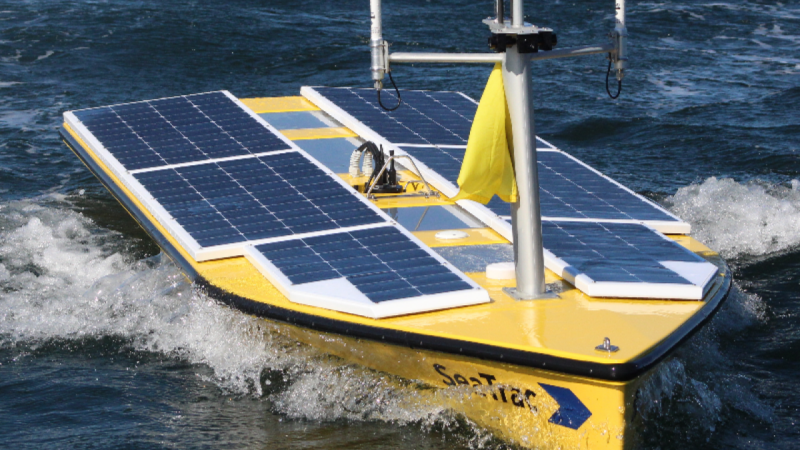
The bright-yellow SeaTrac autonomous vessel lost communications with its operators on Oct. 12 while holding position about 30 nautical miles southeast of Frenchman Bay, Maine. Researchers later offered a $5,000 reward for information leading to its recovery.
Researchers with the Woods Hole Oceanographic Institution and NERACOOS re-established communication with the SeaTrac on Oct. 23, when it was roughly 90 miles off Gloucester, Massachusetts. The vessel has since been recovered.
The 16-foot SeaTrac carries specialized sensors that sample Gulf of Maine waters for phytoplankton associated with harmful algal blooms and transmit data to researchers through cellular and satellite connections.
The vessel had been deployed to monitor an ongoing bloom of Karenia mikimotoi, a phytoplankton that can reduce dissolved oxygen as dense blooms decay. Low oxygen conditions can stress or kill fish, shellfish, marine worms and other organisms, creating concerns for commercial fisheries and aquaculture operations.
Commercial fishermen were among the first to report signs of the bloom along the Maine coast.
In Brunswick, reports from lobstermen, pogie fishermen, clammers, shellfish farmers and coastal residents about unusual water discoloration helped prompt additional monitoring. Testing later found K. mikimotoi concentrations in the millions of cells per liter, according to the town's Coastal Resource Office.
Dissolved oxygen in Maquoit Bay fell as low as 3.11 milligrams per liter, or 37% saturation, below levels associated with severe shellfish mortality.
The Maine Department of Marine Resources has since reported signs that the bloom is declining. Satellite imagery has shown reduced activity, while dissolved oxygen levels have improved in nearshore waters.
However, isolated areas of Muscongus and Penobscot bays have continued to show elevated cell counts, with potential impacts to soft-shell clams and marine worms.
The SeaTrac's monitoring is intended to give researchers and resource managers a better picture of how harmful algal blooms develop and move through the Gulf of Maine. For commercial fishermen, those observations can help track changing water conditions and potential impacts to commercially important species.
Additional information about the SeaTrac's recovery is expected to be released shortly.