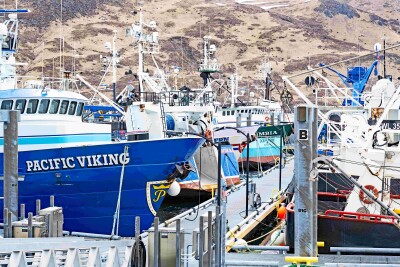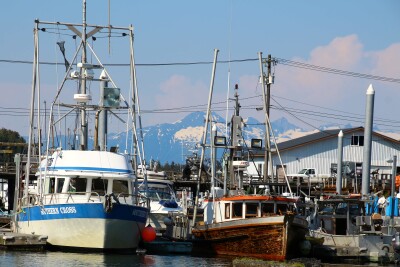
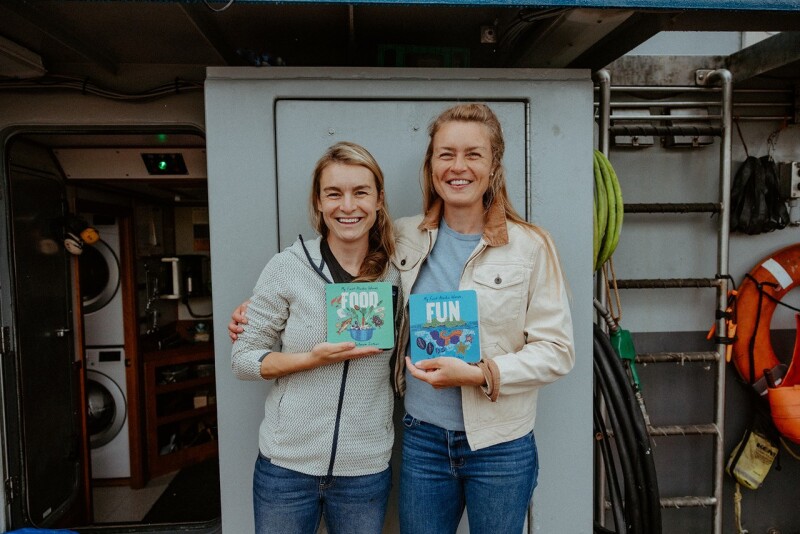
Claire and Emma are spending less time on the water these days, but a growing seafood operation in Homer is bringing the Salmon Sisters closer than ever to the fish, fishermen, and families behind Alaska seafood.
For most of their lives, Claire and Emma have measured time in fishing seasons. They grew up aboard their family’s commercial fishing boats in Alaska, eventually becoming deckhands themselves and building Salmon Sisters around the world they knew best: boats, fish, wild places and the people who make their lives on the water.
These days, though, the sisters are more likely to be packing a box of frozen salmon, working inside a small processing plant, designing seafood packaging on an iPad or chasing one of four young children than working a full season on deck.
“We try to reframe it sometimes,” Claire said. “We’re raising the next generation of commercial fishermen.”
With children ranging from about 1 to 4 years old, the sisters are squarely in the trenches of raising young families. Their husbands continue to fish, their father remains involved in commercial fisheries, and the boats are never far from their lives. Their own time on the water, however, has largely been limited to tagging along aboard family boats, tendering, or spending select weeks aboard Emma’s husband’s gillnetter.
“We are basically a liability,” Claire joked. “We’re so lucky to do this with our family and such patient crew.”
For two women accustomed to doing the work themselves, moving ashore has not always been easy. “Not participating has been really challenging,” Claire said. “We still miss being on the water so much that it dictates everything we plan and everything we do for the future of how we can get back on the boat.”
They expect this chapter to last another two or three years while their children are small and they continue building their land-based operation. After that, both envision finding their way back aboard more often.
A different side of the fishing family
Emma remembers their childhood as a combination of time aboard the boat and time ashore. Their father fished, their mother sometimes joined him and, at other times, provided the shoreside support that kept the family operation moving.
Now Claire and Emma are seeing that dynamic from the other side.
“You have to have the onshore support,” Emma said. “Every person in a fishing family is so critical, and the role you play is really important. But sometimes you just want to go have the adventure. You just want to go out and be doing it.”
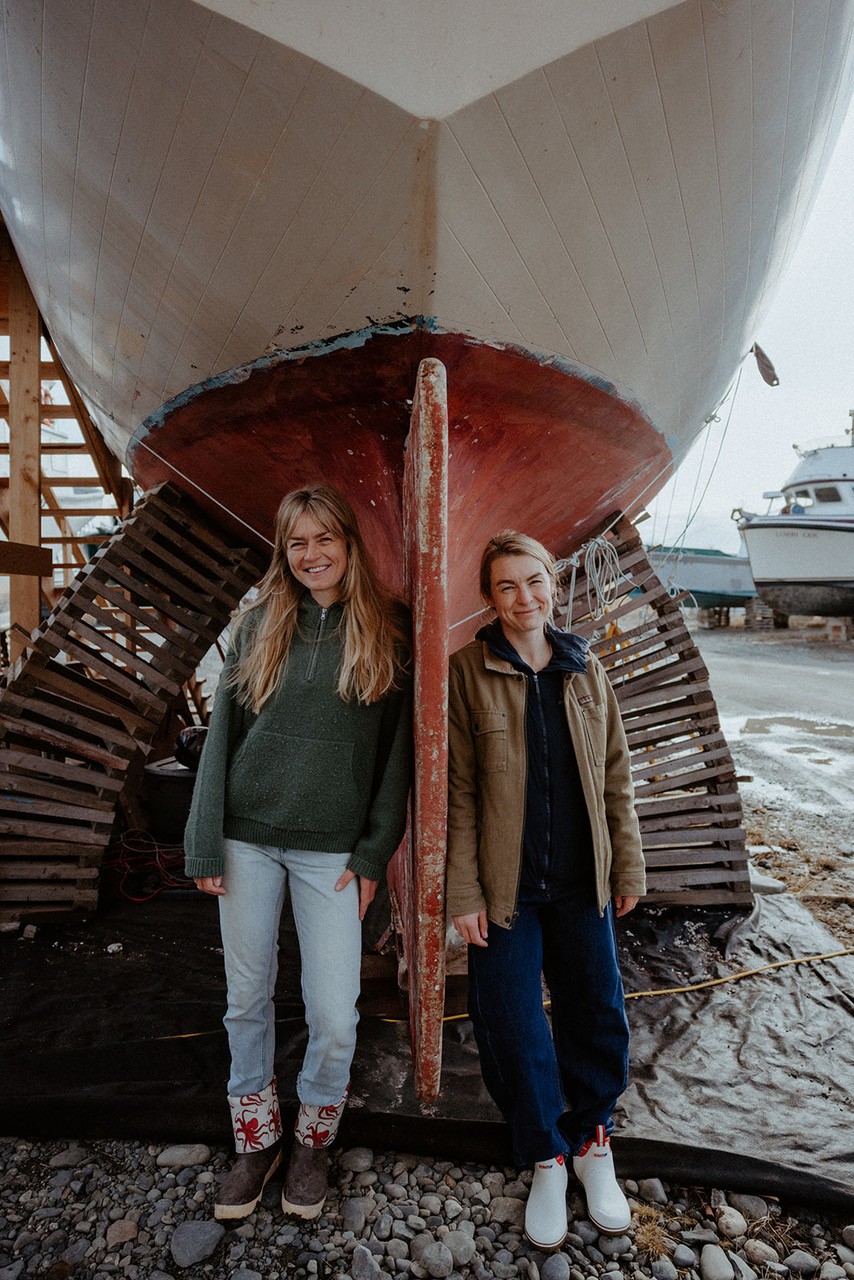
Their children are already absorbing the rhythms of the industry. A trip with their grandfather to haul a boat out became one of the biggest moments of the fall. Radios find their way into imaginary wheelhouses. Everyone wants to be captain.
Starlink and FaceTime have also given this generation of fishing kids something Claire and Emma never had: glimpses of their fathers working aboard boats even when the fleet is far from home.
Being based in Homer has also drawn the sisters deeper into a fishing community that was not historically their family’s home port. Through Salmon Sisters, they buy fish from Cook Inlet fishermen, learn more about the fishery unfolding in the waters directly in front of them and share those fishermen’s stories with customers.
“There are little pins in the map across the state,” Emma said of watching the family’s boats come and go.
Touching every fish
Around the time their first children were born, Claire and Emma came into possession of a shuttered seafood processing facility in Homer.
They have had access to the space for roughly five years, slowly adding the equipment and systems needed to turn it into a working plant. The facility is leased during the short spring season to Kachemak Kelp Hub, a Homer mariculture business, before the Salmon Sisters seafood program takes over during the summer and fall.
The operation is deliberately small. Two or three boats deliver to them. Local fishing families help cut fish. Claire and Emma write plans, pack boxes, work with fishermen, and develop products.
“We are touching every fish,” Claire said.
One of the operation’s core products is the Salmon Sisters Wild Fish Box, a roughly 10-pound box of frozen Alaska salmon and halibut shipped from Homer to customers around the country.
For Claire and Emma, processing has helped close a loop they have spent years talking about: fisherman to processor to storyteller to consumer. “We’ve worked towards this for a decade,” Claire said. “And it’s still just so small, with us taking on the risk, and just a tiny step at a time.”
She hopes that smallness can become an asset. “I hope we can be an example for other young people who are trying to put their own operation together.”
Building a feedback loop
Owning the processing side has also opened the door to experimentation.
Smoked salmon, salmon jerky made from a family recipe, and pet treats are among the value-added products the sisters have developed. Emma designs the packaging, giving them control over both the product and the story that follows it out the door.
“In the past, we’ve relied on other processors, those have been valuable partnerships,” Emma said. “But it’s been really cool to be able to be in there and try some new products ourselves.”
Their fish shop provides something fishermen and processors rarely receive: immediate feedback from the person eating the product.
Customers can sample smoked salmon, ask where a fish came from and learn how to prepare it. Claire might hear a question on the processing floor and text Emma, who can change a design on her iPad. A new product can move from processing to the shop counter, where the sisters see customers react firsthand.
“That immediate feedback is pretty awesome,” Emma said. At their scale, traceability can also be remarkably personal. Claire can tell a customer who caught a particular sockeye salmon and when it came out of the water.
Many of the women working alongside them have commercially fished themselves, are raising children, or continue working aboard boats when schedules allow, making the shop another place where those experiences intersect.
Nostalgia becomes a business model
There is also nostalgia running through much of what Claire and Emma are building.
They grew up around Peter Pan Seafood's operations in False Pass and King Cove, where processors, boats, fishermen, and the rituals of “mug-up” were part of everyday life. Now they watch their own children run around the back lot of a processing plant in Homer while forklifts pass and boats offload nearby.
Their Mug Up Coffee Shop carries some of that history, as do their products and, increasingly, the stories they tell children.
Emma has been finishing two children’s books, one centered on food in Alaska and another on having fun in Alaska. Much of the work happened in the margins of motherhood, sometimes with a sleeping baby on one arm while she worked on a device with the other.
The books reflect the Alaska her children are discovering: skiff rides, berry picking, watching planes take off from the lake and eating seafood.
“Salmon Sisters’ role, in a lot of ways, is just to tell that story of being a kid in Alaska,” Emma said. The characters, she added, are often the landscape itself, the fishermen and the communities within it. Seeing that world again through her children’s eyes has brought a new perspective to the sisters’ marketing, writing and design.
“We have created the business that can be our creative outlet, and we can take it in any way we want that mirrors the phase of life we’re in,” Claire said.
A changing fleet
Their shift ashore is happening during a complicated stretch for Alaska fishermen.
Claire described the past several years as rocky across fisheries, with uneven catch histories and higher operating expenses. In some fisheries, stronger ex-vessel prices have helped, but the cost of running a fishing business continues to climb.
Among fishermen their age, she sees a generation responding by diversifying and finding ways to make increasingly complicated operations work. “They are hustling,” Claire said. “They are nose to the grindstone. These are their years to make things happen.”
For the Salmon Sisters family, that push toward quality and diversification is also taking place aboard the boats.
The family vessels Halcyon and Oracle, which participate in fisheries including black cod and Pacific cod and tender salmon during the summer, have been part of a premium-quality program using slurry ice technology and limited onboard processing.
The goal is to improve quality while creating a more traceable product whose story can follow it to the consumer.
The learning curve has been steep, Claire said, from operating unfamiliar equipment to servicing specialized technology in Alaska. Still, she sees potential. “As a family, we’ve always dreamed of providing our own catch to people who could understand the entire story and just everything, the work that’s going into it,” Claire said. “Finally, we’re slowly putting those pieces together.”
For now, the Salmon Sisters are staying ashore.