.png.author-image.300x300.png)
A bill aimed at fostering research on marine carbon dioxide removal (mCDR) is working its way through Congress. If passed, it would authorize NOAA to designate ocean areas for mCDR testing and make grants to fund this testing. While most fishermen have not yet heard of mCDR (much less talked with their elected officials about it), a few are starting to pay attention—and to let their views be known.
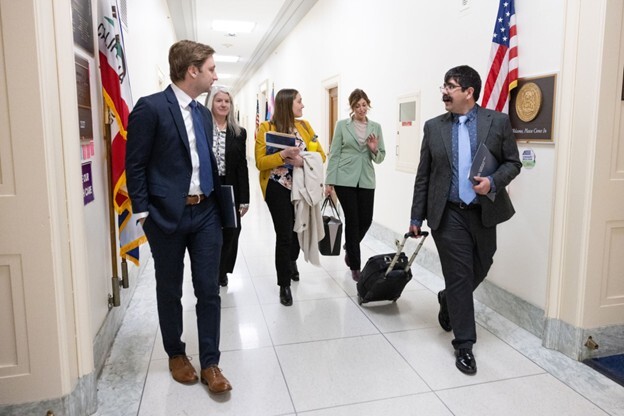
In March, two Kodiak-based commercial fishermen—Danielle Ringer and Theresa Peterson—traveled to Capitol Hill. With logistical support provided by the Carbon to Sea Initiative, the Alaskan duo met with six Senate offices and staff of three Senate committees to discuss the proposed legislation, which is titled the Removing and Sequestering Carbon Unleashed in the Environment and Oceans Act (ReSCUE Oceans Act).
The ReSCUE Oceans Act would be the first federal law dedicated to a set of experimental approaches known as mCDR. Aimed at enhancing the ocean’s uptake of atmospheric carbon dioxide, proposed mCDR methods include growing and sinking seaweed, adding alkaline substances to seawater, dispersing iron particles to stimulate phytoplankton blooms, and using electrochemical processes to strip carbon dioxide from seawater and store it underground. Much is still unknown about how well these proposed methods would work and what side effects they might have on ocean ecosystems, but if proven safe and effective, they could someday play a role in helping stabilize the planet’s temperatures. They could also become a major new ocean use.
A policy brief published for the Fishery Friendly Climate Action Campaign in late May, titled “How Fishery Sensitive is the ReSCUE Oceans Act?,” measures the ReSCUE Oceans Act against these benchmarks. While the Act includes a number of provisions fostering community engagement, transparency, and a precautionary approach to mCDR, the analysis concludes that the Act could be more “fishery sensitive” if it did more to prevent premature commercialization of mCDR techniques, to fund the capacity of fishing communities to help shape mCDR plans, and to honor fishermen’s ecological knowledge—topics that Ringer and Peterson hammered home during their visits on the Hill.
“Coastal communities want to understand potential mCDR ecosystem impacts and the ability to protect existing maritime industries,” said Ringer, who described legislation like this—if done right—as a step towards preventing irresponsible mCDR by fostering publicly accountable science and reinforcing sound governance and oversight of this emerging field.
“At this juncture, I don’t think we know enough to understand how mCDR will interact with complex marine ecosystems that are currently experiencing climate-related stressors,” Peterson added. “In order to gain the information to understand how and if mCDR can work in a way that doesn’t negatively impact the ocean, we need federal funding support for research to understand the potential, to weigh the pros and cons, and to build trust.”
Both Ringer and Peterson are involved in an Alaska-based project called Community Leaders and mCDR (CLaM), which has hosted mCDR forums in Kodiak and Cordova and is tracking mCDR pilot projects in the North Pacific such as the Exploring Ocean Iron Solutions (ExOIS) consortium’s plan to conduct experimental iron fertilization near the Ocean Station Papa ocean observing array.
“As fishermen, we live by and value the science-based fishery management process, which includes an avenue for stakeholder engagement,” Peterson observed. “We want a seat at the table as discussions unfold about research needs and advancing technologies for ocean uses that may impact the marine environment that sustains thousands of fishermen.”
Peterson and Ringer said that the policy makers they met in Washington possess varying levels of familiarity with mCDR, and educating them about the big picture is important. They also noted the value in fishermen serving as messengers.
“I was encouraged that many staffers seemed genuinely interested in hearing directly from fishermen and there was recognition that communities dependent on marine ecosystems need to be part of the process early,” Ringer commented. “I think our meetings helped ground these discussions in the realities of fishing communities and reminded policymakers that these are not abstract marine spaces, but instead they are places where people work, live, and sustain multi-generational livelihoods that form the backbone of the American seafood industry.”
But if the fishing industry is going to have a presence in high-level discussions on the future of mCDR, it’s going to need more than two spokespeople. That’s why Ringer and Peterson encourage all fishermen to begin learning the basics of mCDR.
“Listen to podcasts about mCDR like Plan Sea during a wheel watch or mending web,” Peterson suggested. “There are resources available to learn more and I encourage fishermen to pay attention to this developing field and keep abreast of the discussion.”
Ringer and Peterson are not the only fishermen who are developing their knowledge and honing talking points around mCDR. In late April, a six-person delegation of American and Canadian commercial fishermen and fisheries leaders attended the Carbon to Sea annual convening in Halifax, Nova Scotia. There, they interacted with 200 of the world’s leading researchers working on ocean alkalinity enhancement, an mCDR method that is widely viewed by experts as showing early promise and scalability. Also in April, members of the West Coast fishing industry visited mCDR pilot project sites managed by the Captura company in Los Angeles and the Pacific Northwest National Laboratory in Sequim, Washington.
Interactions like these are paving the way for productive dialogue between the fishing industry and the numerous actors who may play a role in shaping the future of mCDR—from policy makers to scientists, companies, funders, Indigenous communities, and non-governmental organizations. The Fishery Friendly Climate Action Campaign recently received a grant from the ClimateWorks Foundation to continue developing fishing industry literacy and leadership on mCDR through a fishermen-led training curriculum that will launch in the fall.
The ReSCUE Oceans Act represents the first major U.S. legislative proposal related to mCDR. As fishing communities deepen their understanding of mCDR technologies and their potential ecological and economic implications, they have opportunity to help ensure that any federally funded or supported mCDR research is truly “fishery-sensitive.” Fishermen and their representatives can learn more about the contents of this Act in “How fishery sensitive is the ReSCUE Oceans Act?”