

Headliners at the 15th annual Salmonfest on Alaska's Kenai Peninsula July 31-Aug. 2 include Griff Washburn, aka Goth Babe, whose passions include protecting the Tongass National Forest, with its spawning streams for millions of wild salmon.
The Indie-pop artist, whose surf-inspired, outdoor-lifestyle sounds have captivated fans in the 18-30 age group, spent a week kayaking in Alaska in 2025 in the nation's largest national forest, doing a documentary with The Wilderness Society.
"It's one of the last real wild places in the U.S.," Washburn said in narrating the film, Paddling Under Giants. "Let's keep Ameria's biggest carbon reserve wild."
The film, which advocates for protection of old growth forests, is critical of current federal plans to lift restrictions on roadless forests, which would open nine million acres of the Tongass to clear cut logging.
The film is available on Youtube:
Washburn also partnered with the Southeast Alaska Conservation Council and The Wilderness Society for proceeds from related merchandise sales to benefit these organizations.
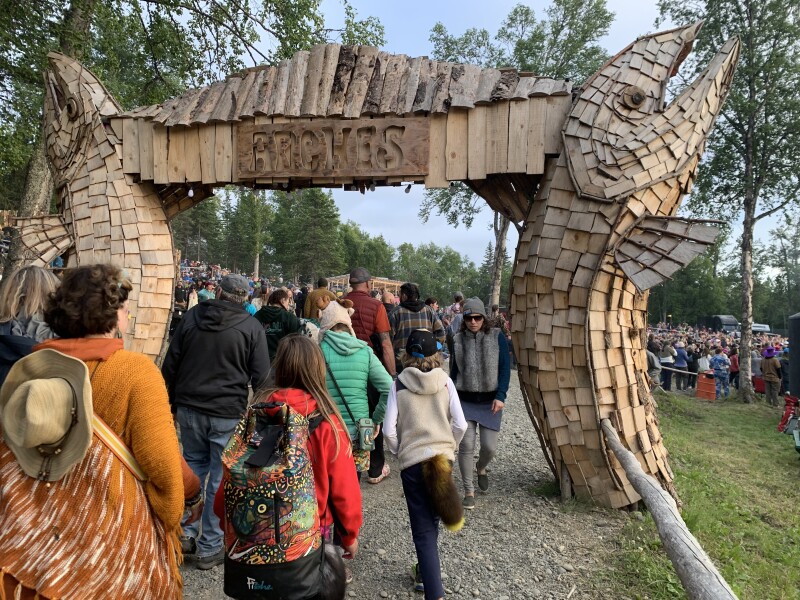
The three-day music and advocacy festival held annually at the Kenai Peninsula Fairgrounds in Ninilchik was founded in 2011 as "Salmonstock," a grassroots effort to protect the world's largest wild sockeye salmon fishery in Bristol Bay and stop the proposed Pebble mine. These days it attracts some of the nation's top musicians in an event blended with environmentalists bent on protecting sustainable fisheries.
"I've never felt so alone while simultaneously having so much purpose in my life," said Washburn, who paddled a sea kayak for five days and 60 miles through the forest in the summer of 2025 to make the documentary.
Jim Stearns, director and producer of Salmonfest, said some 5,500 tickets for the festival are again expected to sell out in advance. Other 2026 Salmonfest headliners include the bluegrass, folk and Americana band Trampled by Turtles. the rock and punk band Gusto, and the progressive bluegrass and Americana of Molly Tuttle. The latest updates on Salmonfest and space still available in the area camping grounds. National Fisherman is a sponsor of the festival.

While most festival goers say they are there for the music, the event also includes food, craft and clothing booths with a seafood accent and environmental booths advocating for healthy fish habitat.
Commercial fishing entities in Southeast Alaska have long advocated for protection of the salmon resource in the 16.7 million-acre national forest, which spans roughly 500 miles from north to south.
An estimated 240 miles of salmon streams in the Tongass are blocked by failed culverts from past timber road building," said Linda Behnken, executive director of the Alaska Longline Fishermen's Association in Sitka. "Salmon populations on once major salmon streams that were clear cut logged are slowly recovering but still impacted by landslides and flooding both increased by clear cut logging.
"Buffers left along streams when hillsides were clearcut have often blown over, leaving the streams vulnerable to overheating and causing the fish kills of recent summers," Behnken said. "Some have been observed and recorded. Likely many more are never seen.
Given that the timber industry supports 3 percent of the Southeast workforce and at the same time undermines commercial fisheries and tourism which are now the largest non-government employers in the region, increased logging is a direct threat to both the environment and the economy of Southeast Alaska."
"Logging on the Tongass is subsidized to make it economically feasible for the industry, which is then allowed to export round logs overseas, costing taxpayers both money and resources, while further compromising our planet's ability to sequester carbon and mitigate climate change," she said.