




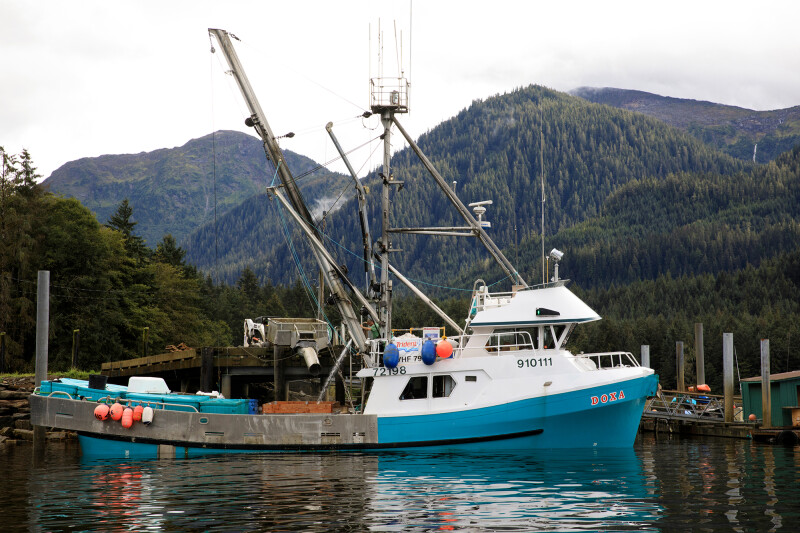
A cybersecurity policy change coming down from the federal government is drawing backlash from Alaska’s commercial fishing industry.
The concern is the change could hobble fishermen and processors operating in remote areas around the state where internet and cellular service are unreliable or unavailable.
Recently, the industry learned the U.S. Department of Commerce plans a transition to Login.gov with “multifactor authentication requirements for public-facing systems” such as the Observer Declare and Deploy System (ODDS), eFISH, and other platforms used by participants in Alaska’s federally managed fisheries.
This would require fishermen and other industry participants to establish a Login.gov account. Login.gov is described as “the public’s one account for government.”
“Login.gov is a safe way to sign in to many U.S. government websites using just one account,” the Login.gov website says. “It helps protect your information by asking you to take extra steps to make sure it’s really you when you log in.”
To access your profile with a participating agency, you would be prompted to sign in or create an account with Login.gov. You would provide two pieces of information to securely sign in: a password and authentication such as a one-time code sent to your phone.
The National Marine Fisheries Service, a Commerce Department agency, in June said it expected to have the infrastructure in place for the Alaska Fishery Science Center to deploy multifactor authentication (MFA) by mid-2026, adding: “We will have one year to implement.”
Concern about the Login.gov requirement prompted the North Pacific Fishery Management Council to send an Aug. 12 letter to NMFS Administrator Eugenio Piñeiro Soler seeking relief.
“While MFA may be routine for users with reliable communications infrastructure, it could create substantial barriers for fishermen operating in rural Alaska, where internet and cellular service are often unreliable or unavailable,” said the letter, signed by council Chair Angel Drobnica. “Access to authentication codes or verification applications may not be possible when cellular service, internet access, or access to a secondary authentication device is not available. In these circumstances, fishermen could be prevented from completing required declarations, accessing permits or accounts necessary to commence a fishing trip.”
Of particular concern is fishermen's access to ODDS, used to track fishing trips and assign observers for vessels in the partial coverage category in Alaska.
“Even under the current system, use of ODDS presents challenges for some vessel operators and processors,” the council letter said. “Although users may declare trips through the ODDS call center, it is not available at all hours and can be difficult to access during periods of high demand. As a result, many participants rely on direct access to ODDS and other NOAA systems to comply with regulatory requirements and begin fishing operations, and the requirement for connectivity through a secondary authentication device for MFA may significantly disrupt fishing plans and increase costs, particularly for small businesses in remote communities.”
The council letter requested some sort of relief from the pending policy.
“The council recognizes the importance of cybersecurity and protecting federal information systems,” the letter said. “However, implementation should account for the realities of operating in Alaska. We request that the department reconsider mandatory MFA requirements for Alaska fishery participants or provide accommodation to account for limited communications infrastructure.”
A representative of one major fishing company told National Fisherman that requiring MFA for assigning observers is “adding a complexity for a basic fishery function,” one unlikely to be of much interest to computer hackers.
The new requirement also would seem to run counter to the Trump administration’s goal of reducing regulatory burdens, the representative said.
.jpg.small.400x400.jpg)
