For commercial fishermen, a sudden fishery closure can mean losing an entire season's income while bills keep coming. Vessel payments, insurance, moorage fees, and other operating expenses don't disappear when a fishery shuts down, and federal disaster assistance can take years to reach the people who need it.
It's a familiar problem across the industry, but Noah Oppenheim believes the conversation is finally shifting from identifying what's broken to finding ways to fix it.
"The fact that conversations about enhanced risk management in commercial fisheries are all of a sudden happening in the industry, in Congress, and in the executive branch, that's a first," Oppenheim said in an interview with National Fisherman.
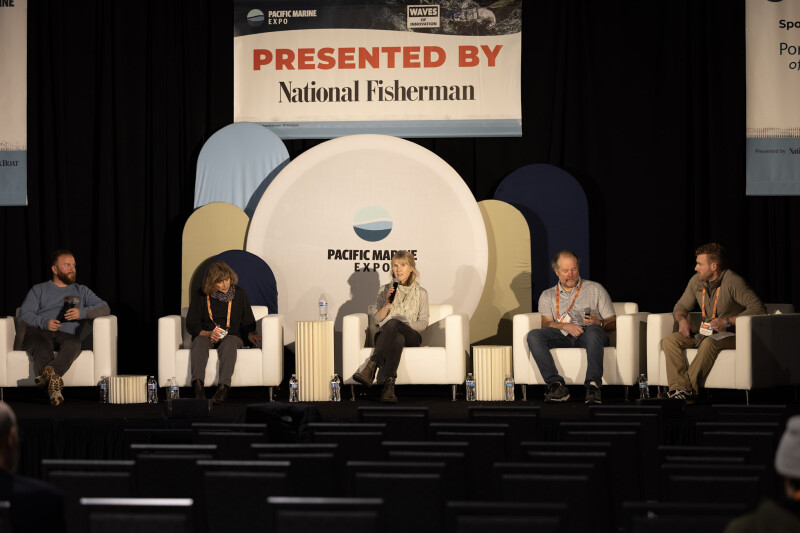
Oppenheim, principal of Homarus Strategies, will moderate a discussion on the issue at Pacific Marine Expo in Seattle on Nov. 20. The session, "Building a Real Safety Net: Risk Management for Commercial Fisheries," will explore whether insurance programs modeled after those available to American farmers could provide commercial fishermen with a more reliable financial safety net.
For Oppenheim, the objective is to move the conversation beyond another discussion of the shortcomings of federal fishery disaster assistance. "We're going to assume that we all know the fishery disaster process is a disaster. It's broken," he said.
When relief comes too late
The limitations of the current system have become particularly apparent in Alaska, where recent crab fishery closures have left vessels and crews without income while fixed operating costs continue.
A September presentation by Jamie Goen, executive director of Alaska Bering Sea Crabbers, and University of Washington fisheries economist Christopher Anderson estimated that crab closures have affected approximately 60 vessels and 400 crew members, with roughly $200 million in annual lost vessel revenue.
The presentation also estimated that a crab vessel can carry approximately $500,000 in annual fixed costs, regardless of whether it is fishing.
Federal fishery disaster assistance provides an important source of relief, but the process requires multiple steps, including disaster determinations, congressional funding, and approval of spending plans before money reaches affected businesses.
According to the presentation, the existing program generally covers 60 percent to 70 percent of revenue losses, but lengthy delays can be particularly damaging for independent fishermen and smaller operations.
Oppenheim believes an insurance-based approach could help address that gap by establishing eligibility and coverage before disaster strikes.
"You can think of insurance basically as pre-qualified fishery disaster coverage," he said. "So instead of spending three years every time something goes wrong, figuring out who's eligible for what, you just do that all in advance."
Could crop insurance work for fishermen?
American farmers have long had access to federally supported crop insurance programs designed to protect against losses in production or revenue. Commercial wild-capture fishermen have not had comparable access, despite facing similar financial uncertainty from environmental conditions and disruptions beyond their control.
Oppenheim sees an opportunity to adapt portions of that system to fisheries rather than build an entirely new program.
Under existing federal crop insurance programs, premium subsidies can substantially reduce costs for participating producers. Similar support could make insurance more accessible to fishermen than policies developed entirely through the private market.
However, translating agricultural insurance into commercial fisheries presents challenges. Unlike individual farms, multiple vessels may depend on the same fish stock, meaning a decline in abundance could affect an entire fleet simultaneously.
Insurance programs would also need to account for differences in fishing operations, revenue histories, species, management structures, and the availability of reliable fisheries data.
The September presentation identified potential pilot approaches using fleetwide catch or revenue to determine payouts, along with incentives for fishermen operating across multiple fisheries.
Oppenheim emphasized that any eventual program must accommodate the industry's diversity, from small owner-operators to larger vessels and both state- and federally managed fisheries.
"There's no advantage that I see whatsoever in designing a program that's going to fail to work for as many fishermen and fishery types as possible," he said. Importantly, he does not envision insurance replacing federal fishery disaster assistance entirely. The existing program also supports processors, infrastructure, research, and communities that would not necessarily qualify for producer-focused insurance.
Long-term closures and fisheries rebuilding efforts would also require different forms of assistance.
A new opportunity through the Trump administration
The renewed interest in fisheries insurance comes as the Trump administration expands the Department of Agriculture's involvement in the domestic seafood industry.
The creation of USDA's Office of Seafood has opened conversations about how commercial fishermen might gain access to federal programs traditionally associated with agriculture.
Oppenheim said discussions with USDA officials, including leadership at the Risk Management Agency, which administers federal crop insurance, have been encouraging.
He pointed to a recent roundtable in Stonington, Maine, attended by senior USDA officials as an important development in bringing commercial fisheries into those conversations.
"We have champions of better risk management in fisheries in this administration. We have congressional offices really paying close attention to this," he said.
Oppenheim also praised Mike Illenberg, director of USDA's Office of Seafood, for his engagement with fishing communities and efforts to understand the industry's needs.
Still, meaningful changes to federal crop insurance eligibility would require congressional action, and developing workable insurance policies would take additional research, industry participation, and testing.
For Oppenheim, the administration's engagement represents an opening rather than a finished solution.
Bringing fishermen into the conversation
The Pacific Marine Expo discussion will bring together Oppenheim, Anderson, Goen, and Linda Behnken, commercial fisherman and executive director of the Alaska Longline Fishermen's Association, which has explored fishery insurance through grant development and engagement with Congress.
Panelists will explore lessons from existing research, potential pilot programs, and the practical considerations involved in creating insurance products for commercial fisheries.
Oppenheim hopes the conversation encourages fishermen to consider what better risk management could mean for their own businesses and communities.
Beyond protecting income, he believes timely financial assistance could reduce pressure on fishermen to continue harvesting during difficult conditions simply to cover operating expenses.
It could also help fishing businesses withstand downturns without selling vessels or leaving the industry altogether.
Ultimately, Oppenheim sees the Pacific Marine Expo as an opportunity to bring these discussions beyond policymakers and researchers and into the hands of the people who would use such programs.
"Talk to your fleets, talk to your representatives in government at whatever scale," he said.
The session, "Building a Real Safety Net: Risk Management for Commercial Fisheries," will take place Friday, Nov. 20, from 1 to 1:45 p.m. on the Main Stage at the Pacific Marine Expo in Seattle.