

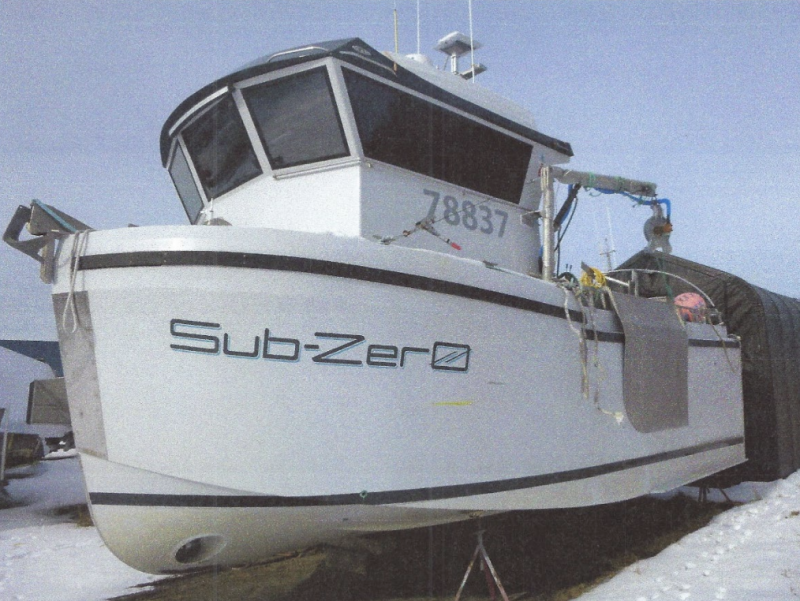
A 32-foot fishing vessel that was stricken by a sudden engine room fire, burned and sank in Alaska’s Nushagak Bay in August 2024 may have had a suspected failure in its hydraulic system.
The Sub Zero was transiting in Nushagak about 28 miles south of Dillingham, Alaska, on Aug. 8, 2024 at about 9:30 p.m. local time when the captain and a crew member discovered a fire in the engine compartment.
The fishermen attempted to fight the fire without success, and they abandoned the boat into a life raft and were rescued by a good Samaritan vessel. As the Sub Zero burned and sank, there were no injuries, and no pollution was reported. The vessel was a total loss estimated at $650,000.
The Sub Zero was built with molded fiberglass by Freestyle Marine Llc, Homer, Alaska, in 2020, propelled by a 815-hp diesel engine turning a a single four-blade propeller. The boat had a vessel monitoring system with four cameras: two on the aft deck and two in the engine compartment. The camera footage could be viewed live in the wheelhouse.
On Aug. 8, 2024, the Sub Zero was transiting from Togiak, Alaska, to Dillingham to replenish supplies in preparation for fishing in the Nushagak commercial salmon fishery. The captain and crew member were aboard when about 9:30 a.m. the vessel was off Protection Point, Alaska, when the captain noticed white smoke on the wheelhouse display for the engine compartment cameras.
He directed the other crewmember aboard to open the lazarette hatch to access the aft end of the engine compartment to investigate. According to the crewmember, when he opened the hatch, “a sudden burst of fire” erupted from the space.
The crewman used a washdown hose to fight the fire and discharged two 5-pound handheld dry chemical fire extinguishers into the space. The captain attempted to access the engine compartment via a door within the accommodation space – the only other access point to the compartment – but could not get in past smoke and flames.
Minutes later, the vessel lost power. The captain went back to the wheelhouse and, about 9:34 a.m. broadcast a mayday call via VHF radio. He then retrieved two immersion survival suits and directed the crewmember to don one. The captain then deployed the vessel’s life raft from the top of the wheelhouse. The captain also retrieved the emergency position indicating radio beacon (EPIRB) and gave it to the crewmember before donning his own immersion suit.
The captain told investigators that, because the vessel was completely engulfed in fire, he and the other crewmember were forced to evacuate the vessel into the life raft. Once the life raft was a safe distance from the burning vessel, the crew activated the EPIRB. The captain estimated they were in the life raft for 15–20 minutes. before being recovered by the nearby good Samaritan fishing vessel Bay Watch.
The Sub Zero continued to burn until sinking. The vessel was not salvaged. The captain told investigators that he suspected the fire could have been from the hydraulic system because he initially saw smoke near the hydraulic fuel tank. The captain stated that the engine compartment was very clean and that he did not store combustible materials in the space.
The Sub Zero had been last surveyed in March 2024 while the vessel was in dry storage in Homer. The surveyor’s report stated, “Vessel appears sound and well built, overall condition: Excellent.”
The captain “told investigators that the smoke appeared to be near the vessel’s hydraulic fuel tank but could not definitively confirm its location. The vessel burned to the waterline, sank, and was not salvaged, so investigators could not access and inspect the vessel to determine the origin and cause of the fire,” the NTSB concluded. “Therefore, the ignition source could not be determined.