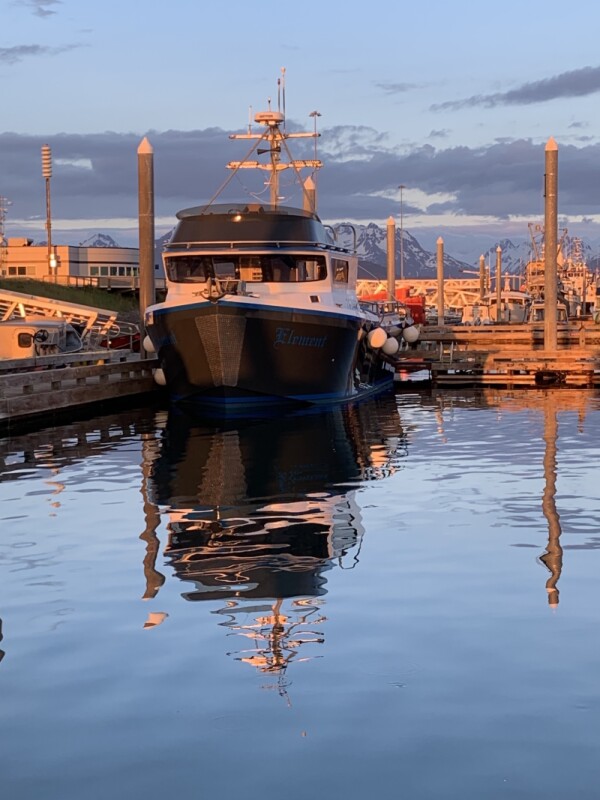
A post on the Facebook Page, Bristol Bay Boat Club put it best: “The F/V Element got a new heart before the season,” and just in the nick of time.
It takes a lot of confidence to repower a week before the Bristol Bay sockeye season, but Homer, Alaska, boatbuilder and fisherman, Ivan Basargin managed to get it done.
With help from his three brothers, Basargin had built the
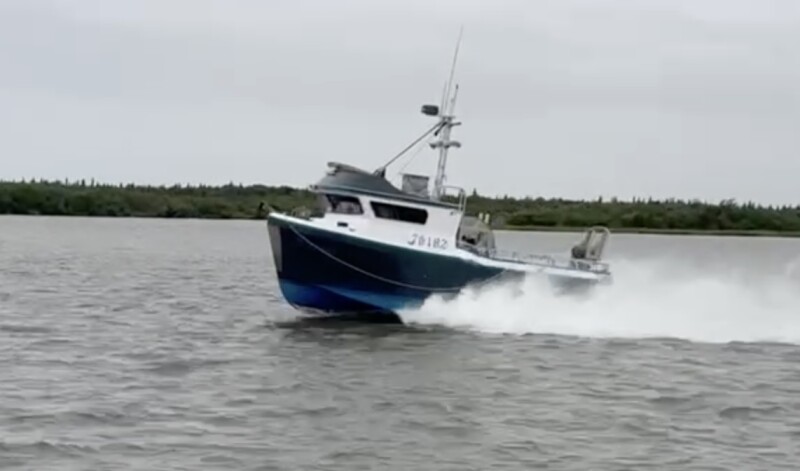
Element in 2010 from the Basargin family’s original mold. “It’s 32 feet by 14 and a half, and the keel is about 3 feet deep,” says Basargin. “I think it’s the last one we made from that mold, because people now want them wider.”
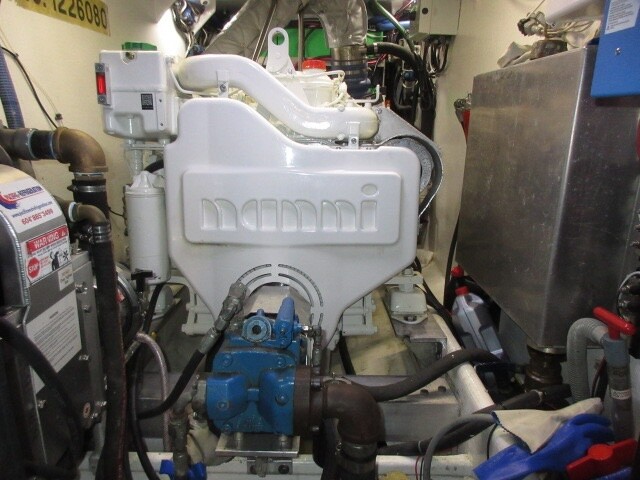
Basargin originally powered his single-prop boat with a 660-hp Cummins QSM11 with Twin Disc 5111 gear and a 2.25-inch shaft. Basargin replaced the Twin Disc gear with a ZF360, at 1.5:1, in 2023. This year, days before the Bristol Bay season started, he put a new 13-liter Nanni into his boat, changed the shaft, and made it over the mountain to Bristol Bay in time for the salmon season.
Basargin had had the engine, a 13-liter Scania block marinized by the French company Nanni, on a pallet for weeks, but couldn’t get to the project because of other work.
“We were working on a turnkey boat for another customer,” he says. “We finished that, and on June 8 and on June 9 my brothers, my father, and I started on the repower. We were doing sea trials the 15th.”
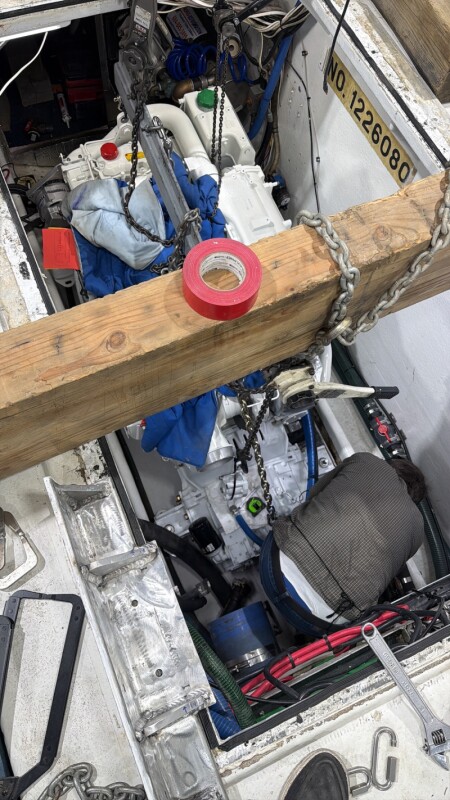
The project involved more than just dropping in the engine. Basargin had to make changes to the engine bed and the exhaust system and increase the shaft and propeller sizes. The Nanni gives Basargin all the horsepower he can get out of a Tier III engine for his size boat. He had sent the specs to engineers he works with at Dafoe Machine Shop in Vancouver, British Columbia.
“They recommended I go up to 2.5-inch to handle the increased torque,” he says. “So we put in the 2.5-inch Aquamet 22 shaft. We also installed a new cutlass and PSS shaft seal. Then we put on a five-blade, 28x26 Veem propeller, and that paired really well with the shaft for handling the load.”
Basargin points out that he had been buying all the parts and developing his installation plan well ahead of time, so that when the opportunity came to put in the Nanni he would have what he needed and the project would go smoothly. Years of boatbuilding experience helped.
Like a lot of Russian Americans’ Bristol Bay boats, the Element is high sided. “We like that,” says Basargin. “It gives us more capacity for fish and more headroom in the engine room. The engine room sits between two fish holds on each side that can hold a little over 5,000 pounds each. “I can pack 20,000 pounds comfortably,” says Basargin, “22,000 pounds when they’re fully stuffed.”
The new Nanni engine between the holds powers an 8.5-ton Pac West refrigerated seawater system (RSW) off the front end, and the deck equipment with a 4.5 cube pump driven by a PTO on the transmission. “The roller and anchor winch are built by Kinematics in Washington,” says Basargin. “The net reel was originally Kinematics, but I replaced it with one my Uncle Gary made. He has a shop on the east side of Homer called Mig & Tig Welding, and he does most of the machining for us.”
In the wheelhouse, Basargin runs a suite of Garmin electronics and can’t say enough good about them. “I had an autopilot that I never could get to work right, and in 2018 I tried the Garmin autopilot on, and it works great. I put on the tracking, and it will steer us down the river.”
The Basargins bring their boats over the mountain, running from Homer across Cook Inlet to Williamsport, truck them from there to Lake Iliamna and then down the Kvichak River. “Going downriver, the current can throw you off a little; going upriver it’s more accurate,” says Basargin.
“I have Garmin radar and the 1242XSV plotter and sounder. And I have a Starlink mini system that hardly draws any power. This year I’m getting a Veratron engine monitor that will plug into my NEMA 2000 backbone and display all my engine readings on the Garmin screen. And I have my iPad that displays it too.”
While the Element has four bunks, Basargin usually takes two crewmen along. “I used to take a couple of buddies, now I take their sons,” he says. “There are two wide bunks downstairs, and two smaller ones at mid-level. But we have the kitchen on the other side of the wheelhouse and a lot of times I’ll sleep on the settee there so I can keep an eye on things.”
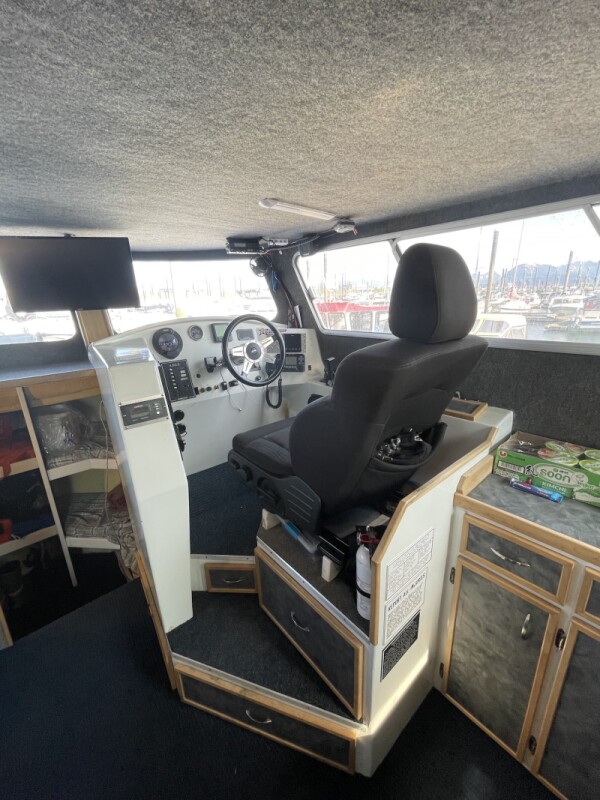
Most of the Basargin boats have a top house on the wheelhouse to give the skippers a better view when in the thick of fishing. But the Element has a flying bridge. “Some guys add a top house to the flying bridge,” says Basargin. “But I haven’t done that yet.”
The new power train can push the Element along at up to 33 knots top speed, 23 knots cruising and 8 knots loaded, and it’s more efficient, Basargin notes. “I’m saving fuel,” he says. “The old engine, when we were all loaded with fish, ran at 1000 RPMs to go 8 knots. The new one is 900 RPMs. When we’re cruising now, we turn 1900 to go 23 knots, and the old one was turning 2100 to go 20 knots.”
The difference showed up this past season in Bristol Bay. “I used to fill up with about 200 to 250 gallons a week,” says Basargin. “This year I was filling up sometimes only 150 gallons.” A fuel savings of up to 40 percent is impressive. But Basargin needed all the edge he could get this season.
“We started on the Nugashik, and the way they had the openings was just after high tide,” he says. “The fish come in with the tide all together. But when you fish it going out, they’re more dispersed, so we didn’t do so good there. Then we switched to the Ugashik, but we were late. My buddies who fished the whole time on the Ugashik did pretty good, we should have started there first. It’s always a gamble.”
That may be so, but increasing performance and efficiency are among the few things fishermen can control, and Ivan Basargin Jr. has made a good move in those directions by giving the Element a new heart.
Element specifications
Boat name: Element
Home port: Homer
Owner: Ivan Basargin
Builder: Basargin Boats
Year built: 2010
Hull material: Fiberglass
Fishery: Bristol Bay sockeye
Length: 32 feet
Beam: 14.5 feet
Draft: 3 feet
Engine: Nanni 13-liter
Power train: ZF360 @ 1.5:1; 2.5-inch Aquamet 22 shaft; 5-blade, 28x26 Veem propeller
Top speed: 33 knots
Cruising speed: 8 knots loaded, 23 knots ready to fish
Fish hold: four holds, 22,000 pounds
RSW: 8-ton Pac West
Deck gear: locally made net reel, Kinematic roller, and anchor winch
Electronics: Garmin suite, radar, sounder, plotter. Starlink. VHF for radio group, and VHF for all other traffic.
Crew accommodations: four bunks, shower, head, galley on the main deck
Fuel: 550 gallons
Water: 100 gallons