For the next generation of commercial fishermen, the desire to work on the water is strong. But from financing a vessel and securing permits to finding experienced captains willing to give newcomers a chance, the path into the industry proves to be incredibly difficult.
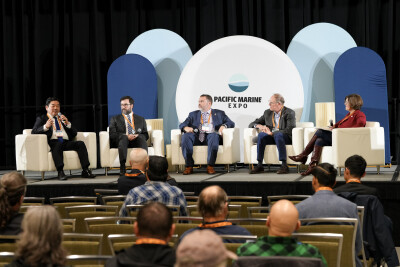
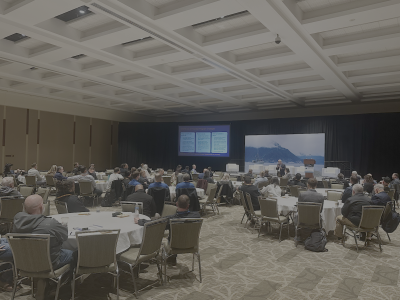
Those challenges brought fishermen, industry leaders, and fisheries organizations from across the country together Friday, Nov. 20, for the first-ever National Future Fishermen Summit, hosted by the National Future Fishermen Coalition (NFFC) during the 2026 Pacific Marine Expo in Seattle.
The summit marked a huge milestone for NFFC. It launched back in May 2025 after beginning as an idea before the COVID-19 pandemic among commercial fishing groups to tackle workforce challenges such as an aging fleet and barriers for new entrants. The associations that make up the coalition have spent years working on the realities of the fleet's graying.
The coalition helped bring 22 fishermen representing all fishing regions in our country to Seattle to participate in the summit and attend the expo, giving them an opportunity to connect with fellow fishermen, share experiences, and explore resources designed to support the industry’s future.
Dustin Delano, a fourth-generation Maine lobster fisherman, NOAA’s first fisherman in residence, and a 2025 National Fisherman Highliner, delivered the opening keynote, reflecting on his childhood fishing alongside his father in Friendship, Maine.
By age 11, Delano had his own small boat. Today, he questions whether a young fisherman could follow that same path. "Boats cost more. Permits and quotas can be nearly impossible to obtain. Fuel, insurance, gear, and maintenance all become more expensive," Delano said. He also pointed to disappearing working waterfronts, increasingly complicated regulations, and limited access to capital as obstacles preventing young people from entering the industry.
"We can't spend our time talking about preserving fishing heritage while allowing the opportunities to carry that heritage forward to disappear," he said.
Delano emphasized the need for improved financing, pathways to vessel and permit ownership, apprenticeships and mentorships, and stronger protections for working waterfronts. He also challenged experienced captains to consider who gave them their first opportunity and whether they were doing the same for the next generation.
"Because the future of this industry won't be secured by government programs alone," Delano said. "It will be secured by fishermen helping fishermen, experienced captains sharing their knowledge, communities investing in their young people, and all of us working together to remove barriers."
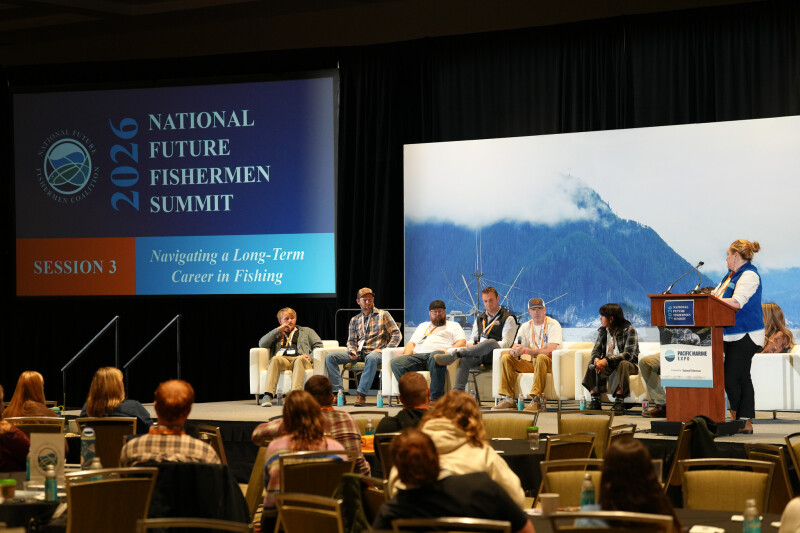
Young fishermen share their paths into the industry
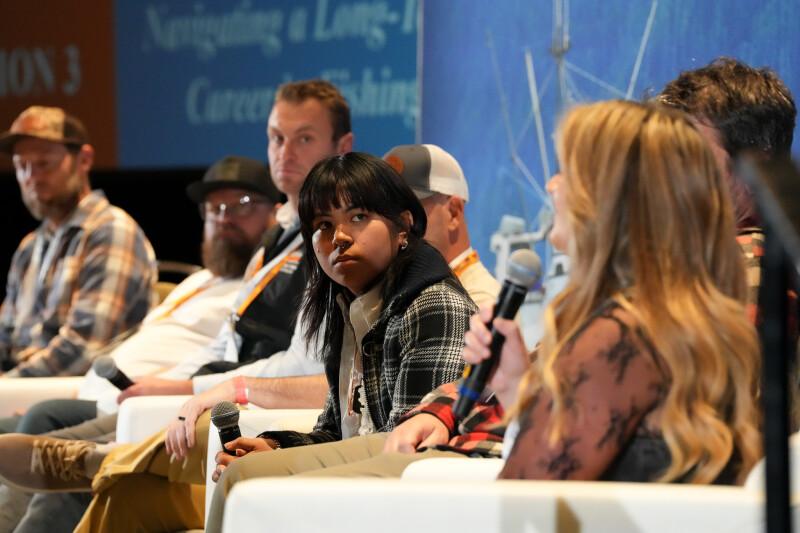
A podcast-style panel featuring commercial fishermen from several regions offered firsthand perspectives on what draws people into fishing, what keeps them there, and the obstacles they face along the way.
Some of the eight panelists grew up in multigenerational fishing families, while others discovered commercial fishing through apprenticeship, career changes, or unexpected opportunities. One first-generation fisherman described leaving college, accepting a deckhand position, and finding a career he never anticipated. Another left a decade in construction after watching fishing boats return to Rhode Island harbor and eventually entering an apprenticeship program.
Despite their different backgrounds, the fishermen shared a common appreciation for the independence, community, and sense of purpose that comes with working on the water. But getting started was very rarely straightforward.
A fisherman from Portsmouth, New Hampshire, shared that dock access is one of the greatest challenges facing new entrants, describing seasonal boat slips reaching around $16,000.
Others pointed to the difficulty of securing financing for vessels and permits, navigating licensing requirements, and finding established fishermen willing to provide opportunities and mentorship.
One Alaska fisherman described having to scale back his ambitions after financing fell short of what he needed for the vessel and permit he initially hoped to purchase. Instead, he bought a less expensive boat and permit to establish himself in the industry.
For another panelist, a mentorship connection made vessel ownership possible when an older fisherman agreed to finance a boat purchase directly, providing terms that traditional lenders could not match. Another fisherman shared that the connections that you can make in these programs are what are really helping him.
Panelists spoke about the importance of gaining experience beyond their family operations, building confidence, and navigating an industry where opportunities are often based on relationships and trust.
Women on the panel described additional challenges, including sexism and difficulties being taken seriously, even after years of proving themselves on the water. The discussion also touched on vessel safety, captains' responsibility for their crews, and the importance of learning from experienced fishermen.
One huge takeaway from a panelist was that real mentorship is one of the only things that can train a fisherman, and safety is one of the biggest parts of that. There is stuff you can’t learn in a room– you learn from doing.
Building opportunities beyond the summit
Representatives from organizations working to recruit and train new fishermen also highlighted the value of collaboration programs. Ashford Rosenberg of the Gulf of America Reef Shareholders Alliance and a member of NFFC's steering committee discussed the coalition’s training initiative, which began with research in 2019 and launched its first pilot in 2024 with support from Sea Grant partners.
The program combines classroom instruction, hands-on experience, and direct connections with experienced fishermen. Rosenberg said the program's small cohorts let participants build relationships with mentors, something she considers more valuable than simply increasing enrollment.
Andrea Tomlinson, founder and executive director of the New England Young Fishermen's Alliance and steering committee member of NFFC, also spoke about the need to address the aging fishing fleet and create opportunities for people without family connections to the industry.
For NFFC, the summit represented an opportunity to connect regional efforts and identify ways to help fishermen not only enter the industry but build sustainable careers. As Delano told attendees, preserving the fishing industry's legacy requires more than remembering the generations that came before.
"Our responsibility is to make sure that dream is still possible," he said, referring to young people watching fishing boats leave the harbor and imagining themselves someday at the wheel.