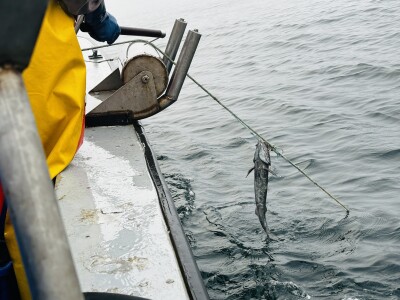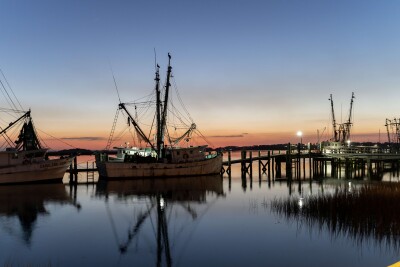
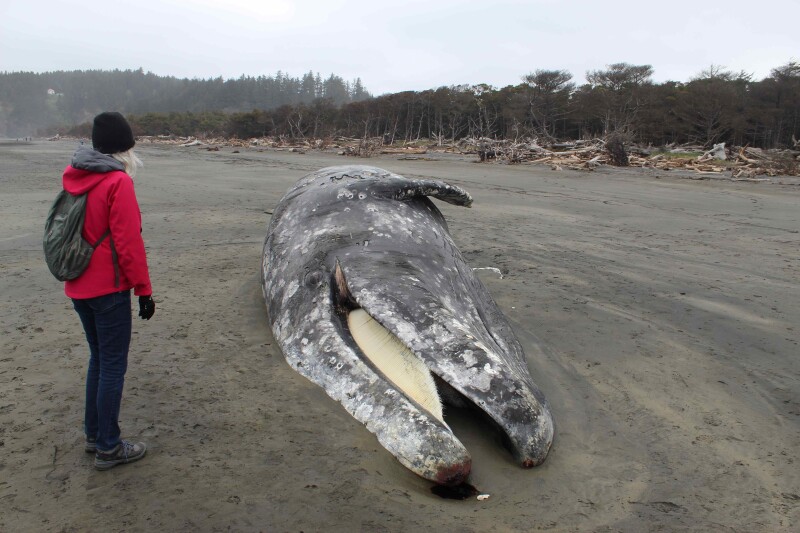
For thousands of years, gray whales have migrated along the Pacific Coast from Baja California, where the cows give birth to their calves, to Alaska, where they fatten on amphipods. But declining ice-edge plankton is, in turn, reducing amphipod populations, turning the whales’ Arctic garden into a graveyard. Since 2016, the gray whale population has dropped by more than half, from 27,000 animals to 12,700. Hundreds of emaciated whales are washing up on West Coast beaches. According to Shawn Henry, CEO of WhaleSpotter—an AI-powered, expert-verified whale detection and noise impact mitigation system—the hungry whales are entering San Francisco Bay in search of food, putting them at high risk of being hit by ships. But WhaleSpotter’s technology is proving it can help the remaining whales stay alive.
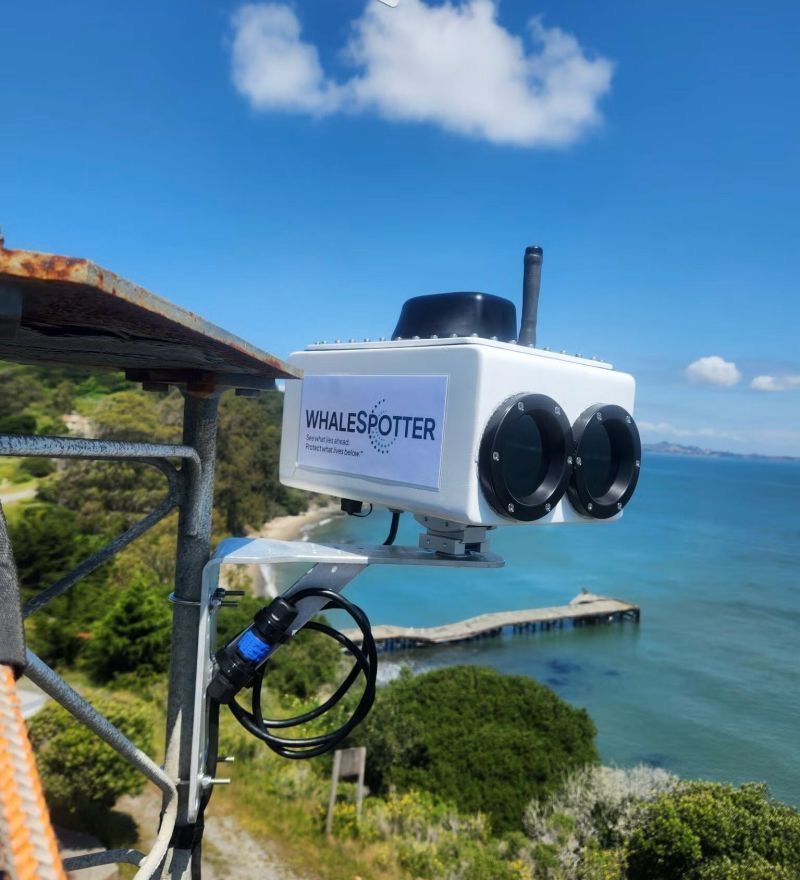
“These thousand-ton ships can’t always slow down, and they’re not going to stop,” says Henry. “But if they know a whale is ahead, they can alter course and avoid a ship strike.” According to Henry, after starvation, ship strikes are the most common cause of death for these whales, followed by entanglement in fishing gear.
Ecosystem shifts need to be addressed globally, but the Massachusetts-based company, WhaleSpotter, which spun off from the Woods Hole Oceanographic Institution in 2024, has developed an AI thermal imaging system that can help ships spot whales with enough time to avoid a collision, and indirectly help reduce entanglements by letting fishermen know where the whales are.
“Our motto is: detect, alert, avoid,” says Henry. “So far, with over one hundred WhaleSpotters on
In addition to putting WhaleSpotter on ships, the company has installed WhaleSpotter on Angel Island, north of San Francisco, and on one of the Bay Ferries. “If the ferry or the stationary cameras spot a whale, they can pool detections and make that information available to ships in the area. All our customers have the option to share information.”
Henry adds that he doesn’t want the mere presence of a WhaleSpotter camera on a boat to be used as bluewashing. “We can look at the number of detections and see if they resulted in a course correction,” he says. “We can measure detections, alerts, and measures taken to avoid whales.”
While WhaleSpotter was initially developed for the shipping industry, Henry notes that there are many more potential applications for the technology. “We think WhaleSpotter could be useful for Environmental Impact Assessments, North Atlantic Right Whale tracking, which could
WhaleSpotter may not save the gray whales from starvation, but it can help them survive in hopes that more favorable ecosystem changes will lead to their survival.