
Federal food purchases, school meals, and grant opportunities could provide new markets for U.S. seafood, but industry leaders say longstanding barriers must be addressed.
Commercial fishermen could see new opportunities to supply federal food programs and access U.S. Department of Agriculture (USDA) resources as the agency works to expand seafood's role in the nation's food system.
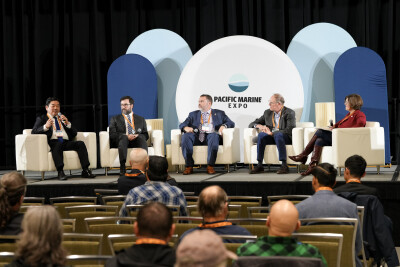
During a Friday panel at the Pacific Marine Expo in Seattle, director of the USDA Office of Seafood, Mike Illenberg, members of the commercial fishing industry and tribal fisheries discussed how the agency's new Office of Seafood could help connect fishermen with federal programs that have historically been geared toward agriculture.
The session, "Fish is Food: Opening Doors for Seafood in Federal Food Programs," highlighted both the potential for increased federal seafood purchases and the challenges fishermen continue to face when applying for USDA assistance.
Illenberg explained that the office was established primarily as a liaison between the seafood industry and federal agencies. Its initial work includes reviewing USDA programs to determine which already serve fishermen, processors, fishing communities, and identifying opportunities to expand eligibility and participation.
"Does this apply to seafood? If it doesn't apply to seafood, why doesn't it apply to seafood? And should it?" Illenberg said, describing the office's approach.
The effort also involves coordinating with NOAA, the Department of Health and Human Services, and other federal agencies to identify opportunities for fishing communities to combine resources.
Getting more seafood into federal food programs
One of the office's priorities is expanding seafood purchases for federal nutrition and feeding programs, including schools. Illenberg said the agency is working to increase both the number and variety of seafood products available through its commodity purchasing programs, which supply food to federal nutrition initiatives.
Greater participation in school nutrition programs could also help introduce younger consumers to seafood while creating additional demand for domestically harvested fish.
However, panelists emphasized that increasing purchases alone will not guarantee opportunities for fishermen across the country. Linda Behnken of Alaska Longline Fishermen's Association described how USDA grant applications often fail to reflect the realities of commercial fishing businesses, particularly smaller operations.
"We are a square peg in a round hole often," she said, explaining that application language and eligibility requirements frequently do not align with how fishermen harvest and sell their catch.
In some cases, applicants have contacted USDA for guidance, followed the recommended process, and still been rejected for applying under the wrong category. She called for clearer program guidance and application language that reflects fisheries and purchasing opportunities that support regional fishing economies rather than primarily benefiting large producers.
Illenberg acknowledged those concerns, noting that many agency employees have little experience working with commercial fisheries. The Office of Seafood hopes to address those gaps by working directly with program managers, improving applications and helping eligible fishermen access existing resources.
Tribal fisheries seek a seat at the table
Aja DeCoteau of the Columbia River Inter-Tribal Fish Commission emphasized that the USDA must recognize tribal fishermen and harvesters as food producers while acknowledging the agency's history of discrimination against Native producers.
She pointed to existing partnerships involving salmon habitat restoration, fisheries science, and tribal management as examples of how federal agencies can work more effectively with tribal governments.
For tribal fishing communities, success would mean greater access to financing, equipment, business development, and markets for tribally harvested seafood.
Measuring success
Looking ahead, the Office of Seafood looks forward to increased federal seafood purchases, greater participation in school nutrition programs, and more fisheries expertise on USDA grant review panels.
Behnken cited research indicating that just 0.5 percent of USDA grants currently go to seafood, with only a portion reaching fisheries and aquaculture. Increasing that share, she said, would be one measure of whether the agency's efforts are reaching the industry.
For fishermen, the larger question is whether USDA's growing recognition of seafood as food will translate into meaningful opportunities on the water, particularly for small businesses, tribal harvesters, and communities that depend on commercial fishing.