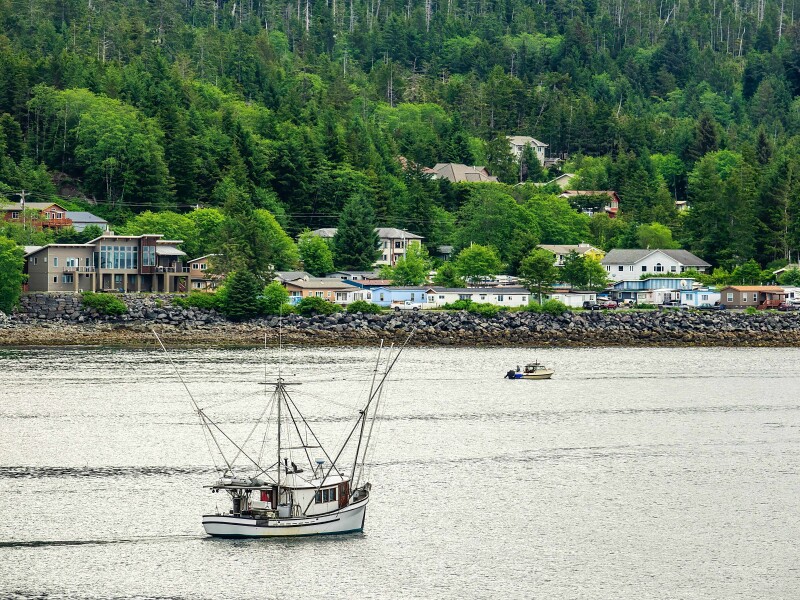
Twenty Southeast Alaska commercial troll vessels will help researchers investigate how changing ocean conditions influence where salmon and other fish are found as part of a new nearly $600,000 research project.
According to the Juneau Empire, the Sitka-based Alaska Sustainable Fisheries Trust announced the project Oct. 1 after receiving a $293,600 grant from the National Fish and Wildlife Foundation. Combined with $300,000 in matching funds, the project is valued at $593,600.
The effort will recruit 20 commercial troll vessels for the 2028 and 2029 fishing seasons, pairing fishermen’s catch information with measurements of underwater temperature and depth.
The goal is to better understand why salmon may concentrate in one area while nearby waters produce fewer fish.
“Temperature at depth certainly plays a role in where fish are aggregating,” Jack Carroll, director of operations at project partner Ocean Data Network, told the Juneau Empire.
Participating fishermen will use electronic logbooks and oceanographic sensors to record catches and conditions encountered while fishing. Satellite connectivity will allow that information to be transmitted to researchers during the season.
Researchers will then compare catch records with environmental measurements to look for connections between ocean conditions and where fish are being caught. The project will collect information on Chinook salmon, halibut, lingcod, and rockfish.
The project builds on a long history of fishermen contributing observations to Southeast Alaska fisheries research. From 1971 to 1991, fishermen participated in a voluntary paper-logbook program. The Alaska Trollers Association revived the concept in 2023 with an electronic logbook pilot involving 10 fishermen.
Longtime Alaska fisherman Jim Moore, who participated in the original logbook program and later advocated for an electronic version, said he expects the expanded effort to attract greater participation and research support.
“I am excited to see our project expand to scale and fully expect to see increased participation and support from our research partners,” Moore said.
Real Time Data will provide its Deckhand electronic reporting application, allowing fishermen to record catches and observations as part of their normal fishing operations. Participating vessels will also receive Starlink connectivity to transmit information while at sea.
Ocean Data Network will support the collection and organization of the resulting information so it can be used by researchers and fisheries managers.
If successful, the project could provide fishermen with a better understanding of how conditions beneath their vessels relate to fishing success while expanding the amount of real-time information available to scientists and managers.
The grant is one of 13 projects receiving a combined $3.4 million through the 2026 Electronic Monitoring and Reporting Program administered by the National Fish and Wildlife Foundation and NOAA.
Recruitment is underway for Southeast Alaska troll fishermen interested in participating in the 2028 and 2029 seasons.