Thousands of fall Chinook salmon returned to the Klamath River Basin in 2025, greatly exceeding the projected forecast, California Department of Fish and Wildlife (CDFW) officials said.
Data presented at the CDFW Salmon Information Meeting in Sacramento on Feb. 25 showed that an estimated 51,400 Klamath River fall Chinook returned to the basin, roughly 180% of the projected forecast of 28,600 kings.
Preliminary findings from the meeting showed that the 2025 Klamath Basin fall Chinook run size estimate is 61% of the 48-year long-term average. The last commercial salmon season for the Klamath River was in 2022, said Peter Tira, information officer for CDFW in Sacramento.
The return of the salmon comes in the wake of dam removal activity that began in the summer of 2023 with the removal of the first of four Klamath River dams in California, named Copco 2, Tira said. The second of the four dams – named JC Boyle – was removed in 2024, followed shortly thereafter by the removal of Copco 1 and lastly, the Iron Gate Dam.
The Iron Gate Dam was the southernmost dam blocking salmon passage into the upper reaches of the Klamath River. The final pieces of the dam were removed in October 2024. The final three dams did not come down sequentially, but rather, dam removal operations occurred simultaneously for the most part, Tira said.
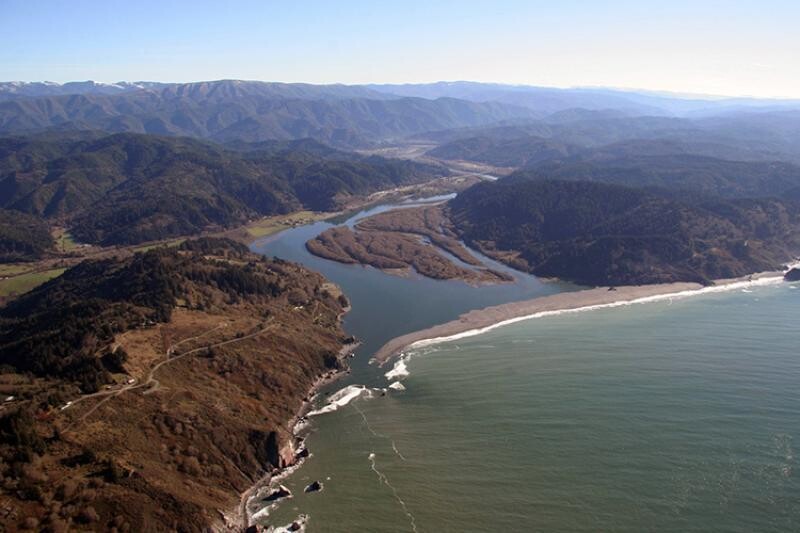
The Klamath River, which traverses the Oregon-California border, was once the third most abundant salmon-producing river on the West Coast of the continental United States. Six federally recognized Native American tribes had for millennia relied on the bounty of the Klamath River, the forests, and the surrounding grasslands for sustenance and spiritual practices that were central to their identity.
The four dams had for years blocked salmon passage and damaged the ecology of the river.
CDFW noted in a report issued on Nov. 18, 2025, a little more than a year after the historic removal of four hydroelectric dams on the Klamath River, that scientists were seeing salmon reoccupying just about every corner of their historic habitat.
“The speed at which salmon are repopulating every nook and cranny of suitable habitat upstream of the dams in the Klamath Basin is both remarkable and thrilling,” said Michael Harris, environmental program manager of CDFW’s Klamath Watershed Program. “There are salmon everywhere on the landscape right now, and it’s invigorating our work.”
Fish-counting stations on newly accessible tributaries within the former reservoir footprints in California recorded 208 adult salmon in Jenny Creek and 260 adult Chinook salmon in Shovel Creek. Multiple state and federal agencies, tribes, and non-governmental entities were monitoring salmon throughout the Klamath Basin at that time.