

A routine inspection in Alaska has unraveled into a much larger international wildlife trafficking case, with federal officials seizing tens of thousands of shark fins moving through U.S. ports.
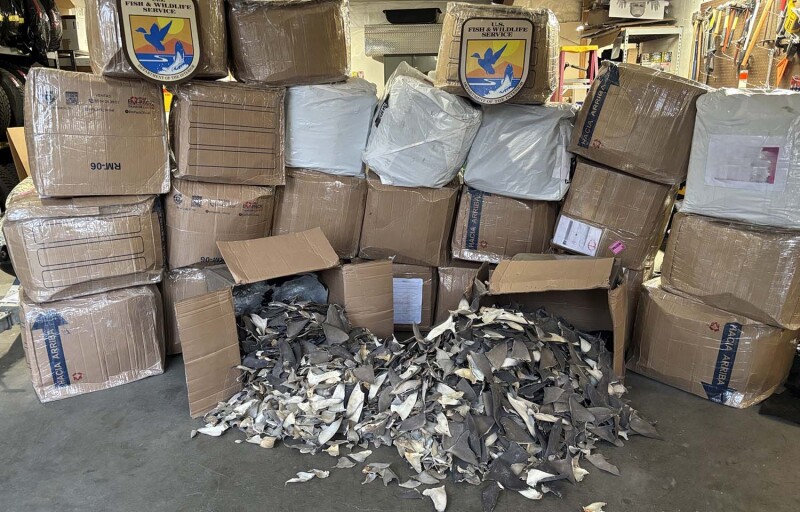
According to KTUU, the investigation began in Oct. 2025, when U.S. Fish and Wildlife Service inspectors flagged a suspicious shipment in Anchorage. That single discovery ultimately led authorities to 19 additional shipments routed through Anchorage, Louisville, Kentucky, and Cincinnati, Ohio, all moving from Mexico to Hong Kong.
In total, officials seized roughly 50,000 dried shark fins, weighing more than 1,6000 pounds and valued at over $1 million. The shipment had been disguised as car parts and was tied to what the agency described as a broader trafficking network.
Shark fins are highly valuable in Chinese and Southeast Asian cuisine, where they are used to make shark fin soup. The demand drives a multi-million-dollar global trade in dried shark fin, which is considered one of the most expensive seafood products by weight, according to Smithsonian Ocean.
Federal authorities said the fins primarily came from silky sharks and bigeye thresher sharks, species protected under the Convention on International Trade in Endangered Species. While not outright banned, trade in these species is tightly regulated under Appendix II, requiring proper documentation and oversight for legal export and import.
All shipments were seized for multiple wildlife law violations and information from the case has been shared with international enforcement partners for potential follow-up actions.
The investigation shows the role of Anchorage as a key inspection point in the global seafood and wildlife trade. The U.S. Fish and Wildlife Service designates the city as an official wildlife inspection port, putting it on the front lines of monitoring international shipments moving through Alaska.
The seizure was conducted as part of Operation Thunder, a multinational effort targeting illegal wildlife trade. It also comes amid tightening U.S. restrictions, following the 2023 Shark Fin Sales Elimination Act, which largely bans the possession, transport, and sale of shark fins in the United States.