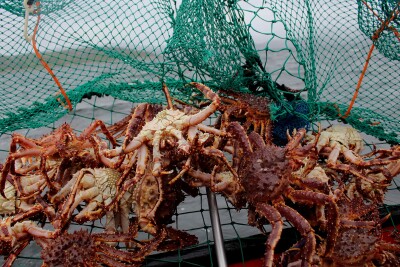
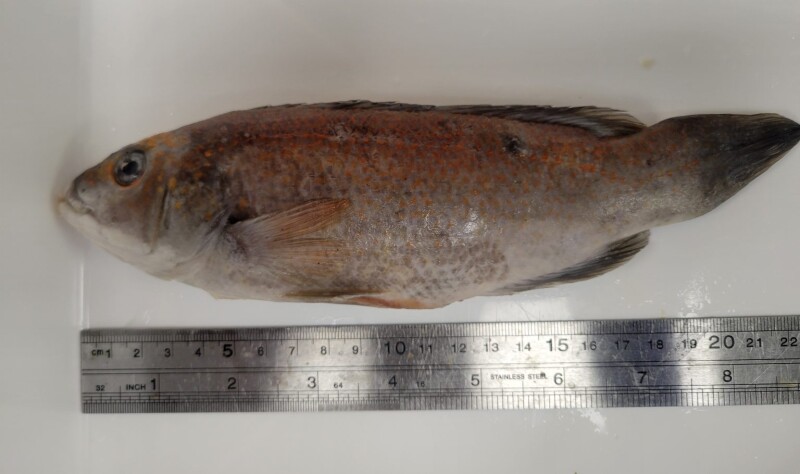
Along Maine’s coast, a familiar fish is raising new questions for lobstermen.
Researchers at the University of Maine (UMaine) are taking a closer look at whether cunner fish– long known to share habitat with lobsters– may be preying on them in a new way, particularly targeting egg-bearing females. The work is being led by fisheries scientist Michelle Staudinger, backed by a National Geographic Society grant aimed at studying keystone species and emerging ecosystems shifts.
Cunner aren’t new to the Gulf of Maine. The small, colorful fish have always fed on young lobsters in their early benthic stages, along with clams and snails. But recently, fishermen and the Maine Department of Marine Resources have reported cunner showing up in traps, and in some cases with lobster eggs in their mouths, raising concerns about potential impacts to the fishery.
“We don’t know if this behavior has been happening and gone unnoticed or if there is an environmental factor causing it to happen now,” Staudinger said in the UMaine article. “We would like to gather evidence to determine how widespread it is happening, and the best way to do that is to work with the fishermen who are on the water every day and see them in their traps.”
To get answers, researchers are turning to environmental DNA to analyze cunner stomach contents, which is needed because the species’ crushing teeth make traditional diet analysis difficult. The goal is to determine whether this is a localized issue or something broader that could influence how and where lobstermen have traditionally fished.
While the study has just begun, it comes at a time when the Gulf of Maine ecosystem is already in flux. Research has shown that the region has been warming rapidly– about 99 percent faster than much of the global ocean, according to a widely cited study. Scientists say that warming waters combined with ocean acidification are already affecting lobster growth, reproduction and survival.
Recent research on lobster embryos found that higher temperatures can speed up development but result in smaller larvae at hatch, which could be more easily eaten by predators. This dynamic could potentially intersect with predator behavior including species like cunner.
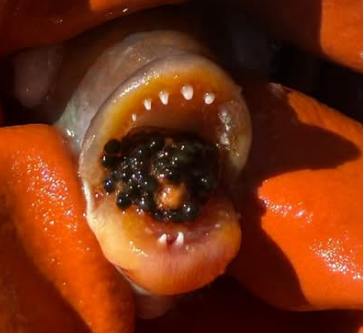
Shifts in prey availability may also be playing a role. Staudinger noted historical research showing cunner favor mollusks like mussels– species that have declined in some areas– raising the possibility that the fish are adapting to new food sources.
The UMaine team says the work could identify “hot spots” where cunner and egg-bearing lobsters overlap, offering further insights into where and when interactions are most likely. It could also lead to practical solutions, like trap modification to deter fish.
The findings may also show the issue is limited in scope, something that could ease another concern for fishermen.