A bipartisan group of U.S. senators is calling on the Treasury Department to expand sanctions targeting China's distant-water fishing fleet by focusing on the vessels that keep it operating at sea, arguing the move could significantly disrupt illegal, unreported, and unregulated (IUU) fishing.
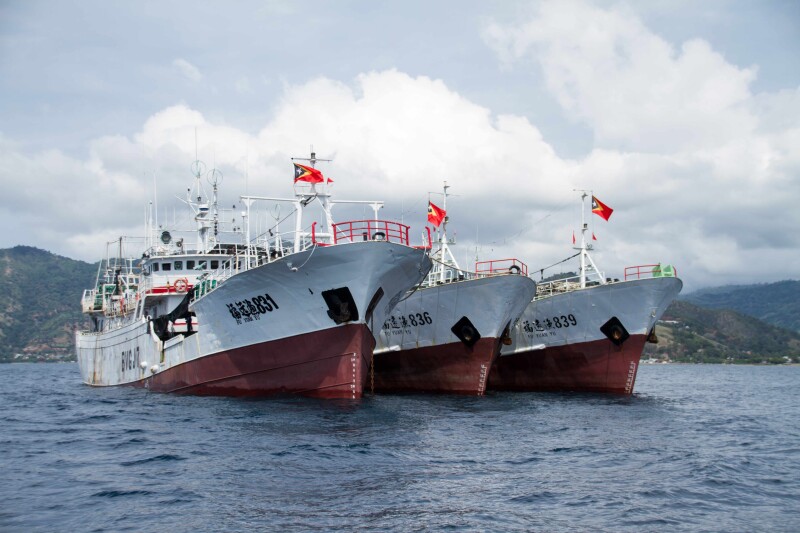
In a letter sent to Treasury Secretary Scott Bessent, Sen. Todd Young, R-Ind., and eight Senate colleagues urged the administration to sanction 29 Chinese support vessels, including refrigerated cargo ships, fuel tankers, and floating service bases, along with their owners. The lawmakers contend those vessels are the logistical backbone of China's distant-water fleet, allowing fishing vessels to remain at sea for extended periods while avoiding ports where sanctions and enforcement actions are more effective.
"China's distant water fishing fleet continues to disrupt global and regional fishing economies," Young said in a statement. "Through overfishing and illegal incursions into foreign waters, China seeks to undermine the global fishing industry until there is nothing left. The United States must take steps to combat these activities and promote American fishing practices, which remain the gold standard for sustainable fishing."
The letter was also signed by Sens. Ted Cruz, R-Texas; Dan Sullivan, R-Alaska; Andy Kim, D-N.J.; Tom Cotton, R-Ark.; Chris Coons, D-Del.; Roger Wicker, R-Miss.; Rick Scott, R-Fla.; and Marsha Blackburn, R-Tenn.
The senators argue that China's distant-water fleet, which they estimate ranges from 2,000 to 16,000 vessels, receives billions of dollars in government subsidies and accounted for roughly 44 percent of global fishing effort between 2022 and 2024. They accuse the fleet of widespread IUU fishing, destructive fishing practices, and labor abuses, including forced labor aboard fishing vessels.
Rather than attempting to sanction individual fishing vessels, the lawmakers say targeting the relatively small number of support ships would be more effective. Refrigerated carrier vessels allow catches to be transferred at sea, while bunker tankers refuel fishing vessels and floating bases provide medical care, supplies, and other services. According to the letter, those vessels enable Chinese fishing boats to remain at sea indefinitely without returning to port.
The senators noted that the U.S. has previously sanctioned Chinese fishing interests. In 2022, the Treasury Department's Office of Foreign Assets Control sanctioned two Chinese nationals and more than 150 vessels tied to human rights abuses under Executive Order 13818. They argue expanding those sanctions to include support vessels would make it significantly more difficult for China's fleet to obtain fuel, insurance, financing, port services, and buyers for its catch.
The request builds on broader congressional efforts to combat IUU fishing. Lawmakers pointed to funding approved in 2025 for Coast Guard maritime domain awareness technologies and the Senate's passage of the Fighting Foreign Illegal Seafood Harvests Act, which seeks to strengthen the federal government's response to illegal fishing and related labor and maritime security concerns.
The senators said sanctioning the support fleet would increase financial and operational pressure on China's distant-water fishing network while reinforcing international efforts to combat illegal fishing and protect global fisheries.
The U.S. Treasury Department "remains concerned about IUU fishing and forced labor practices, and we are committed to addressing this issue through the tools available to us," a spokesperson for Treasury told National Fisherman.