

Researchers at the Woods Hole Oceanographic Institution are using lobsters to study how a developing ocean carbon removal technique could affect marine life, as scientists look for ways to increase the ocean’s ability to absorb carbon dioxide.
According to an Aug. 20 report from The Guardian, researchers with the Lock Ocean Carbon in the Northeast Shelf and Slope project, known as LOC-NESS, are studying ocean alkalinity enhancement (OAE). The technique involves adding alkaline materials to seawater to increase its capacity to absorb carbon dioxide from the atmosphere.
Last summer, the research team released approximately 65,000 liters of sodium hydroxide into the Gulf of Maine’s Wilkinson’s Basin about 40 miles offshore from Boston. The material was mixed with a red dye, allowing researchers to track its movement while monitoring changes in alkalinity and carbon uptake over four days.
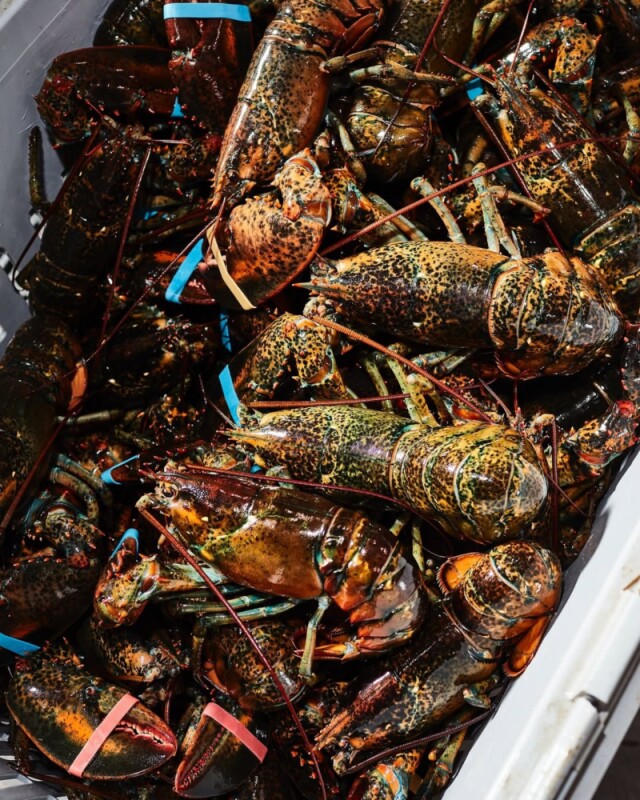
Now, scientists are examining what those changes could mean for marine organisms, including lobster, one of New England’s most economically important species.
Researchers at Woods Hole are exposing lobsters to different levels of alkalinity to determine how the animals respond. Preliminary laboratory results show no increased mortality or behavioral changes after exposure to elevated pH and alkalinity.
Marine biologist Chris Murray said researchers have so far observed no lethal effects at either low or high alkalinity levels. The team plans to analyze the lobster’s RNA following the trials to look for less-visible physiological responses.
The work follows earlier studies involving organisms at the base of the marine food web, including phytoplankton. Researchers eventually hope to expand the experiments into more complex systems containing multiple marine species.
The research comes as fishermen are already seeing changes in the Gulf of Maine. Third generation Scott Lord told The Guardian that species once commonly encountered as bycatch, including sea urchins, sand dollars and starfish, have become increasingly rare. He has also seen inshore lobster numbers decline over roughly the past 15 years, forcing fishermen farther offshore.
Questions remain about how OAE could affect marine ecosystems if deployed on a much larger scale. Researchers in Europe studying species including sea urchins, mussels, and fish eggs have found that excessively high alkalinity can cause physiological problems, abnormal development, and mortality.
The U.S. research is also facing an uncertain funding environment. The Guardian reported that federal cuts to ocean science have reduced funding opportunities for marine carbon dioxide removal research, potentially limiting scientists’ ability to continue studying the biological effects of techniques such as OAE.
For researchers at Woods Hole, those biological studies are an important step before determining whether ocean alkalinity enhancement could safely be expanded.