

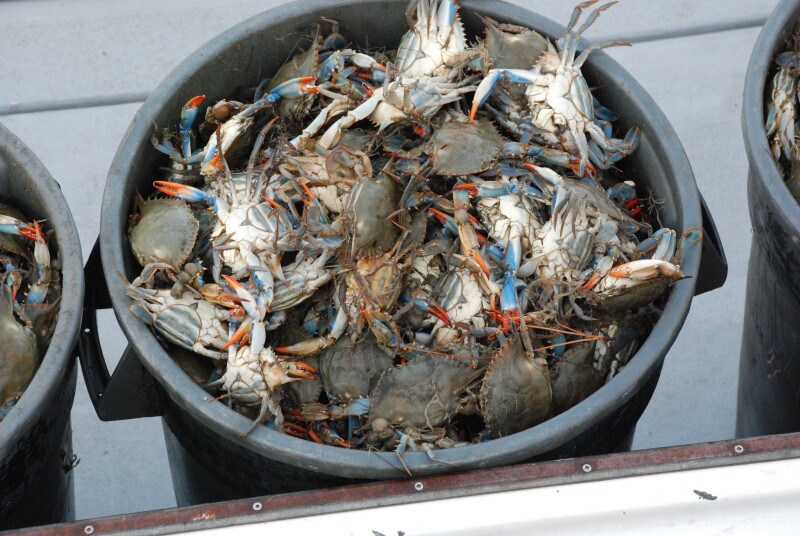
The Chesapeake Bay's blue crab population has declined by 50 percent between 2010 and 2023, according to a recent stock assessment by the Chesapeake Biological Laboratory at the University of Maryland Center for Environmental Science, leaving researchers searching for answers about what is driving the long-term decline.
Key takeaway
Researchers say Chesapeake Bay blue crab numbers have fallen 50% since 2010, but current harvest levels remain sustainable as scientists investigate habitat loss and early-life survival as the likely drivers of the decline.
Speaking with WAMU, Michael Wilberg, a fisheries science professor at the University of Maryland Center for Environmental Science and lead author of the study, said scientists have identified several contributing factors but have yet to pinpoint the primary cause.
"The really short answer to that is that we don't really know, unfortunately," Wilberg told WAMU.
Researchers believe invasive blue catfish are contributing to the decline by preying on blue crabs, but Wilberg said the species does not account for the full population loss.
Instead, researchers suspect the biggest challenges may be occurring early in the crab's life cycle. Wilberg said that blue crab larvae develop in the Atlantic Ocean before returning to the Chesapeake Bay, and scientists believe something during that stage may be reducing survival or preventing young crabs from successfully returning to the estuary.
Researchers are also investigating whether the loss of juvenile habitat, including seagrass beds and salt marshes, is limiting recruitment. Wilberg noted to WAMU that these habitats have declined over time because of coastal development and other environmental changes.
Despite the population decline, Wilberg said current fishery management measures appear to be keeping harvest at sustainable levels. He pointed to management actions implemented roughly 15 years ago that reduced fishing pressure and helped the stock rebound around 2010 before the current downward trend began.
Looking ahead, Wilberg said that continued research into blue crab habitat needs, along with efforts to preserve and restore critical nursery areas, will be key to understanding and reversing the decline.
For consumers, Wilberg said there is no reason to avoid Chesapeake blue crabs.
"I don't think so. I think that the fishery as it currently stands is still sustainable," Wilberg told WAMU. "I wouldn't discourage anyone from eating blue crabs."