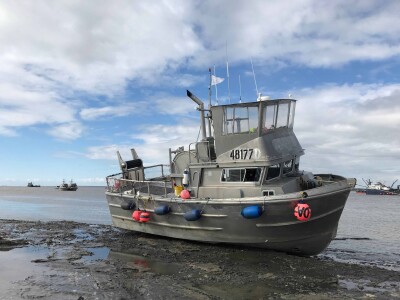
Every time a fishing vessel sinks, there’s something we can learn from what happened. Sometimes those lessons come from accident investigations. Other times, they come from research looking at years of vessel casualties. And sometimes, the most valuable information comes from talking directly with a fisherman who survived.
Each tells us something different. When we look at them together, we begin to get a better picture of what helps people survive and, just as importantly, what might have prevented the emergency.
That’s the thinking behind the Alaska Marine Safety Education Association’s (AMSEA) participation in this year’s Pacific Marine Expo.
Bringing research and experience together
For more than 40 years, AMSEA has provided hands-on marine safety training to fishermen and other mariners throughout Alaska, the Pacific Northwest, the United States, and beyond. Based in Sitka, Alaska, AMSEA is perhaps best known for its Fishing Vessel Drill Conductor courses, where participants practice skills and drills they may need during an emergency.
At the Pacific Marine Expo, AMSEA will bring that practical approach to a panel discussion titled Surviving Vessel Disasters: Factors Contributing to Survival of Cold-Water Immersion. The panel will take place on Thursday, Nov. 19, at 11:30 a.m. on the Main Stage.
When a fishing vessel sinks in cold waters, why do some crew members survive while others don’t? It’s a question that Devin Lucas and his colleagues at the National Institute for Occupational Safety and Health (NIOSH) set out to better understand by examining years of commercial fishing vessel sinkings in Alaska.
To explore what influences survival and what might prevent a vessel disaster in the first place, AMSEA will bring together representatives from NIOSH, the National Transportation Safety Board, the Coast Guard, the marine survival equipment servicing industry, and fishermen who have survived vessel disasters.
What are investigators learning from vessel casualties? What problems are discovered when life rafts and immersion suits come in for servicing? What role does crew preparation play? The idea isn’t to second-guess anyone’s actions. It’s to better understand what happened, what worked, and what others might learn from those experiences.
From discussion to hands-on experience
AMSEA’s life raft workshops will take that conversation a step further, giving fishermen a chance to get familiar with equipment they may someday depend on. AMSEA will offer four hands-on life raft workshops during the Expo. Attendees will participate in a simulated deployment, watch a raft inflate, and explore its features and emergency equipment. They’ll also experience practical challenges of using survival equipment, including how difficult simple tasks can become when wearing immersion suit gloves.
The workshops will be informal and interactive, giving fishermen an opportunity to ask questions, handle equipment, and become more familiar with a life raft before they ever need one.
Project Gabe: Preventing opioid overdoses at sea
AMSEA is also excited to bring Project Gabe to the Pacific Marine Expo this year to help fishermen combat opioid misuse and prevent overdoses within the fishing fleet, where physical stress and chronic pain are part of everyday life.
Part of the industry’s growing fishermen’s health initiative and AMSEA’s Mariners First Aid program, Project Gabe provides opioid awareness and naloxone (e.g., Narcan) training alongside CPR and other important first aid training. The program helps fishermen recognize overdose symptoms and safely administer lifesaving medication in isolated marine environments.
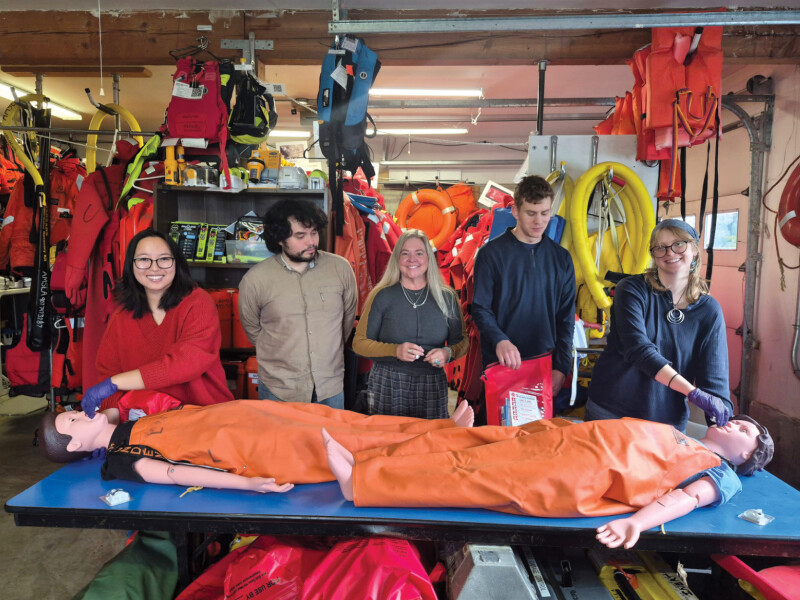
This year, AMSEA will host 30-minute, hands-on workshops where attendees can practice CPR and opioid overdose reversal techniques on mannequins, learn about alternative pain-control methods, preventive exercises for chronic pain, and behavioral health resources.
The free training sessions will take place from 12:30 to 1 p.m. and 3 to 3:30 p.m. on Thursday, Nov. 19, and from 3 to 3:30 p.m. on Friday, Nov. 20. Participants will receive an official AMSEA naloxone distribution certification and a free Project Gabe opioid overdose response kit.
Connecting with the fishing community
AMSEA values the opportunity to connect with fishermen, vessel owners, equipment manufacturers, and others who work in the industry. The Pacific Marine Expo gives AMSEA another way to share information, demonstrate equipment, and hear directly from the people who use it. Those conversations matter. The questions fishermen ask and the experiences they share help AMSEA understand what they’re encountering aboard their vessels and what would make training more useful.
Whether it’s preparing a crew for an emergency, getting familiar with a life raft, or learning to respond to an opioid overdose, AMSEA’s work is about giving people the knowledge and skills that may help prevent an emergency or save a life when one occurs.