

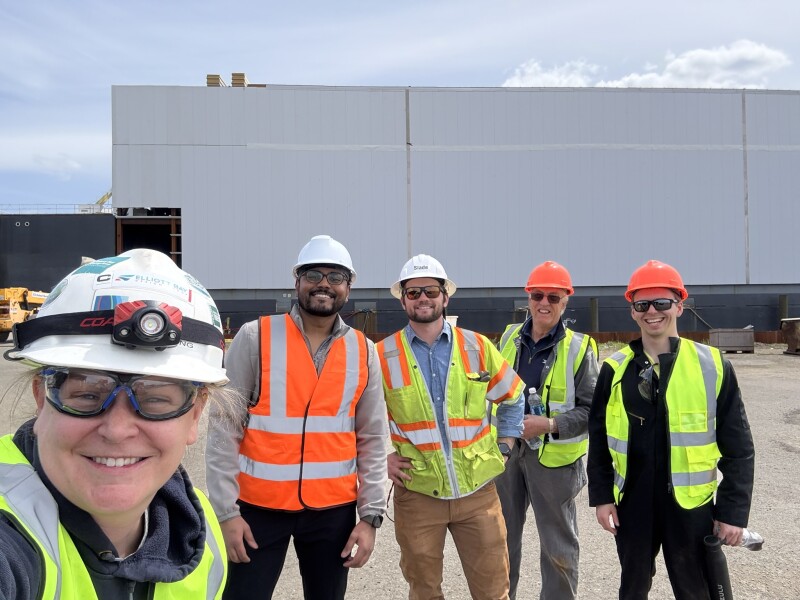
When a vessel owner is weighing a repower, a new winch system, or an entire new build, the best decisions are made early, long before steel is cut or a boat is hauled. At Elliott Bay Design Group (EBDG), a Seattle-based naval architecture and marine engineering firm, that early conversation is where the work begins. Whether the project is a stability analysis, a condition survey, a structural foundation for new deck equipment, or a full vessel design, EBDG’s engineers help fishing and workboat operators understand where their vessels stand today and plan a realistic path forward.
In this Pacific Marine Expo Q&A, Director of Sales Joe Hudspeth and Principal in Charge David Turner, PE, explain why rising costs and aging fleets make long-term capital planning more important than ever, how a seemingly simple equipment swap can involve regulatory, structural, and operational questions all at once, and why owners should stay open to rethinking their approach before the design is locked in.
Please give a brief overview of Elliott Bay Design Group and the services it provides.
Joe: Elliott Bay Design Group is a full-service naval architecture and marine engineering firm, which allows us to provide a wide range of solutions based on what an owner or operator needs. That can include new vessel procurement, feasibility studies, or assessments of an existing vessel or fleet.
For fishing and workboat operators, our services range from stability calculations, winch and crane foundations, and equipment selection to condition-based maintenance programs, condition surveys, 3D scanning and modeling, and repowers or new designs. We also stay current on emerging propulsion technologies, including diesel, alternative fuels, electrification, and automation, helping operators evaluate solutions that make sense for their vessels and operations.
What has changed for your customers in the past year or two, and how has that changed what EBDG offers?
Joe: Everything continues to get more expensive while, at the same time, vessels continue to get older. That makes it increasingly important for owners and operators to take a long-term look at their fleet and capital planning.
Owners need to understand when it makes sense to recapitalize and invest in a new vessel or technology, and when maintenance or repower programs should be incorporated into upcoming dry dock periods. At EBDG, we help operators assess where they are today, plan and budget for the future, and understand when it is time to make that investment. Sometimes acting sooner can ultimately be more cost-effective than waiting as costs continue to rise.
What is EBDG bringing to Pacific Marine Expo this year, and what are your goals for the show?
Joe: We’re bringing our biggest assets to PME: our people.
Attendees will have the opportunity to meet some of EBDG’s naval architects and marine engineers and talk directly with the people behind our work. We’re also bringing our excitement around new technologies, examples of how we’ve helped operators in the past, and, most importantly, an eagerness to listen.
We want to hear what the industry and owner-operators are experiencing, understand the challenges they need to overcome, and explore how we can walk alongside them to help them succeed.
Why does Pacific Marine Expo matter to Elliott Bay Design Group?
Joe: PME matters because it gives the industry an opportunity to come together. During the working months of the summer, everyone is focused on their individual areas of the industry. PME gives us a chance to pause, reconnect, and talk about what we’ve experienced.
We get to celebrate successes, whether that’s coming off a great fishing or workboat season, and we also have an opportunity to come together around the challenges facing the industry. Most importantly, we collaborate on how we move forward.
We may celebrate, commiserate, and collaborate, but collaboration is something you can always count on at PME.
If a fisherman or vessel owner is considering a new vessel or major vessel project, what should they be thinking about early in the process?
Joe: Cost and schedule are naturally two of the first questions owners ask. The reality is that a vessel project may cost more and take longer than initially expected, but those challenges become much more manageable when the conversations happen sooner rather than later.
EBDG brings experience to those early conversations. We can help owners navigate regulatory approvals, connect with trusted partners and equipment providers, work through the shipyard process, and make the overall project as productive and cost-effective as possible. The earlier we understand where an operator needs to go, the better positioned we are to help develop a realistic path to get there.
Please walk us through a specific problem you solved for a fishing customer recently.
David: We’re currently working with a client that wants to remove the existing anchor winch and chain from its vessel and replace it with a winch and cable system. Our role includes addressing the regulatory requirements associated with that change, as well as the engineering considerations that come with modifying the vessel. That includes evaluating and designing the necessary structural foundations and determining how the former chain locker can be repurposed. It’s a good example of how what may initially appear to be an equipment change can involve regulatory, structural, and operational considerations that need to be addressed together.
.png.medium.800x800.png)
If a fisherman or vessel owner is considering working with EBDG, what should they be asking that most people don’t?
David: Before getting too locked into a specific course of action, take the time to have a dialogue with the engineering team and consider the questions they’re asking based on their experience with other projects. Be open to reconsidering the direction you initially thought you needed to go. When an owner is too prescriptive at the beginning, it can lock the design team into a specific path and limit opportunities to develop a solution that may work better for the vessel and its operation. Having an open conversation early about what you need and what you want can ultimately help avoid rework later in the project.
What are you personally looking forward to at Pacific Marine Expo this year?
Joe: One thing I’m particularly excited about is seeing PME broaden its focus across the working boats of the West Coast while maintaining its strong connection to the fishing industry and Alaska.
This year, PME is hosting a passenger vessel session focused on design, propulsion, and charging innovations, which I’ll have the opportunity to moderate. I think it’s exciting to see the show bring together an even broader range of operators and maritime professionals while continuing to create connections across the West Coast maritime industry.
Is there anything else you would like our readers to know about EBDG?
Joe: I think it’s important for people to know that they can always call and ask. There are real people on the other end at Elliott Bay Design Group.
Our team includes experts across mechanical, electrical, and structural engineering, along with professionals who can help with studies, RFPs, and navigating complex processes. If we can help, we will. And if something falls outside what we do, we can help point you in the right direction.
Ultimately, we want to be trusted partners. If you don’t get a chance to meet our team at PME, give us a call.