




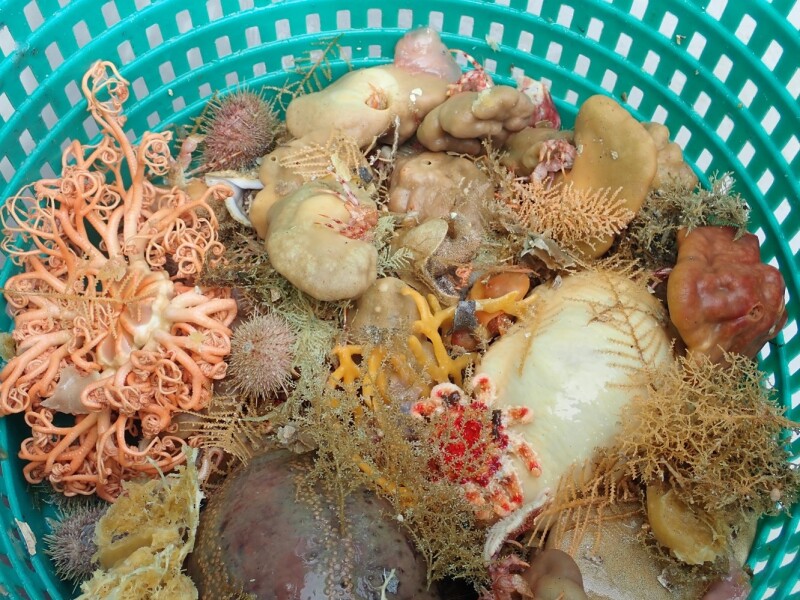
Scientists have identified nine previously unknown species of sea sponges in Alaska waters, including one in an entirely new genus, discoveries that are expanding scientists’ understanding of the state’s largely unexplored seafloor and renewing debate overfishing practices and habitat protections.
According to the Alaska Beacon, the discoveries stem from a NOAA Fisheries program studying Alaska’s cold-water sponge and coral gardens. The nine species bring the number of known sponge species in Alaska to 232.
“Alaska really has these major knowledge gaps, and we regularly are uncovering either undescribed species, which was the case here, or some of these rarely identified species that are really vital for seafloor habitats,” NOAA Fisheries biologist Sean Rooney told the Beacon.
Seven of the newly identified species were found in the central and western Aleutian Islands, while two were found exclusively in the Gulf of Alaska. Some species occurred in both regions. Researchers found them at depths ranging from about 50 to 500 meters.
One of the discoveries, Polycapus rubrum, represents an entirely new genus. Scientists distinguished the sponge through microscopic examination of its spicules, tiny structural elements within sponges, and DNA testing. Another newly described species, Julavis borealis, is related to sponges previously known from tropical waters.
The specimens were collected during trawl surveys conducted between 1997 and 2022, illustrating the time required to identify and classify sponge species. Sponges play an important role in Alaska’s marine ecosystem by creating complex seafloor habitat, filtering seawater, and providing nursery and shelter areas for fish. But scientist still know relatively little about their distribution. Rooney told the Beacon that about 61% of Alaska’s seafloor has yet to be mapped using high-resolution sonar.
The discoveries are also feeding into ongoing discussion over how fishing gear interacts with seafloor habitat. Most of the Aleutian region has been closed to bottom trawling since protections were established in 2006 for coral and sponge habitat, though some areas remain open. The Gulf of Alaska remains more broadly open to bottom trawling, with designated protections for certain coral areas and seamounts.
Environmental organizations, including Oceana and the Center for Biological Diversity, have pointed to the new discoveries in calling for additional habitat protections. Oceana has sought restrictions on bottom trawling in the Gulf of Alaska and has brought proposals before the North Pacific Fishery Management Council.
The council is also examining a related issue involving pelagic, or midwater, trawl gear. Although the gear is designed to fish above the bottom and is widely used in Alaska’s pollock fishery, research has documented instances of contact with the seafloor.
At its June meeting, the council declined to take regulatory action on pelagic trawl gear contact with the bottom, instead directing staff to further analyze potential options for preventing or reducing that contact. According to the council’s meeting outlook, that work is expected to return for consideration in May 2027.
 (1).jpg.small.400x400.jpg)
