NOAA Fisheries is making approximately $4.6 million available for projects aimed at reducing bycatch through improved fishing practices and innovative gear technology.
The agency announced its 2026 funding opportunity through the Bycatch Reduction Engineering Program, inviting non-federal researchers to submit proposals for collaborative projects that address bycatch challenges facing U.S. fisheries.
A major emphasis of this year's funding opportunity is industry involvement. NOAA Fisheries said it is looking for proposals that include proactive and meaningful engagement with the fishing industry in identifying, designing, or implementing projects.
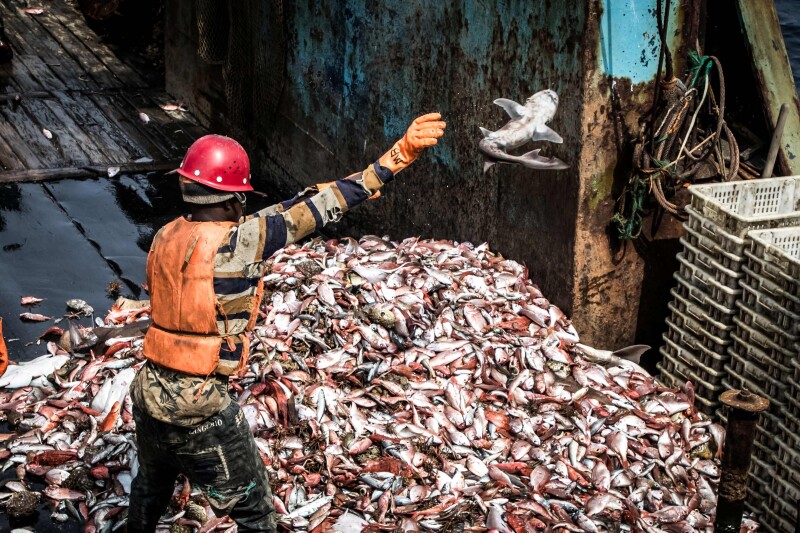
Bycatch includes fish and other marine species that fishermen do not want, cannot sell, or are not permitted to retain. Depending on the fishery, it can include non-target fish as well as marine mammals and sea turtles. Reducing those interactions can help address biological concerns while also limiting economic impacts on commercial fishing operations.
The Bycatch Reduction Engineering Program has supported research conducted alongside fishermen to develop and test gear and fishing practices under real-world conditions.
Previous work on the West Coast, for example, found that a dual-sorting flexible grid system known as Flexigrid reduced undersized sablefish bycatch by more than 45 percent while maintaining catches of adult sablefish and other target species.
In the Southeast, research supported using different circle hook sizes to improve selectivity. NOAA Fisheries said larger 15/0 circle hooks reduced undersized red grouper bycatch by more than 70 percent, while smaller 13/0 hooks showed greater selectivity for catching red snapper.
The new funding opportunity follows $2.4 million awarded through the program in 2025 for 10 projects around the country.
Three Northeast and Mid-Atlantic recipients received funding last year, including the Sea Mammal Education Learning Technology Society, or SMELTS, which received $254,100; Whale and Dolphin Conservation, Inc., which received $258,527; and Cornell Cooperative Extension of Suffolk County, which received $226,780.
In the Southeast and Gulf region, Woods Hole Oceanographic Institution received $249,972, and Mote Marine Laboratory received $208,529.
West Coast recipients included the Pacific States Marine Fisheries Commission with $243,797, Sub Sea Sonics with $228,581, and the Pacific Whiting Conservation Cooperative with $72,000. The Alaska Department of Fish and Game received $348,723, while Hookpods Ltd. received $328,853 for work in the Pacific Islands region.
NOAA Fisheries said preventing and reducing bycatch remains a shared goal among fisheries managers, the commercial fishing industry and the environmental community.
Applications for the 2026 Bycatch Reduction Engineering Program funding opportunity are now open through Grants.gov.