A new California partnership is bringing fishermen, scientists, and conservation groups together in an effort to reduce whale entanglement risk while keeping the state’s Dungeness crab fleet on the water.
The Marine Mammal Center, Pacific Coast Federation of Fishermen’s Associations (PCFFA), and The Nature Conservancy have launched the Dungeness Crab and Whale Conservation Collaborative, a three-year initiative supported by the Clean Break Fund.
The collaborative aims to improve real-time information about whale presence and behavior off California, giving fishery managers better data as they make decisions about entanglement risk, season delays, and other restrictions affecting the commercial Dungeness crab fishery.
“California’s commercial fishermen have a long history of finding solutions to challenges on the water,” said Lisa Damrosch, executive director of PCFFA. “This partnership brings that experience together with some of the best minds in science and conservation, with fishermen at the table from the very beginning.”
The Marine Mammal Center will lead development of an integrated whale monitoring system that combines vessel surveys, drones, shore-based observations and underwater acoustic gliders. The goal is to develop a clearer picture of where whales are located and how their distribution changes over time.
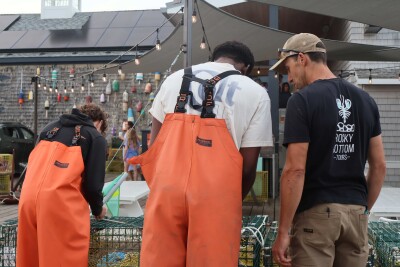
Commercial fishermen will have a direct role in that work. PCFFA will coordinate industry-led vessel surveys and fishermen’s participation in entanglement investigations, incorporating knowledge from those working on the water into the collaborative’s research.
The Nature Conservancy will expand vessel-based whale surveys and satellite whale detections while advancing gear recovery technology and improving the data systems used in fishery management.
The partners say better and more timely whale data could help managers respond more dynamically to changing conditions, potentially reducing entanglement risk without relying as heavily on broad fishery restrictions.
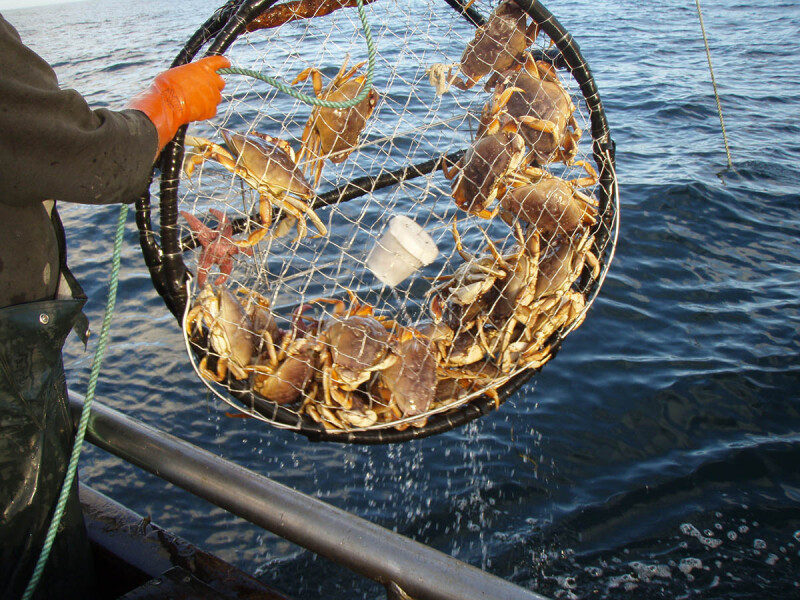
California’s Dungeness crab fleet has faced repeated season delays and fishing restrictions in recent years as managers work to limit the risk of whales becoming entangled in fishing gear. Those delays can cut into some of the fishery’s most valuable fishing periods.
Findings from the new collaborative will be shared with the California Department of Fish and Wildlife and other partners to help inform the state’s Risk Assessment and Mitigation Program, or RAMP, which is used to evaluate whale entanglement risk and determine management actions.
“Protecting whales and supporting a healthy fishing industry are goals we can work toward together,” the partners said. “Addressing a challenge this complex takes collaboration, a willingness to learn from one another and a commitment to finding solutions grounded in science and the experience of people who work on the water.”