


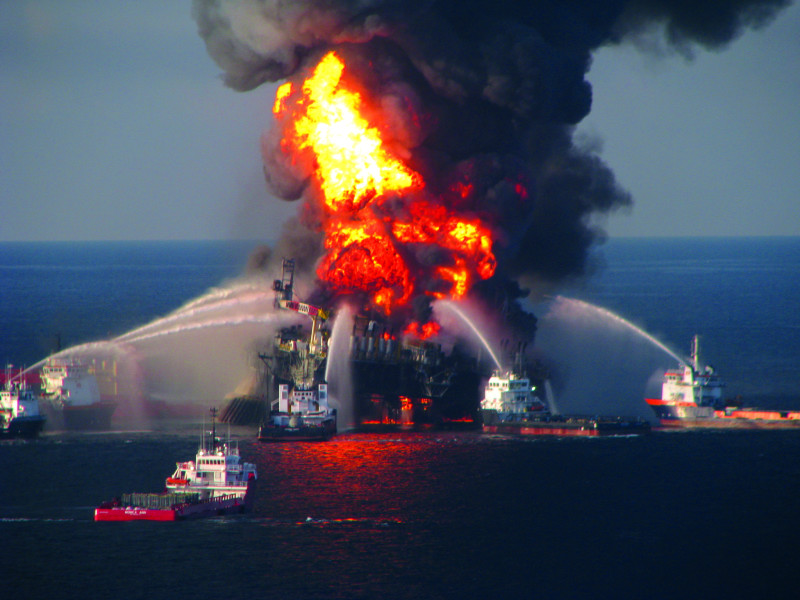
The catastrophic 2010 Deepwater Horizon disaster led to the splitting of the federal Marine Minerals Administration into two separate agencies – one focused on offshore leasing and production, and another on safety.
Now Democratic leaders in Congress are sounding the alarm over the Trump administration’s move to reunite the agencies’ functions under one roof.
The April 2010 well blowout and fire killed 11 platform workers, discharged an estimated 4.9 billion barrels of oil into the Gulf of Mexico and was only declared sealed five months later in September 2010.
Economic and environmental damages from the disaster led a year later to the creation of the Bureau of Ocean Energy Management (BOEM) to handle offshore energy management, alongside the Bureau of Safety and Environmental Enforcement (BSEE).
In a July 8 letter to the Government Accountability Office
The key issue is “whether Interior is collapsing the firewall between resource development and independent safety oversight that was established after Deepwater Horizon,” Heinrich and Huffman wrote in their letter.
“These concerns are compounded by the fact that Interior is pursuing this reorganization amid significant workforce reductions, including staffing losses resulting from the 2025 Deferred Resignation Program and additional proposed cuts in the fiscal year 2027 budget request,” they added. “The Department is simultaneously expanding the scope of its responsibilities to include offshore critical minerals leasing and other new activities.”
The original post-Deepwater reorganization “was intended to address the very regulatory failures that contributed to the Deepwater Horizon disaster by ensuring that offshore safety and environmental protection would not be subordinated to industry pressure or revenue generation,” Heinrich and Huffman wrote.
The move by Interior Department officials, followed by the Democratic demands for scrutiny, echo a May 2019 debate during the first Trump administration when the Bureau of Safety and Environmental Enforcement issued a new well control rule, with revisions sought by offshore oil and gas operators who contended safeguards imposed after Deepwater Horizon disaster had become unnecessarily burdensome.
The first Trump administration pitched it as regulatory reform to build U.S. energy security. Critics dubbed it a rollback of safety rules.
Post-disaster reform “while well intentioned, was flawed with technical problems that actually detracted from the goal of safe operations,” said Randall Luthi, then president of the National Offshore Industries Association. “BSSE’s final revisions, which leave the original rule largely intact, further manage risks and better protect workers and the environment, making drilling safer.”
For their part, environmental groups claimed Interior was in effect “gutting” safety improvements.
“The well control rule was one of the most important actions we took, as a nation, in response to the BP-style disaster at sea. The rule draws directly from lessons learned from that debacle,” said Bob Deans, then director of strategic engagement at the Natural Resources Defense Council.