

Alaska’s commercial weathervane scallop fishery opened July 1 with harvest levels unchanged from last season, but despite nearly 400,000 pounds of statewide quota available, only two vessels are expected to participate in one of the world’s most exclusive commercial fisheries.
According to the Alaska Department of Fish and Game (ADF&G), the 2026/27 fishery carries a statewide guideline harvest level (GHL) of approximately 381,700 pounds of shucked scallop meat, with nearly half of the allocation, 190,000 pounds, coming from waters around Kodiak.
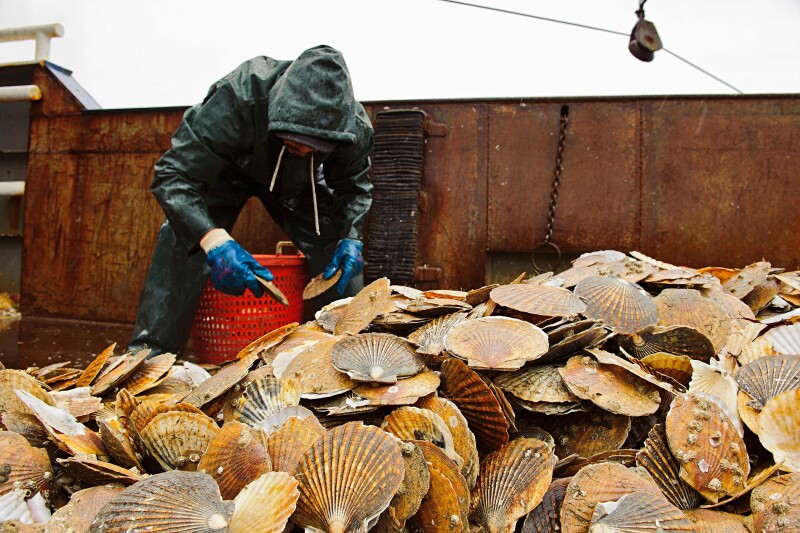
Kodiak remains the center of Alaska’s scallop fishery, but as KMXT reported on July 8, there was no rush of boats leaving the harbor when the season opened. "Weathervane scallops are the largest species of scallop in the world, and the only scallop species on the West Coast that has a substantial commercial fishery," Kodiak-based ADF&G area biologist Nat Nichols told KMXT.
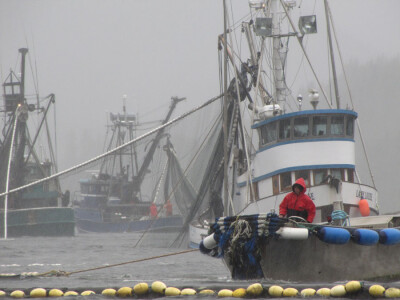
The fishery is also remarkably small. Nichols told the station that just two vessels, both homeported in Kodiak, actively harvest Alaska's weathervane scallops, making them the only vessels targeting the species anywhere in the world.
Participation remains limited because the fishery is jointly managed by the state and federal governments. Vessel operators must hold separate state and federal dredge permits, register with ADF&G, operate with an activated vessel monitoring system, carry an onboard observer, and fish with highly specialized New Bedford scallop dredges no wider than 15 feet.
There are nine federal scallop permits in existence, Nichols stated. Seven are held by Alaska Weathervane Seafoods, a harvesting cooperative formed in 2000, while the remaining two permits are owned by East Coast interests and are not currently being fished.
That cooperative structure has helped solve one of the fishery's biggest historical challenges: Tanner crab bycatch. According to Nichols, before permit holders began working together, vessels frequently reached crab bycatch caps before harvesting the available scallop quota, forcing early closures. Since the cooperative was established, portions of the fishery have closed because of bycatch just twice in the past decade.
Last season, Alaska's two scallop vessels harvested 317,085 pounds of shucked scallops, leaving about 57,600 pounds of the available quota uncaught.
For the 2026/27 season, Yakutat again received the state's largest single-area allocation at 145,000 pounds, while Kodiak's four management districts combine for 190,000 pounds. Smaller allocations were set for the Alaska Peninsula, Dutch Harbor and Bristol Bay-Bering Sea. The West Kayak Subsection of Prince William Sound will open with a 7,200-pound allocation, while Cook Inlet and the East Kayak Subsection remain closed.
ADF&G said managers will monitor catch rates and crab bycatch throughout the season. Areas may close before reaching their harvest limits if catch per unit effort declines or bycatch thresholds are exceeded.
The Alaska scallop season typically concludes before October.