


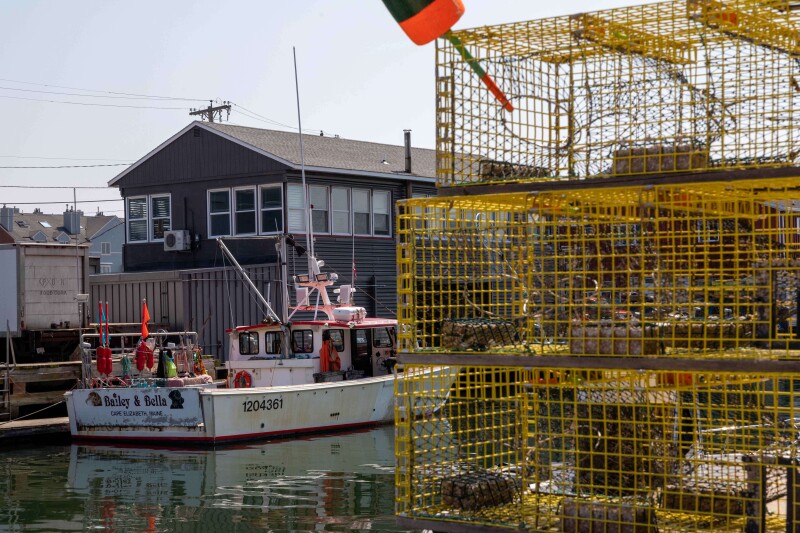
The U.S. House of Representatives has passed H.R. 9436, legislation that would extend the current pause on new North Atlantic right whale regulations affecting the lobster and Jonah crab fisheries through 2035.
The Northeast Lobsterman Protection Act of 2026 passed the House on Sept. 1 by a 219-196 vote. The bill would extend the existing regulatory pause from its current expiration at the end of 2028 to Dec. 31, 2035.
The legislation has drawn support from Northeast commercial fishing organizations, which argue additional time is needed for ongoing research and technology development to inform future whale regulations. Conservation groups, meanwhile, say the extension would delay measures they believe are necessary to reduce the risk of serious injury and mortality to the critically endangered North Atlantic right whale.
The New England Fishermen’s Stewardship Association (NEFSA), which urged lawmakers to pass the measure ahead of the House vote, welcomed its passage.
“The New England Fishermen’s Stewardship Association strongly supports passage of H.R. 9436,” Jason Joyce, NEFSA’s director of advocacy, said in a statement provided to National Fisherman.
Joyce said maintaining the current framework longer would give NOAA Fisheries additional time to collect data and evaluate developing fishing technologies.
“It preserves the existing regulatory framework while giving NOAA the time needed to collect reliable data, test rapidly advancing technologies and determine what actually works to protect whales without putting fishermen in danger,” he said.
The Maine Lobstermen’s Association (MLA) also supported the House action.
“Extending the pause through 2035 will give scientists the time needed to build a meaningful body of data so future whale regulations are based on sound science, not assumptions, while protecting fishing families and coastal communities from needless economic harm,” MLA executive director Patrice McCarron said.
Fishing groups have pointed to ongoing state and federal research, including aerial, vessel-based and acoustic monitoring of right whales, improved lobster fishing-effort data and research into alternative fishing technologies.
The current pause was established through the Consolidated Appropriations Act of 2023, which directed federal regulators to treat existing lobster and Jonah crab fishery measures as sufficient under the Marine Mammal Protection Act through the end of 2028.
H.R. 9436 would extend that provision for another seven years.
Conservation organization Oceana criticized the House vote, arguing that the extension would postpone additional protections at a time when the right whale population remains critically endangered.
Oceana estimates that roughly 380 North Atlantic right whales remain and states entanglement in fishing gear continues to be one of the major threats facing the species.
“This is an extinction bill, plain and simple,” Oceana senior campaign director Gib Brogan said in a statement following the vote.
Brogan argued that management measures and developing fishing technologies should be implemented sooner rather than later.
Oceana also pointed to the Atlantic Large Whale Take Reduction Team process now underway. The team, which includes fishermen, scientists, conservation groups, and government officials, is working on recommendations for additional measures intended to reduce whale entanglement risk after the current regulatory pause expires.
Supporters of H.R. 9436 maintain that extending the pause would not remove protections already in place. Instead, they say it would preserve the existing regulatory framework while allowing more time to incorporate research into future management decisions.
Opponents argue that waiting until 2036 for additional measures could leave right whales exposed to continued entanglement risks during a critical period for the species.
As National Fisherman reported Aug. 31, H.R. 9436 was introduced by Rep. Mike Lawler, R-New York, with Rep. Jared Golden, D-Maine, and advanced through the House Natural Resources Committee in July.
With House passage secured, the legislation now moves to the Senate. It would need Senate approval before it can be sent to the president.