

Sustainable Fisheries Partnership (SFP) has launched a five-year initiative aimed at strengthening fisheries management and seafood supply chains across six countries in Northwest Africa and Latin America.
The Global Marine Commodities 2 (GMC2) Project brings together government agencies, seafood industry participants, and other public and private partners in Mauritania, Morocco, Senegal, Ecuador, Guatemala, and Panama. The initiative is implemented by the United Nations Development Program, funded by the Global Environment Facility, and executed by SFP.
The project will combine market-based approaches with fisheries governance efforts to address overfishing and improve the sustainability of seafood supply chains in the Canary Current Large Marine Ecosystem off Northwest Africa and the Pacific Central American Coastal Large Marine Ecosystem.
Representatives from authorities in the six participating countries met remotely Oct. 7 for the project's first Steering Committee meeting, marking the official global launch of GMC2.
Work will center on 10 seafood supply chains, including small pelagic fisheries in Mauritania, Morocco and Senegal; octopus fisheries in Mauritania and Senegal; large pelagic fisheries in Ecuador, Guatemala and Panama; titi shrimp in Ecuador; and shrimp in Panama.
According to SFP, the project is designed around three connected goals: increasing market demand for sustainably produced seafood, supporting responsible supply from participating fisheries, and improving the use of data and information to support changes in seafood markets and fisheries management.
“GMC2 brings collaborative fisheries management and responsible seafood markets together,” said Pedro Ferreiro, SFP fisheries governance and livelihoods director and technical lead for the project.
Ferreiro said government-led co-management platforms will give fishermen and other stakeholders opportunities to contribute their knowledge to fisheries priorities and management decisions, while participation from seafood buyers and suppliers can connect market demand with improvements in fisheries governance and supply chains.
“The first Steering Committee meeting is an important step in building that collaboration across the six participating countries,” he said.
The initiative comes as fisheries in both regions face pressure from growing global seafood demand and gaps in national and regional management, according to SFP.
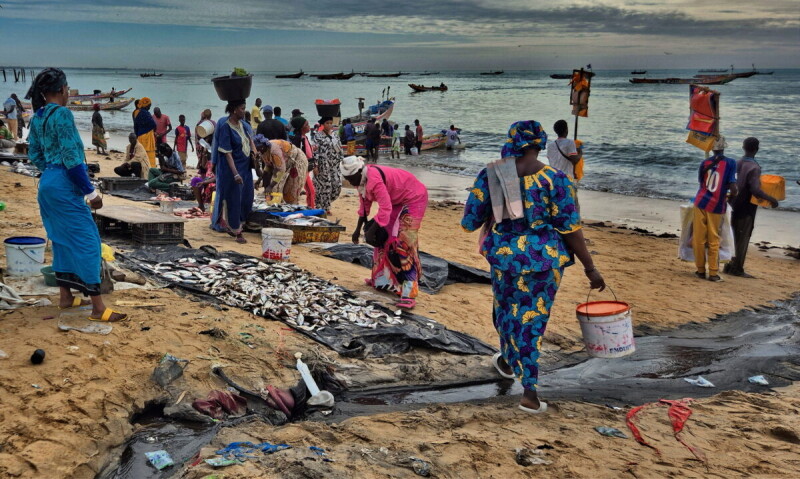
The Canary Current ecosystem stretches from Morocco to Guinea-Bissau and supports food and livelihoods for nearly 35 million people. Fisheries there produce roughly 4.4 million tonnes of seafood annually, about 75 percent of it small pelagic fish. The region is also home to what SFP describes as the world's largest common octopus fishery.
The Pacific Central American Coastal ecosystem extends from Mexico to Ecuador and is home to roughly 50 million people. Fishers in the region land about 1.3 million tonnes annually, including tuna and other large pelagic species, shrimp and small pelagics.
Regional and national work under GMC2 was already underway before the October Steering Committee meeting, with regional inception meetings held in July and September and national launch events held earlier this year in Ecuador, Panama, and Senegal.