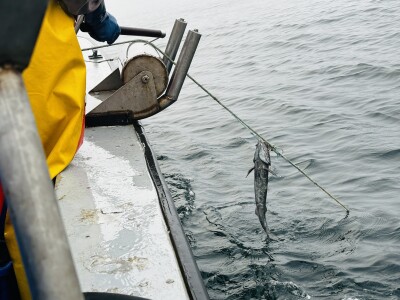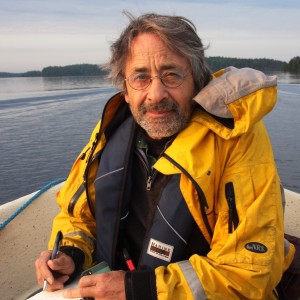
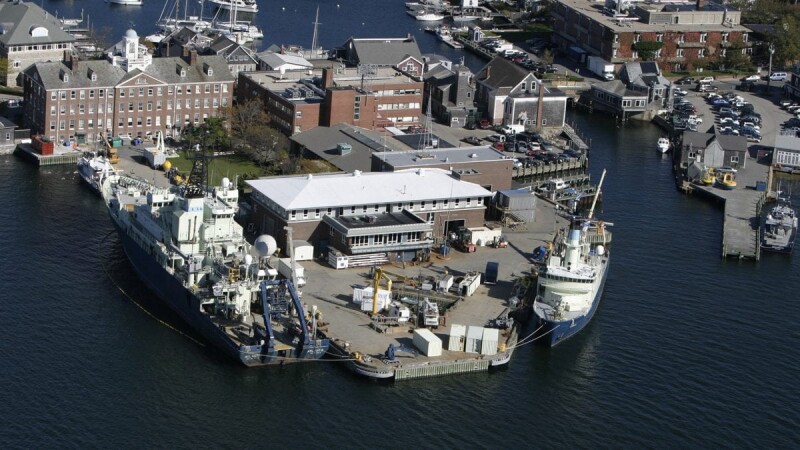
Fishermen around the world are seeing changes they’ve never seen before, most of which they believe are linked to warming oceans. Ken Buesseler, a scientist at the Woods Hole Oceanographic Institution (WHOI) and a member of the ExOIS (Exploring Ocean Iron Solution) group, believes reducing emissions is no longer enough and that steps need to be taken to mitigate the problem. He and an international team propose fertilizing parts of the ocean with iron to increase plankton growth and capture carbon.
“The late John Martin advocated this idea,” says Buesseler. “He famously said: ‘Give me half a tanker full of iron, and I’ll give you the next ice age.’”
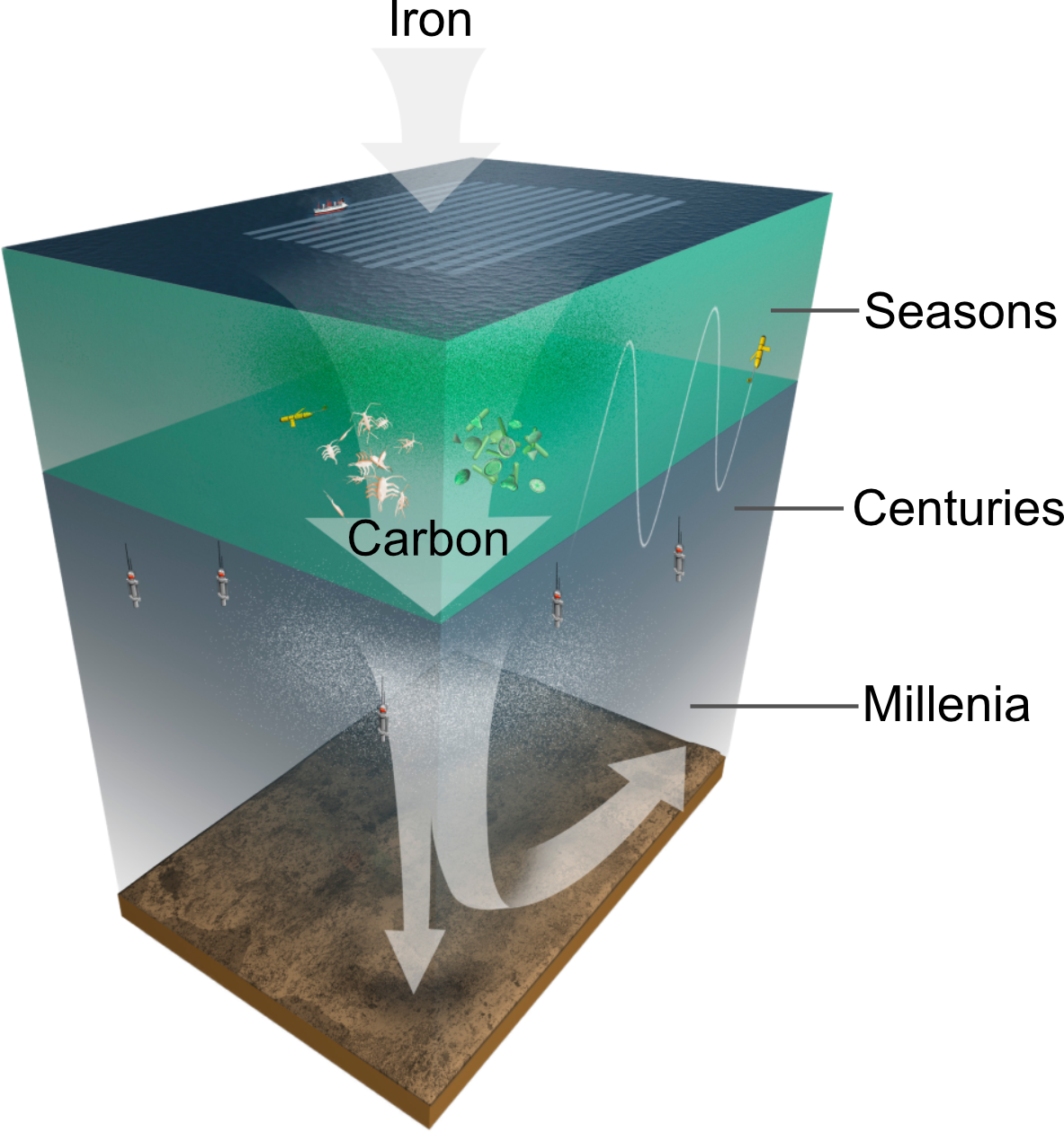
According to Buesseler, the sea sequesters 50 times more carbon than the land, and one of the ways that happens is when phytoplankton absorbs carbon through photosynthesis and then dies and sinks to the bottom. “This marine snow, we call it, carries the carbon down into the deep ocean where it may stay for 100 or 500 years.”
Buesseler notes that iron fertilizer, which also finds its way to the sea naturally, can increase phytoplankton growth significantly. “You can see it from space,” he says. “Areas that we’ve fertilized are greener.” He adds that the phytoplankton that benefit most from iron fertilization are diatoms. “Diatom growth is limited by iron availability,” says Buesseler. “Diatoms absorb more carbon than other phytoplankton and because they often have shells of silica, when they die they sink faster, and that’s what we want.”
The world’s oceans, Buesseler points out, move about 10 billion tons of carbon a year from the ocean’s surface to its interior. “If we can get that up to 11 billion using iron fertilization and other methods, that’s something,” he says. “But we’re talking at least five years of experiments before we can decide if we should do anything at scale.”
To move the ball forward in a way that respects the concerns fishermen and others may have, Buesseler is participating in a panel—Marine Carbon Removal: Fishery-Friendly Guardrails for Governing a New Ocean Technology—at the 2026 Pacific Marine Expo (PME). “What we want to do is familiarize people, particularly fishermen, with the idea, and describe how it works,” he says, noting that stimulating plankton growth could help fisheries. “The salmon eat the copepods that eat the phytoplankton.”
ExOIS, of which Buesseler and WHOI are a part, is made up of 40 institutions in 10 countries, and sees the need to study how iron fertilization of some parts of the ocean stimulates what it calls the biological carbon pump. “Our system is powered by sunlight and does not require any construction site on land. We just need a boat or a plane to pour iron in a liquid form or spread as dust into the ocean.” Buesseler notes that the area they hope to work in is 400 miles west of Vancouver and south of Kodiak, and that the amount of liquid iron they plan to pour into the water is a fraction of a fraction of what the eruption of the Aleutian volcano, Kasatochi, deposited in the northern Pacific in 2008. “And some contend that fisheries generally improved that year,” he says. “They found two years later that the Fraser River sockeye run was higher than ever.
Buesseler notes that there are other strategies to promote plankton growth and sequester carbon that are less efficient. “There is a wave tube that uses wave action to pump colder water to the surface,” he says. “But that would need to offset any extra carbon the colder water carries with it. And there are people talking about growing seaweed and sinking it, but only a small fraction of that will actually get to the bottom, unless altered to sink as part of some unproven industrial process. None of these strategies are perfect, but compared to fisheries decline and watching the planet boil, they are better than nothing.”
That is essentially the point of Buesseler’s work and his efforts to explain iron fertilization to attendees of the PME panel. Convinced that something besides emissions reduction has to be done to reverse the current trends, Buesseler is hoping to get approval to experiment with fertilization far out in the Gulf of Alaska. “Realistically, we need about six months to watch the growth of phytoplankton, the marine snow fall, and return to normal conditions. This will provide baseline data for fisheries scientists and climate scientists,” he says.