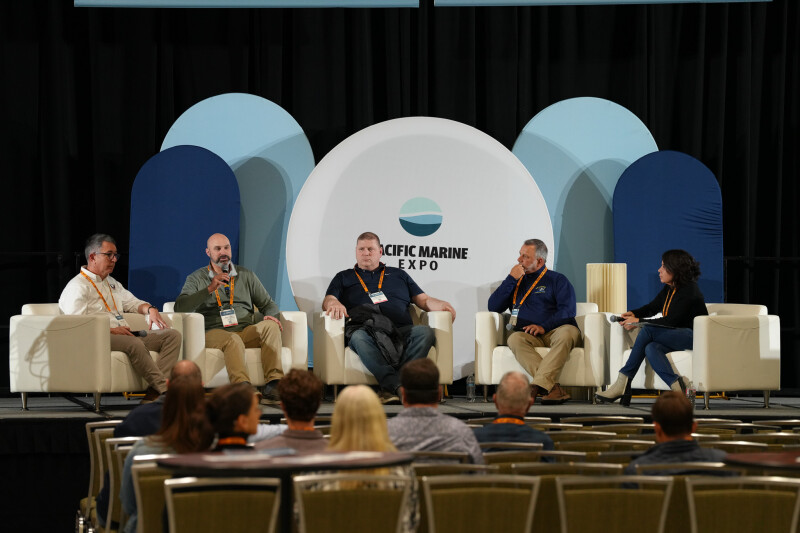
One of the highlights of the 2026 Pacific Marine Expo is its schedule of educational and informational sessions, and among the most valuable was the panel session, Surviving Vessel Disasters: Factors Contributing to Survival of Cold Water Immersion.
Moderated by Kennedy Menendez of the Alaska Marine Safety Education Association, the panel began with comments from Andrew Ehlers of the National Transportation Safety Board, which recently released a report on the 2024 sinking of the seiner Wind Walker in Alaska. “We found the most probable cause of the Wind Walker sinking was loss of stability,” said Ehlers. “The captain did not have enough information about the stability of the vessel. Weight had been added over the years, all of it above the vessel’s center of gravity. If the captain and crew had had more stability training and a more current stability report, they may have understood the situation better.”
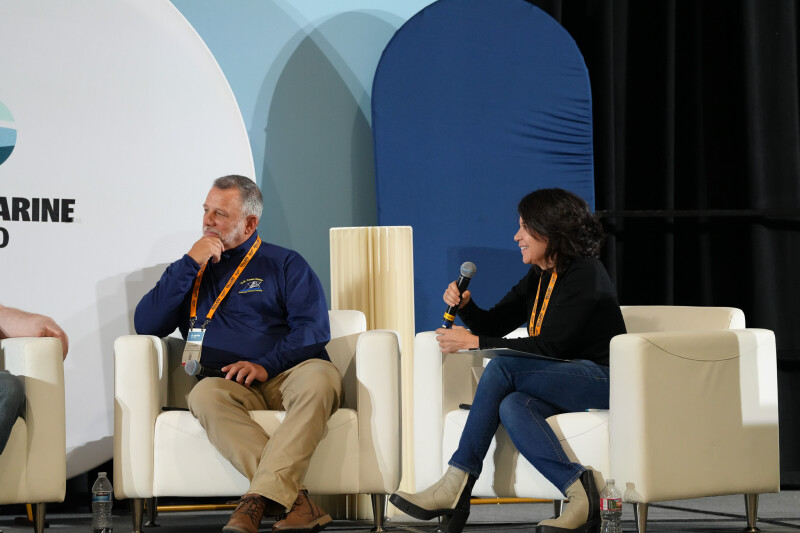
While vessel stability was the root cause of the incident, other factors may have contributed to the loss of all five crew members. “We found survival suits,” said Scott Wilwert, the US Coast Guard’s Commercial Fishing Vessel Safety Program Coordinator in Juneau, Alaska. “They didn’t get out of the bags themselves. They were trying. But you need training.” Wilwert noted that fishermen need the right-size suit in working order and the muscle memory to don it under difficult conditions, which comes from practice. “It’s also important to let people know if you’re having trouble, sooner rather than later,” he said.
It was noted that in his Mayday call, the captain said that they were trying to launch the raft, but the raft was never found. Panelist Shawn Simmons, president of the private company, Marine Safety Services, which sells and services marine safety equipment, suggested that the Wind Walker crew may have tied the rafts close to the boat and bypassed the weak link that would have broken under 500 pounds of pressure. “It could have gone down with the boat,” he said.
While all the panelists mentioned the importance of training, Simmons focused more on the condition of the safety gear on the boat. “You should make sure your life raft and the hydrostatic release are in good working order,” he said. “You should know how long the painter is and you should have the raft located where you can reach it.” Simmons also noted that EPIRBs (emergency position indicating radio beacon), which are also designed to release and float to the surface, should be checked frequently. “The batteries can die; they may not release.”
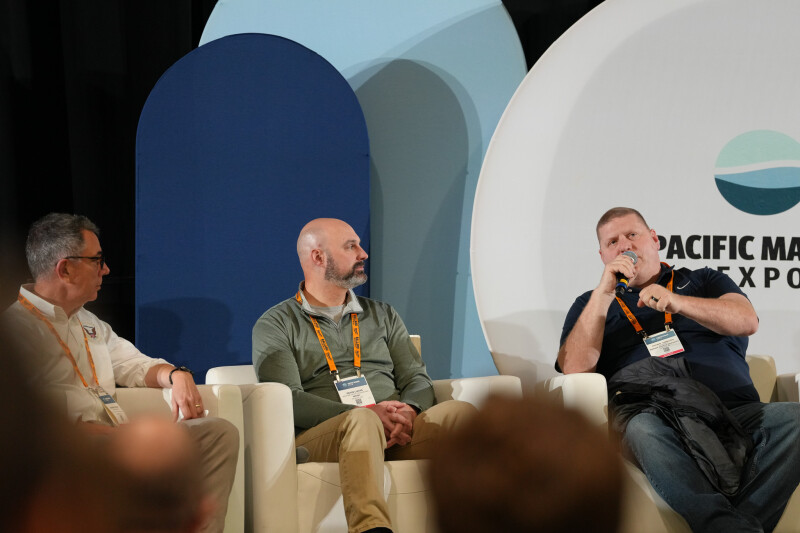
Simmons also spoke highly of using personal locator beacons, PLBs. “An EPIRB stays on the boat,” he said. “But the nice thing about PLBs is that you can use them on land too, if you go hunting or snowmobiling or whatever, and you can buy them for under $400.”
Several panelists noted that there is no expiration date on survival suits, and Devin Lucas of the National Institute for Occupational Safety and Health (NIOSH) pointed out that his team planned to collect 400 older survival suits that had passed visual inspection by the Coast Guard and pressure test them to make sure they were watertight. “We want to determine how they age and at what age they start to fail,” he said.
The session lasted an hour, and the panelists provided more details and particular suggestions on how fishermen can increase their odds of survival in the event of a disaster. One theme that all the panelists mentioned, however, was training and the importance of safety drills.