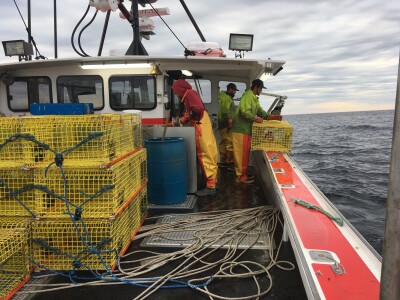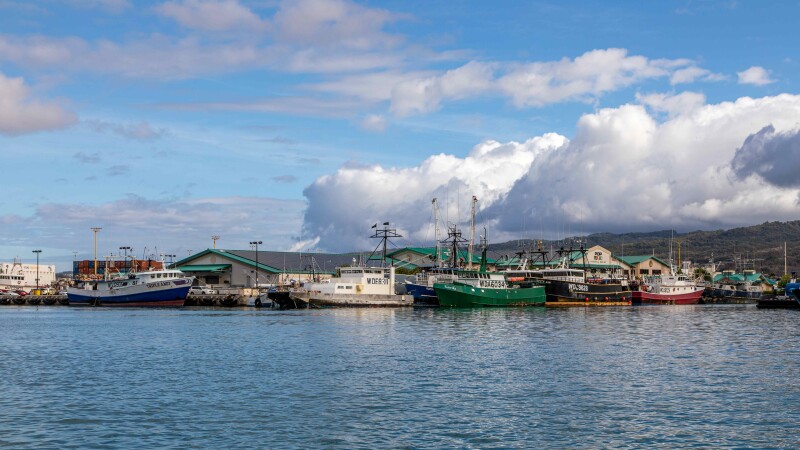
Commercial fishing in the Northwestern Hawaiian Islands could resume under an experimental approach as federal fishery managers consider how to regulate fishing in waters largely closed to the industry since 2010.
The Western Pacific Regional Fishery Management Council will meet Sept. 15-17 to consider regulations for the reopened Northwestern Hawaiian Islands fishery, along with potential changes affecting Hawai‘i and American Samoa longline fleets, according to two Council releases published by Saving Seafood.
Ahead of the meeting, the Council’s Scientific and Statistical Committee recommended a deliberate approach to reopening the Northwestern Hawaiian Islands bottomfish fishery. Before its closure, the area accounted for about half of Hawai‘i’s bottomfish management unit species landings.
Scientists recommended developing a new bottomfish data collection plan and considering an experimental fishing permit, or EFP, as fishing resumes.
“An EFP may not be the quickest way to fish, but it may be the right tool to collect data at the start,” committee member Shelton Harley said.
The Council will consider whether existing regulations covering permits, monitoring, reporting, vessels and gear should remain, be revised or be supplemented with additional measures.
Another potential change involves Hawai‘i’s deep-set longline fleet. The scientific committee found no scientific basis for retaining an existing swordfish limit that restricts unobserved deep-set vessels north of the equator to 25 swordfish per trip when using circle hooks and 10 with other hooks.
The restriction dates to the closure of Hawai‘i’s shallow-set swordfish fishery more than two decades ago. Since the limit was last modified in 2012, deep-set vessels have averaged fewer than five swordfish per trip.
In American Samoa, the Council will also take final action on the Large Vessel Prohibited Area around Muliāva, or Rose Atoll. Options include maintaining the existing 50-nautical-mile restriction, allowing American Samoa longline vessels to fish between 12 and 50 nautical miles, or reducing the prohibited area to 12 nautical miles.
The Council will consider the scientific committee’s recommendations alongside input from fishermen, agencies, advisory groups and the public before deciding which management changes to advance.