For all the talk about hybrid propulsion and alternative fuels, some of the most immediate gains in reducing fuel burn and improving performance on commercial fishing vessels aren’t happening in the engine room at all.
They’re happening on deck.
After decades of conversations with fishermen, boatbuilders, and engineers, National Fisherman's boats and gear editor Paul Molyneaux says the biggest “low-hanging fruit” in efficiency isn’t propulsion– it’s everything around it.
“The thing that pops up most to me is deck gear,” Molyneaux said. “Especially electric winches. That’s where you can really start to see gains.”
Turning work into power
Modern electric deck systems– particularly winches– are doing more than just hauling gear. In some cases—as hen setting a net dredge or other fishing gear that requires a winch or reel to roll backwards—they can generate power.
“On an electric trawl winch for example you use energy when you’re hauling back,” Molyneaux explained. “But when you’re setting out, you can turn your motor into a generator and feed energy back into the vessel’s electrical grid. It’s not going to be as much as you use hauling back but you can cut your losses. You capture that energy that would have been lost to entropy.”
That kind of regenerative capability flips the traditional model on its head. Instead of deck gear being a constant drain on the system, it becomes an asset that eases demand on generators and main engines.
It’s a concept that aligns closely with broader industry research, including work from the Island Institute focusing on the Maine Climate Council– the state’s leading climate action initiative, and others, which encourages taking a holistic view of a vessel’s energy systems–not just its propulsion platform.
And while the idea might sound cutting-edge, Molyneaux says fishermen and the companies that serve them are already paying attention.
Awareness is growing
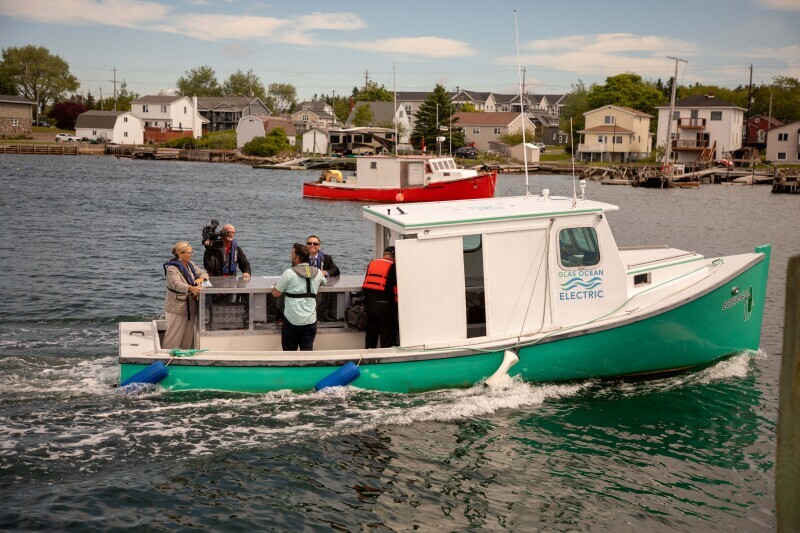
“There’s definitely software being developed to track and control energy use,” Molyneaux said. Companies such as Noble Tech in Washington and Glas Electric in Nova Scotia are collecting data from vessels with similar operating profiles, from lobster boats to midwater trawlers, to better understand where energy is being used and where efficiencies can be gained.
“They look at how to run those systems at peak efficiency,” he said. That can include optimizing engine RPMs, determining when to run gensets or use shaft-generated power, and even factoring weather and currents into decisions about when and where to fish.
Increasingly, that data is being paired with artificial intelligence, opening the door to real-time monitoring and, potentially, remote vessel operations.
“What they’re talking about now is getting that data back to shore into AI systems,” Molyneaux said. “You can actually run parts of the vessel from an office. That’s where it’s heading and, in a few cases, has arrived.”
For an industry built around hands-on work and experience, that kind of shift may raise concerns. Many boat owners may be reluctant to hand a captain’s decisions over to a computer. But the building blocks, including load monitoring, system optimization and remote diagnostics, are already making their way aboard, one step at a time.
Efficiency that works on the water
Still, technological advantages alone don’t drive adoption. As fishermen often point out, they need to see a return on investment. Unless they are being subsidized, savings in fuel, maintenance, and replacement costs have to be more than the cost of the new equipment and software.
But the concepts are attractive. High-tech equipment operating at maximum efficiency means smoother hauling, more precise control, and less strain on both crew and equipment. More efficient refrigeration systems can improve product quality. Smarter load management can reduce the risk of system failures offshore.
Even with those benefits, however, adoption isn’t always straightforward. “The reality is, fishermen are focused on the problems right in front of them,” Molyneaux said. “Leaks, breakdowns, crew, maintenance– it’s constant. That’s where most of their energy goes. They need some downtime to really analyze costs and benefits of advanced systems, receive subsidies, or put their faith in someone they trust. Relationships are important for moving these technologies forward.”
Where inefficiencies hide
On many working boats, especially older ones, electrical inefficiencies aren’t always obvious. They’re layered in over time.
“You’ve got decades of add-ons,” Molyneaux said. “Systems get built up piece by piece instead of being redesigned as a whole.”
Outdated wiring, oversized equipment, and aging components all contribute to wasted energy. And for many operators, a full overhaul simply isn’t financially feasible. This is especially true in fleets where margins are tight, and vessels are expected to keep running, regardless of age. “A lot of guys just live with subpar systems. If they’re making money, they can overlook things until things fall into place for a change.”
Even when fishermen are ready to upgrade, another challenge stands in the way: finding the right people to do the work. “There’s a real shortage of technicians who understand commercial fishing vessels,” Molyneaux noted. “It’s different from yachts or recreational boats. These systems are built for work.”
That gap could become more pronounced as systems grow more complex. Hybrid setups, advanced electrical controls, and integrated monitoring systems all require specialized knowledge– something that isn’t yet widely available in many fishing communities.
Lessons from successful retrofits
Still, there are examples of what’s possible when electrical systems are designed with efficiency in mind.
Molyneaux pointed to newer vessel designs, including innovative builds in places like British Columbia and New Zealand, where integrated systems reduce overall energy demand.
“You’re seeing boats where everything is designed to work together,” he said. “Hydraulics, electrical systems, propulsion– it’s all connected. That’s where you start to reduce engine load in a meaningful way.”
In those cases, efficiency isn’t coming from one single upgrade– it’s the result of a systems-based approach.
While large-scale transitions to hybrid or electric propulsion may not suit every type of vessel or operational profile—and may still be years away for much of the fleet—electrical efficiency is already delivering tangible benefits.
And perhaps most importantly, it’s happening in ways that make sense to fishermen.
“These guys aren’t chasing trends,” Molyneaux said. “If something works–if it’s cost effective and makes the boat better– they’ll use it.”
From regenerative winches to smarter load management, the shift toward more efficient electrical systems isn’t being driven by mandates or headlines. It’s being driven by practicality– one upgrade at a time.