

A bipartisan group of U.S. senators is backing legislation that would expand the use of environmental DNA (eDNA) in federal fish stock assessments, potentially giving fisheries managers another tool to collect more frequent and comprehensive data.
According to Cornell University, the Fisheries Science Modernization Act would direct NOAA to test and validate eDNA technologies for use alongside existing fishery assessment methods. The bill is led by Senator Murkowski, R-Alaska, and Senator Whitehouse, D-Rhode Island, co-chairs of the Senate Oceans Caucus, and has eight republican, democratic, and independent co-sponsors.
NOAA currently develops stock assessments using methods including research vessel surveys, bottom trawls, acoustic sonar, longlines, and commercial fishing data. Those assessments ultimately help regional fisheries managers establish annual harvest levels.
The legislation calls for NOAA to expand its use of eDNA to increase survey coverage and frequency while potentially lowering costs.
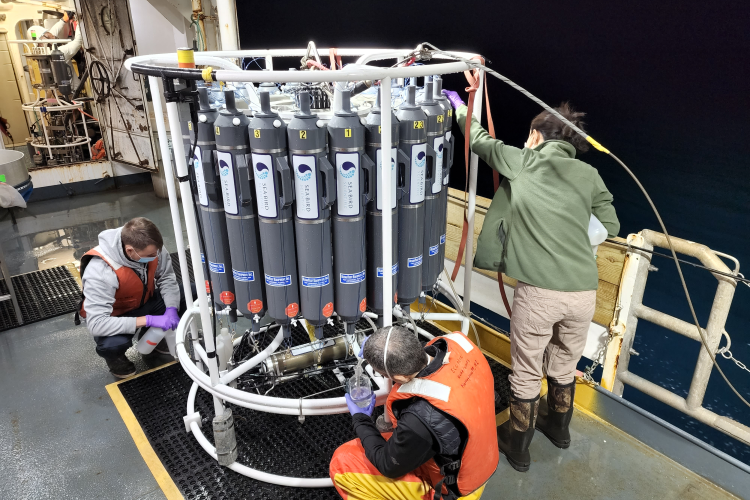
eDNA allows researchers to collect genetic material that organisms leave behind in the environment. Cornell researcher David Lodge, who began working with eDNA nearly two decades ago, said technology has progressed from primarily detecting whether a species is present to potentially helping scientists estimate abundance.
“The focus of this legislation is quite different,” Lodge told Cornell. “Here, it’s not just about detecting whether a Pacific hake exists, it’s about estimating how many hake there are, based on how many distinct pieces of hake DNA you can find.”
NOAA has already been testing eDNA techniques with Pacific hake. Under legislation, the agency would further test and validate the technology before incorporating it more broadly into formal stock assessments.
“Environmental DNA is an innovative, cost-effective tool that will give our scientists a clearer picture of our fisheries while expanding survey coverage and reducing costs,” Murkowski said.
Murkowski said the legislation grew out of collaboration among NOAA, Alaska fishermen, tribal partners, academia, and industry.
The measure has received support from fishing industry organizations including the Alaska Longline Fishermen’s Association, American Sportfishing Association and Pacific Seafood Processors Association, as well as environmental groups including Environmental Defense Fund and Ocean Conservancy.
Cornell Atkinson Center for Sustainability supported some of the research behind the legislation and helped connect researchers with policymakers as the proposal was developed.
If enacted, the Fisheries Science Modernization Act could move eDNA closer to becoming a routine component of the federal stock assessment process while maintaining traditional survey methods as NOAA evaluates how the emerging technology can supplement existing fisheries data.