

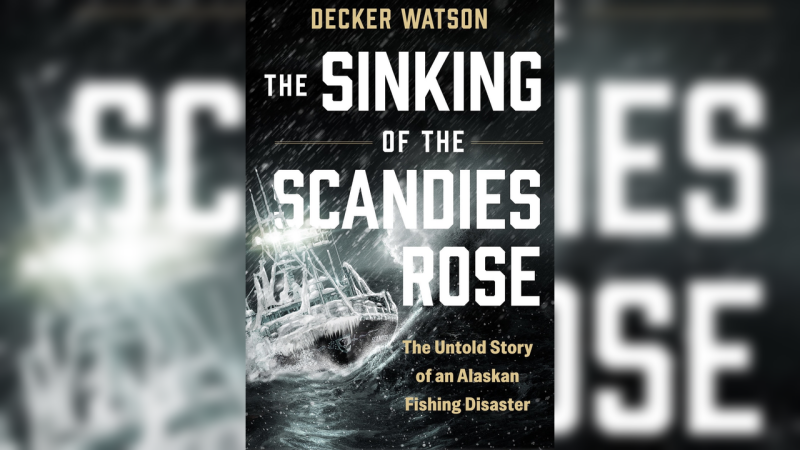
Decker Watson’s new book, The Sinking of the Scandies Rose, provides readers with an in-depth account of the 2019 sinking of the 130-foot crab boat
No matter how well told the story – and this one is – as someone who has pounded ice, and whose children have fished heavy weather, a book about death and survival on a commercial fishing vessel is not one I would ever read unless I was getting paid to, which I am.
But for the uninitiated readers who want to know what making yourself sick with difficult memories, post-traumatic stress syndrome, and concern for loved ones at sea feels like, then Decker Watson has got what you need. He pulls no punches, glosses over nothing, and digs deep into the emotional soup of fishing, dying, and surviving.
To make a book out of events that took place over several hours on that New Year’s Eve of 2019 and January 1, 2020, Decker delves into the lives of the people who lived and died that night, as well as their families. He examines the boat, its design, and the inaccurate stability booklet that, in part, led to the disaster. He blends all these elements and tells the story of how personalities, machinery, and weather led to the loss of five lives, the miraculous preservation of two, and why.
In his build-up chapters, Decker paints intimate pictures of the characters in the story; who they were and what made them tick, as well as the relationships many of them shared with each other. He looks at their home lives and work lives and how they all landed where they did in this story.
Gary Cobban Jr. alone gets ample ink in the book. As captain of the Scandies Rose, Cobban’s judgment was deemed a key factor in the sinking, though Decker emphasizes that: “The stability instructions described a different boat than the one beneath his feet.”
Perhaps because he knows fishing and knows how close calls feel, Decker’s description of the sinking itself is enough to curdle the blood of any mariner.
Besides being almost pornographically vivid, this tale of tragedy is also thorough. Decker recounts all the work of the Marine Board of Investigation into the sinking, including the testimonies of the survivors, the MBI’s findings and recommendations, and the division of the insurance money.
Jon Lawler died in a motorcycle accident two years after surviving the sinking. But in the final pages Decker revisits the lone survivor, Dean Gribble Jr, and notes that he is getting his life together.
“The Bering Sea and Gulf of Alaska will always be dangerous,” Decker writes in the end. “But there are some risks that don’t ever need to be taken. Maybe that’s the lesson the Scandies Rose leaves behind. Maybe it will take hold. It hasn’t always.”