
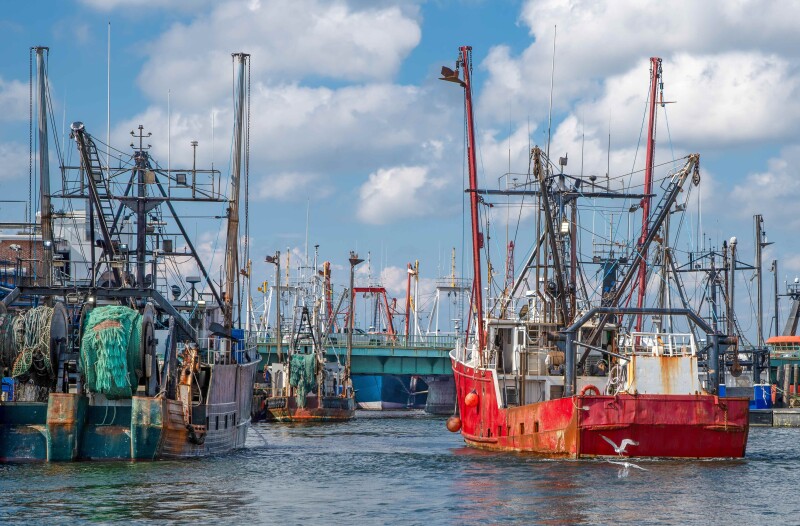
Commercial fishermen could receive federal assistance to offset rising fuel costs under a new $8 billion U.S. Department of Agriculture (USDA) relief program, though key details on payment rates and eligibility for the fishing industry have yet to be released.
USDA announced the Harvest Fuel Relief Program on Oct. 19, offering $8 billion in one-time payments intended to help agricultural producers absorb higher fuel and other production costs during the 2026 production year. USDA's Farm Service Agency will administer the program, funded through the Commodity Credit Corporation Charter Act.
While much of the program is geared toward traditional agricultural commodities, USDA specifically included fishermen among the non-Title I producers that may qualify for assistance.
For commercial fishermen, however, the size of that assistance remains an open question.
USDA plans to release commodity-specific payment rates for Title I commodities in November. The agency said payment methodology for other eligible producers, including fishermen and specialty crop growers, will be announced later.
In the meantime, USDA is asking fishermen to provide information documenting increased fuel costs at [email protected]. The agency said those submissions will be considered as it determines payment rates.
U.S. Sen. Susan Collins, R-Maine, said she worked with the White House and Agriculture Secretary Brooke Rollins to ensure commercial fishermen and lobstermen were included in the program.
“The rising cost of fuel and other inputs has placed significant financial strain on hardworking farmers, fishermen, lobstermen, and their families,” Collins said. “After speaking with both the White House and Secretary Rollins, I am pleased to have been assured that Maine fishermen and lobstermen will benefit from the Administration’s new agricultural relief package.”
The announcement comes as diesel remains one of the most significant operating expenses for many commercial fishing businesses. The impact varies considerably by fishery and vessel, but increases in fuel prices can quickly eat into already narrow margins, particularly for vessels traveling long distances to fishing grounds or operating fuel-intensive gear.
The Maine Lobstermen’s Association welcomed the inclusion of fishermen, noting that fuel prices affect nearly every aspect of operating a lobster business.
“Higher fuel prices impact nearly every aspect of running a lobster business, putting even more pressure on already-tight margins,” the association said. MLA said it has been working with USDA to help federal officials understand the economics of Maine's lobster fishery and plans to continue that work as the agency develops the program.
The Southern Shrimp Alliance is similarly urging commercial shrimpers to begin preparing for the application process even though eligibility requirements, application dates and payment amounts for fishermen have not been finalized.
The group recommends fishermen gather fuel receipts, invoices, and other records documenting their 2026 fuel expenses and, when possible, compare those costs with previous years. Fishermen can submit that information directly to USDA as the agency develops its payment methodology.
USDA is also encouraging eligible producers to create a Login.gov account before applications open. Producers who link their Login.gov account with USDA will be able to access pre-filled applications online once the application period is announced.
Unlike some federal agricultural assistance programs, participation in Harvest Fuel Relief will not require producers to be linked to crop insurance.
For fishermen, the program also marks another expansion of USDA's involvement with the domestic seafood industry. The agency created an Office of Seafood earlier this year, an effort aimed at increasing coordination of federal programs affecting U.S. seafood producers and strengthening domestic markets.
The Harvest Fuel Relief Program follows several other large federal agricultural assistance packages issued in 2026. USDA said its Farmer Bridge Assistance program provided $12 billion in one-time bridge payments to more than 560,000 farmers. The department also recently distributed nearly $14 billion in gross payments through the Agriculture Risk Coverage and Price Loss Coverage programs.
Exactly how the new $8 billion package will translate into assistance for commercial fishing operations remains to be seen. Unlike major agricultural commodities, where USDA can rely on acreage, production costs, yields, and market prices to develop a uniform payment formula, commercial fisheries vary widely in vessel size, fuel consumption, trip length, gear type, and operating costs.
That makes the information fishermen submit to USDA particularly important as the department develops its methodology.
For now, fishermen interested in receiving assistance should retain records documenting their fuel expenses, submit information on increased costs to USDA, and prepare for the application period while awaiting additional guidance on eligibility and payment rates.