

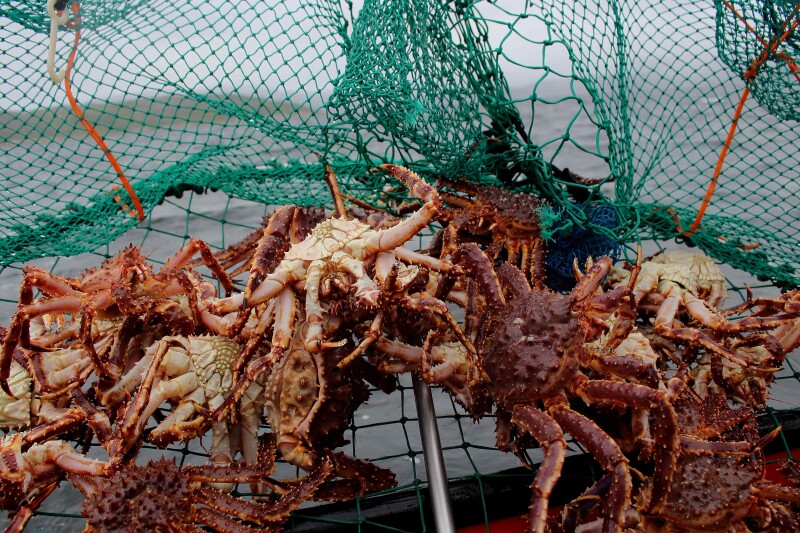
Alaska crab fishermen will head into the 2026-27 season with total allowable catches set for Bristol Bay red king crab, Bering Sea snow crab, and Bairdi Tanner crab, with all three fisheries scheduled to open Oct. 15.
The Alaska Department of Fish and Game (ADF&G) set the Bristol Bay red king crab TAC at 3.41 million pounds, while the Bering Sea snow crab, or opilio, TAC was set at 5.1 million pounds, according to an Oct. 6 release from seafood supplier Keyport LLC.
Bairdi Tanner crab will account for the largest harvest, with a combined 32.1 million pounds available across the eastern and western Bering Sea. The western Bering Sea TAC is set at 27.2 million pounds, while the eastern Bering Sea TAC is 4.9 million pounds.
All three fisheries open at noon on Oct. 15.
The Bristol Bay red king crab season runs through Jan. 15, 2027, while both eastern and western Bering Sea Bairdi seasons run through March 31.
The snow crab season extends later into the spring, closing May 15 in the Eastern Subdistrict and May 31 in the Western Subdistrict.
According to Keyport, red king crab and snow crab harvest levels remain well below historical levels as the stocks continue to rebuild. The company described this year's snow crab TAC as conservative and said the larger Bairdi harvest is supported by recent survey results.
“These TACs reflect the continued careful, science-based management of Alaska’s crab stocks,” said Mark Pedersen, Keyport's CEO. “Harvest levels remain measured, and at the same time the cost of fishing, processing, and getting crab to market continues to climb.”
Keyport expects supplies of both Bristol Bay red king crab and domestic snow crab to remain limited this season. For Bairdi, the company said increased harvest volume will reach the market gradually through the March 31 season.
The 2026-27 seasons begin Oct. 15 as Alaska's major Bering Sea crab fisheries continue operating under harvest levels intended to balance fishing opportunity with the ongoing recovery of key crab stocks.