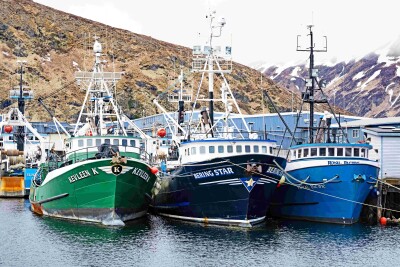
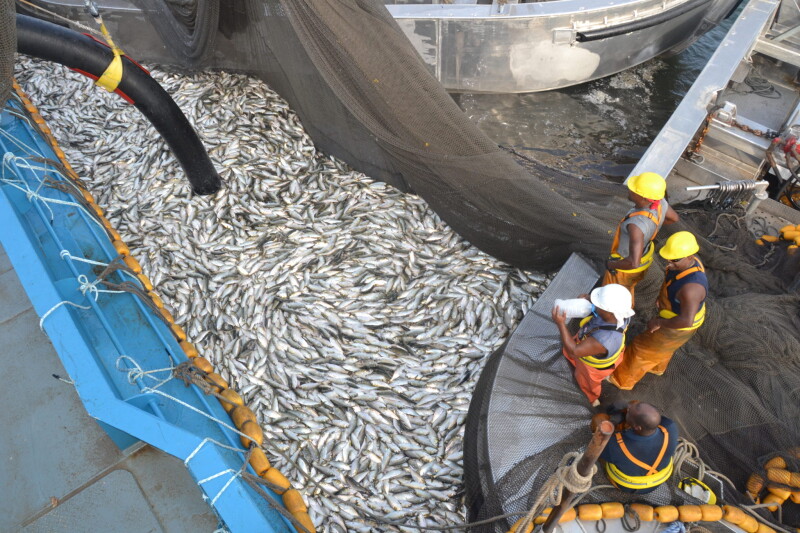
Hundreds of Northern Neck residents turned out Saturday as Virginia’s commercial menhaden community urged fisheries managers to hold off on further Chesapeake Bay harvest restrictions while several new studies of the fishery are underway.
The Atlantic States Marine Fisheries Commission (ASMFC) is considering changes to the Chesapeake Bay reduction fishery cap through Draft Addendum II to the Atlantic Menhaden Fishery Management Plan. Options include cutting the current 51,000-metric-ton cap by as much as 50 percent and potentially tying it to the coastwide total allowable catch.
According to WHRO Public Media and Rappahannock Record, 439 people attended the Sept. 19 public hearing at Northumberland High School, where many speakers called on managers to wait for additional scientific research before reducing the cap.
The turnout included employees and families connected to Ocean Harvesters and Omega Protein’s Reedville processing operation, as well as other members of the Northern Neck community.
Among those addressing fisheries managers was 13-year-old Charlotte Blackwell, whose father is a fishing boat captain.
“Our dad is a fishboat captain, and we have many family members who also work in this industry,” Blackwell said, according to WHRO. She asked what Bay-specific science demonstrated that another reduction was necessary and urged commissioners to “let the evidence lead us to the conclusion.”
The Reedville menhaden operation is a major employer in Northumberland County. The fishing fleet and processing plant employ about 260 people, while an additional roughly 250 jobs are connected to supporting businesses, including trucking companies and welders, according to Keith Harris, a local farmer and member of the Northumberland County Board of Supervisors.
Harris told WHRO that the operation provides about $16 million to county residents and pays roughly $700,000 in local taxes annually. The hearing comes as three studies are set to examine menhaden in the Chesapeake Bay, with more than $4.5 million expected to support research into the Bay population, commercial harvest, management approaches, and the needs of predators that rely on the forage fish.
Joseph Grist, who heads the Virginia Marine Resources Commission’s (VMRC) fisheries management division and represents Virginia on ASMFC, said VMRC, the Institute of Marine Science, and ASMFC plan to coordinate the studies.
“This will give us that science answer that we’re really looking for,” Grist told WHRO.
The research comes amid continued debate over whether menhaden availability is contributing to declines among predators including striped bass and osprey.
Earlier this month, the Center for Conservation Biology at William & Mary reported historically low osprey reproduction in higher-salinity portions of Chesapeake Bay, where the birds rely heavily on menhaden. Researchers identified food stress as a major factor in nesting failures, but the findings did not establish commercial menhaden harvest as the cause.
Ocean Harvesters has argued that additional factors, including climate change, changes in menhaden distribution, and the timing of the fish’s movement into the Bay, could affect prey availability.
Draft Addendum II would give ASMFC several options for changing the reduction fishery cap. According to the Rappahannock Record, proposed caps range from 45,900 metric tons to 25,500 metric tons, compared with the current 51,000-metric-ton limit. Managers are also considering linking the Bay cap to the coastwide total allowable catch and spreading harvest more evenly throughout the fishing season.
The Bay cap was established in 2006 as a precautionary measure, before ASMFC implemented a coastwide total allowable catch for Atlantic menhaden.
The latest hearing underscored the competing pressures facing commissioners as they consider the proposal: concerns about menhaden's role in the Chesapeake ecosystem and calls from the commercial fishing community to allow ongoing research to provide more Bay-specific information before imposing additional restrictions.