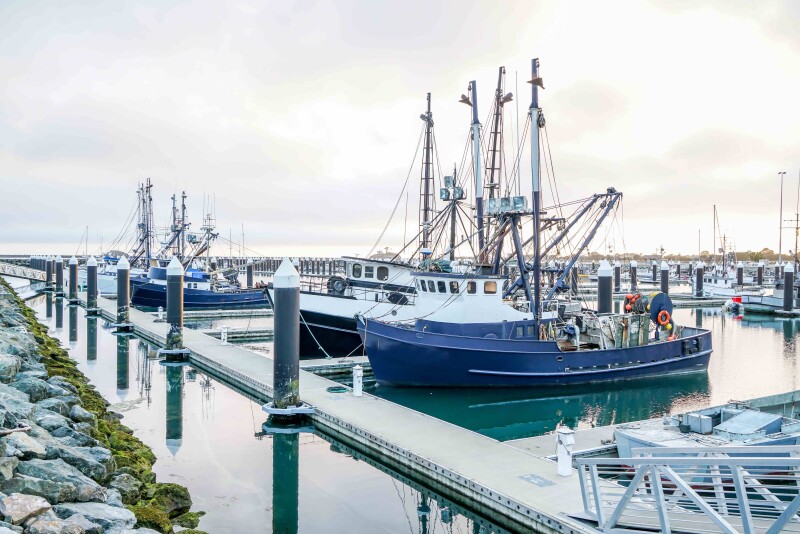
After decades of restrictions that idled vessels, slashed quotas, and forced fishermen out of the industry, the West Coast groundfish fishery has fully rebuilt, and the men and women who stuck it out say the turnaround is nothing short of remarkable.
In Oct. 2025, federal fishery officials declared yelloweye rockfish rebuilt, marking the recovery of the last of 10 groundfish species that were once fished to below a quarter of their healthy levels. The announcement came years ahead of schedule- regulators had not expected the slow-growing species to rebound until 2084.
"These fish were really severely limited to us,” Aaron Longton, founder of Port Orford Sustainable Seafood in Oregon, told Mongabay. “Now, we have huge quotas.”
The milestone caps a 25-year effort that began in 2000, when then- Commerce Secretary William Daley declared the West Coast groundfish industry a federal disaster. The declaration triggered an immediate reduction in catch quotas for the 10 overfished species. The Pacific Fishery Management Council advised NOAA to close nearly 20,000 square miles of ocean to trawlers, effectively shutting down most of the fishing grounds.
In 2002, Congress authorized a buyout program. The federal government purchased and permanently retired 91 vessels and 239 fishing permits at a cost of $46 million. About 40 percent of the fleet sold out or headed north to Alaska.
"The really successful fishermen stayed,” said Waldo Wakefield, an ocean ecology and fishing gear researcher affiliated with Oregon State University who spent nearly two decades involved in the fishery’s reconstruction as a NOAA biologist.
The framework that guided the recovery included a shift to individual fishing quotas under the federal catch share program adopted in 2010, mandatory 100 percent observer coverage for trawl vessels beginning in 2011, and years of stock assessments and gear innovation. Semi-pelagic trawl designs that keep heavy gear off the seafloor, along with LED bycatch deterrents and improved net sensors, have reduced the fishery’s environmental footprint.
The recovery has not translated into economic prosperity for fishermen. Rebuilding fish stocks has outpaced market demand, and structural costs continue to squeeze margins. Fishermen are required to hire certified observers or install video monitoring systems, pay 3 percent assessment on landed groundfish for management costs, and continue chipping away at the 2002 buyback debt, which is expected to be repaid by 2028.
"It’s ‘1984’ over here,” said Wade Hearne, a Newport, Ore., trawler whose family has fished groundfish for generations, referring to the monitoring requirements aboard his vessel.
The Trump administration’s April 2025 executive order directing federal agencies to reduce the regulatory burden on U.S. fisheries has stirred debate about whether hard-won conservation measures could be weakened. The Pacific Fishery Management Council is scheduled to vote this month on whether to ease the monitoring requirements.
Longton, for one, is watching closely. “If we go in with the same attitude we did before, it won’t be long before we depress groundfish numbers again,” he said.
Kate Kauer, fisheries strategy lead for The Nature Conservancy in California, said the fishery’s conservation record remains strong, but its long-term economic health depends on keeping those protections intact.
"If we take good care of the resource, then we will have future profitability from the resource,” she said.