

Research studies presented at the seventh annual Wild Alaska Pollock meeting in Seattle disclose millions of dollars in value to the Pacific Northwest economy and beyond.
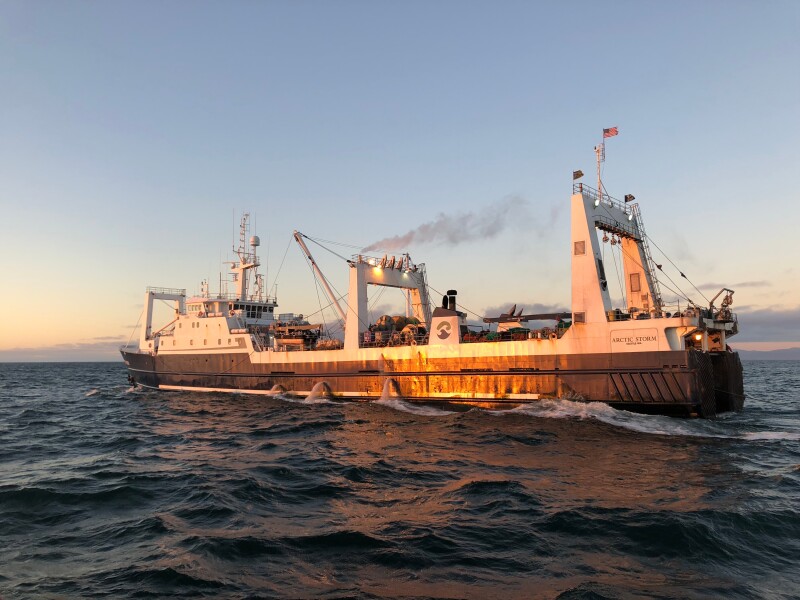
Study details, shared by the Association of Genuine Alaska Pollock Producers (GAPP) on Sept. 18 with nearly 300 participating industry representatives, noted that in 2023, 1.43 million metric tons of pollock were harvested — worth $1.7 billion. Much of it was processed throughout coastal Alaska and included everything from fillets and surimi to roe, fishmeal, and oil.
The studies, funded by the Alaska pollock industry, were compiled by two Alaska research entities: McKinley Research Group and Northern Economics.
The studies concluded that Alaska pollock makes up over half of the total Alaska commercial seafood harvest volume and represents an especially large share of the seafood industry in Southwest Alaska. Because most Alaska seafood is transported by sea, Alaska pollock also accounts for about half of the statewide outbound seafood marine cargo. In 2023, Alaska seafood represented nearly 100% of statewide marine cargo export volume, excluding oil tankers and bulk ore and lumber vessels.
The research reports said that in 2023, the Alaska pollock fishery supported over 16,823 jobs nationwide, including 6,318 in Alaska and 5,045 in Washington state, with estimated total labor income of $337 million and $450 million, respectively.
"For every one dollar of labor that's earned by an Alaskan working in the Alaska pollock industry, two dollars are earned by other Alaskans — a hugh multiplier effect of the fishery throughout the state," said Melissa Erred of Northern Economics.
Overall, the Alaska pollock fishery generated $2.5 billion in U.S. economic output, or sales activity, with Alaska garnering nearly one-third of that total. Without the volume and frequency of Alaska pollock product shipments, marine freight carriers would reduce service to Unalaska’s Dutch Harbor and other coastal villages, according to the Northern Economics report.
The Alaska seafood industry — and by extension, Alaska pollock in particular — are key users of marine cargo, fuel distribution, and passenger airline businesses in Southwest Alaska, the McKinley Capital report said.
According to Ron Rogness, director of industry relations, partnerships, and fishery analysis at GAPP, marine freight carrier companies interviewed for the studies said that the absence of the Alaska pollock fishery would leave other Alaska seafood products quite literally stranded in Alaska.
"The absence of the Alaska pollock fishery would drive up costs of groceries, building materials, and essential supplies significantly," said Rogness.
Without Alaska pollock's steady demand, prices would rise, services would shrink, and remote communities in western and northern Alaska would have reduced access to the all-important diesel fuel that powers critical infrastructure, he added.
GAPP also released during the meeting a research report from Dalhousie University with preliminary results of a comprehensive life cycle assessment for the 2024 fishing year, showing an 18% improvement in what was already one of the lowest carbon footprints of any protein source.
"This is a very low climate impact sector," said Peter Tyedmers, a professor in the university's School for Resource and Environmental Studies. "Alaska pollock has one of the lowest greenhouse gas emissions of any protein."
Tyedmers and Michelle Mann, a graduate student in the university’s environmental studies program, provided an in-depth examination of the carbon emissions for products made from wild Alaska pollock. The results build on an earlier life cycle assessment commissioned by GAPP and performed by Quantis International in 2022.
GAPP CEO Craig Morris described the studies’ conclusions as a testament to the dedication and focus on continuous improvement of the firms that produce wild Alaska pollock, and to the investment in the tools and technologies to keep doing things better.
The full studies from both research firms are available online here and here.