

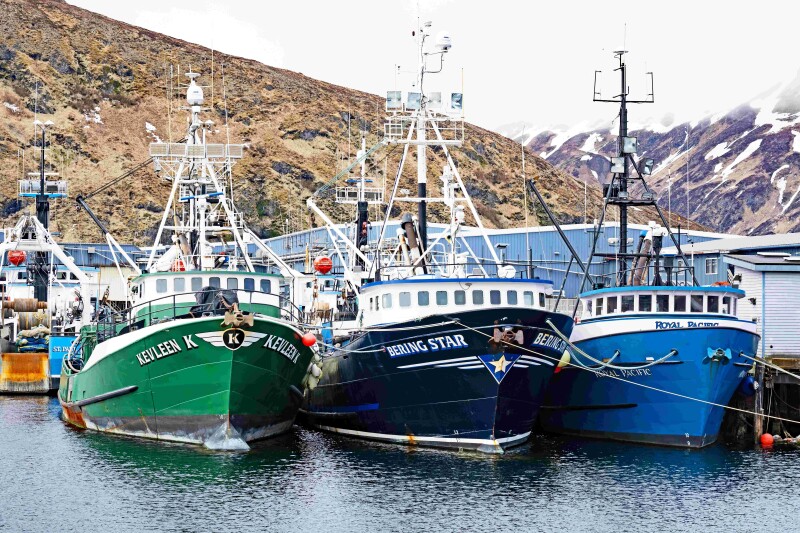
Southwest Alaska communities are calling for fisheries policy discussions to remain grounded in science while giving greater consideration to the fishing families, processors, workers, and coastal communities affected by management decisions.
The Southwest Alaska Municipal Conference, or SWAMC, adopted a joint resolution June 15 calling for “fact-based dialogue on the future of Alaska fisheries and coastal communities.” The resolution has since gained support from communities and boroughs across the region.
SWAMC pointed to the region’s outsized role in Alaska’s seafood economy, saying Southwest Alaska is home to four of the nation’s top fishing ports and accounts for nearly 70 percent of the state’s seafood processing output. From 2015 through 2024, economic activity in Southwest Alaska communities generated approximately 75 percent of Alaska’s shared fisheries tax revenues, according to the resolution.
The resolution comes as fisheries policy continues to feature prominently in public debate across Alaska. SWAMC said proposals under discussion could significantly affect fishing families, seafood workers, processors, local governments, Alaska Native communities and coastal economies, and argued that the economic, social and cultural consequences should be considered alongside biological sustainability.
The communities reaffirmed their support for fisheries management that is “science-based, adaptive, transparent, accountable, inclusive” and capable of evolving as environmental, economic and social conditions change. They also called for management decisions to account for impacts on fishing families, seafood workers, processors, Alaska Native communities, local governments, and the broader state economy.
SWAMC also urged state and federal policymakers to recognize what the resolution described as an “inseparable relationship” between healthy fish stocks and healthy fishing communities. Fisheries policies, the group said, should be developed in partnership with communities whose economies, cultures and futures depend on sustainable fisheries.
Beyond management decisions themselves, the resolution calls for additional investment in fisheries research, stock assessments, climate and ecosystem science, seafood market development, workforce development, transportation and infrastructure supporting fishing communities.
The resolution also takes aim at the tone and substance of the broader fisheries debate, calling on candidates for public office, policymakers, advocacy organizations and Alaskans to engage in “informed, respectful, and fact-based dialogue” and consider how proposed policies could affect communities, workers, families and businesses dependent on access to sustainably managed fisheries.
As of Aug. 13, the resolution's signatory page listed support or action from several Southwest Alaska communities and boroughs, including the Bristol Bay Borough, City of Akutan, City of Aleknagik, City of False Pass and Kodiak Island Borough. The attached document also shows additional signatures dated after Aug. 13, including Lake and Peninsula Borough and the City of Kodiak.
The Aleutians East Borough separately adopted a closely aligned resolution July 8 supporting science-based fisheries management and sustainable fishing communities.
SWAMC directed that its resolution be sent to Alaska Gov. Mike Dunleavy, members of the Alaska Legislature, Alaska’s congressional delegation, the Alaska Board of Fisheries, North Pacific Fishery Management Council, Alaska Department of Fish and Game, municipal governments, tribal organizations, and candidates for statewide and federal office.