Southeast Alaska commercial fishermen could see one of the region’s largest pink salmon harvests in decades next summer, with the Alaska Department of Fish and Game (ADF&G) forecasting a harvest of 67 million fish in 2027.
The projection follows several years of relatively weak pink salmon returns, but biologists say strong juvenile salmon numbers indicate the population could rebound significantly.
“It is a large forecast, and it would be one of our largest harvests since statehood,” Andy Piston, Southeast salmon research supervisor for ADF&G, told KCAW.
Pink salmon have a two-year life cycle, allowing populations to recover quickly when conditions are favorable. Since the late 1990s, state biologists have used surveys of juvenile pink salmon migrating to sea to help predict adult returns the following year.
Piston said this year's juvenile surveys produced some of the strongest numbers he has seen.
“The juvenile catches this year were the best I had ever personally seen on a survey,” Piston told KCAW. “And so, as long as early marine survival is good, you can produce an incredible amount of fish.”
A similar situation occurred in 2013, when managers forecast a harvest of 54 million pink salmon, but fishermen ultimately landed more than 90 million fish.
However, biologists and industry representatives caution that favorable juvenile numbers do not guarantee a strong harvest. Ocean conditions and marine survival can significantly affect how many salmon return.
Phil Doherty, a retired state salmon biologist who now oversees the Southeast Alaska Seiners Association, recalled 1987, when a forecast of more than 40 million pink salmon resulted in a harvest of just 3.5 million fish. The department used different forecasting methods at the time.
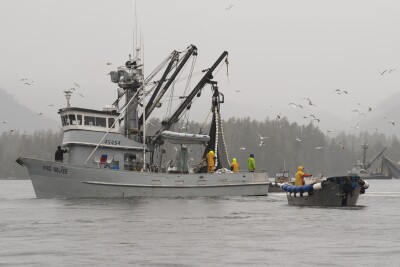
Southeast Alaska's seine fleet accounts for more than 90 percent of the region's pink salmon harvest, making a strong return particularly important for those fishermen.
Doherty said a harvest of 67 million pink salmon would rank among the largest in the region's history, although the economic benefits would also depend on ex-vessel prices and harvests elsewhere in Alaska.
“I’m keeping my fingers crossed that it’s a big harvest,” Doherty said. “I’m keeping my fingers crossed that the prices will be good, and that everyone will be happy.”
For now, the forecast offers optimism for Southeast Alaska's salmon fleet, with actual returns and market conditions determining how the 2027 season unfolds.