Are you an optimist? If you thought a lasting agreement over what to do about the Lower Snake River Dams (LSRD) was at hand in 2023, the answer is probably yes.
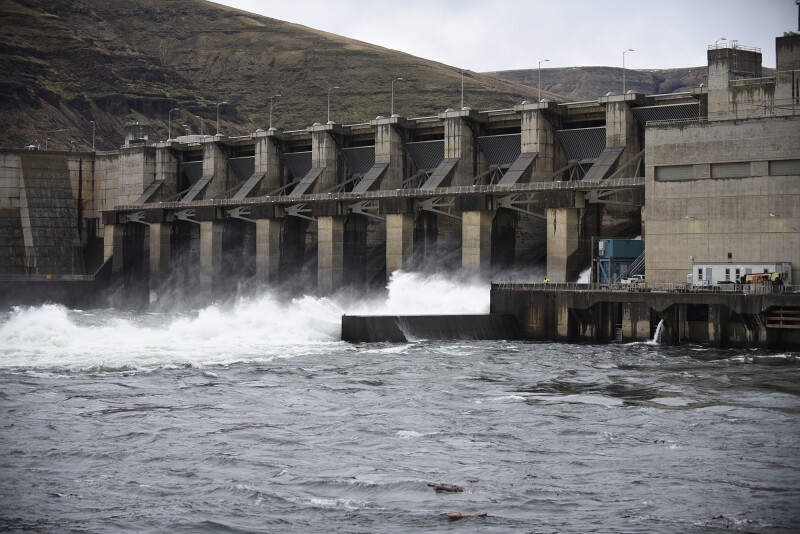
Too often, environmental challenges defy resolution. These four dams, while a clean source of hydroelectric power and a boon to agriculture in the Pacific Northwest, significantly impede the migration of spawning salmon. And while they transformed Lewiston, Idaho, into the most inland port on the West Coast, they created a series of reservoirs in which warm water and reduced velocity set the stage for predation of fish. Several salmon and steelhead runs that once were at the heart of Native American life are nearing extinction.
The four tribes whose rights to fish in “usual and accustomed places” are enshrined by treaty, along with environmentalists and fishing interests, have sued the government numerous times for failing to meaningfully protect salmon.
Construction of the first dam began in 1955. The first tribal fish-ins, so-called, were staged in the 1960s in the name of reclaiming fishing rights.
The tide, as it were, began to turn in 2016, when a federal judge found that the government’s plans for protecting fish in the Lower Snake River were inadequate and ordered a new plan — one that “might well require” breaching of the dams — by 2018.
In 2020, the U.S. Army Corps of Engineers denied the tribes’ request to remove the dams.
In 2022, Washington’s U.S. Sen. Patty Murray and Gov. Jay Inslee released a study that concluded that dam removal was the salmon’s best bet. Murray, The New York Times reported, had “previously resisted” this conclusion.
Finally, in 2023, the Biden administration entered a “memorandum of understanding” (MOU) valued at $1 billion with the treaty tribes to restore the wild salmon population. The agreement did not commit the United States to removing the dams, saying that was a decision for Congress. But the table was set.
Dinner won’t be served anytime soon. President Trump in June withdrew from the agreement. Trump called the MOU radical and said it “placed concerns about climate change above the Nation’s interests in reliable energy resources.”
There are legitimate reasons to question the wisdom of removing the dams.
The dams’ average output is 940MW, enough electricity to power Seattle, for example, for a year. At capacity, the dams will generate upward of 3,000MW, helping to ensure a power grid that is as easy on the atmosphere as it is reliable.
As much as 10% of all wheat exported from the U.S. moves down the Snake River by barge. Dam removal would compel growers to resort to more expensive truck or rail transportation. An additional agricultural benefit bestowed by the dams is 400,000 irrigated acres.
A decade or so ago, the Bonneville Power Authority (BPA), which markets electricity generated by the LSRD, and the Corps of Engineers cited statistics indicating salmon returns had improved. Nonetheless, as of 2024, a five-year review conducted by the National Oceanic and Atmospheric Administration (NOAA) said Snake River sockeye salmon should remain listed under the Endangered Species Act (ESA).
Factors other than the dams have conspired against the fish. Among these, NOAA says, are climate change, hatchery fish production across the Pacific, and predation by sea lions and seals in the Lower Columbia River.
Nor is there universal agreement that removing the dams will bring salmon back.
Nonetheless, tearing up the MOU simply commits stakeholders in the Pacific Northwest to resuming ESA litigation as a way of life.
There is a policy solution, and it lies in recognizing that things are changing along the Lower Snake River. Several years ago, U.S. Rep Mike Simpson of Idaho observed that court-imposed annual fish costs of $600 million were “strangling the BPA and increasing every year.” Eventually, he reasoned, rising rates would compel its customers to move on. Then what?
Simpson, who is accurately described as conservative, was also fearful that if stakeholders sat on the sidelines, “At a certain point in the future the decision will no longer be ours.” The dams would come down, and the stakeholders would get nothing.
In 2021, Simpson unveiled a $33 billion infrastructure and community investment plan, “Northwest in Transition,” that would be begin removal of the dams in 2030 while making stakeholders whole.
“My concept,” he said at the time, “is an attempt to recognize the value and benefits of the dams and to replace them, not to roll the dice and see what someone else comes up with for us.”
Simpson’s initiative may never be law. Events, including Biden’s MOU and Trump’s dismissal of it, have intervened. But it’s hard to imagine a solution that does not build on Simpson’s model.
It’s noteworthy that Simpson’s proposal did not result in his being tossed out of office. In 2024, his Republican primary challenger pledged not to remove the dams.
Simpson beat him in a landslide.