Established in Gloucester, Massachusetts, in 1964 by Frank Rose III, Rose Marine has served the commercial fishing industry for over 60 years and has seen many changes in the industry. In the 1960s, most US fishing vessels were still made of wood, many of them Eastern rigs with old Hathaway winches and chain steering. The Rose family has seen the rise of steel and fiberglass boats, and the boom years of groundfishing, followed by resource decline and the consolidation of the industry.
Another Frank Rose—a scion of the founder—now owns and runs the business, and he is keeping the ball rolling by diversifying as well as specializing. “We are the biggest shaft supplier in New England,” says Rose. “We have a 400,000 dollar inventory. After us, you would have to go to Virginia to get a shaft. If somebody calls us and needs a 4-inch by 20-foot shaft, we can send it out the same day.”
For smaller vessels, Rose stocks mostly Aquamet 22 shafts, but most bigger boats use Aquamet 17 shafts. “We can do shafts up to seven inches in diameter,” says Rose. “But our bigger shafts are generally 6-inch and up to 24-feet. Of course, Aquamet 22 is stronger, but it’s so much more expensive. We use it in about 30 percent of our larger shafts.”
While Rose ships shafts all over New England, including nearby Fairhaven, he notes that his biggest customer base is in Maine. “We send bar to other machine shops there, like R.E. Thomas,” says Rose. “And we buy from them too, like their dripless stuffing box. We saw the value of that right away.”
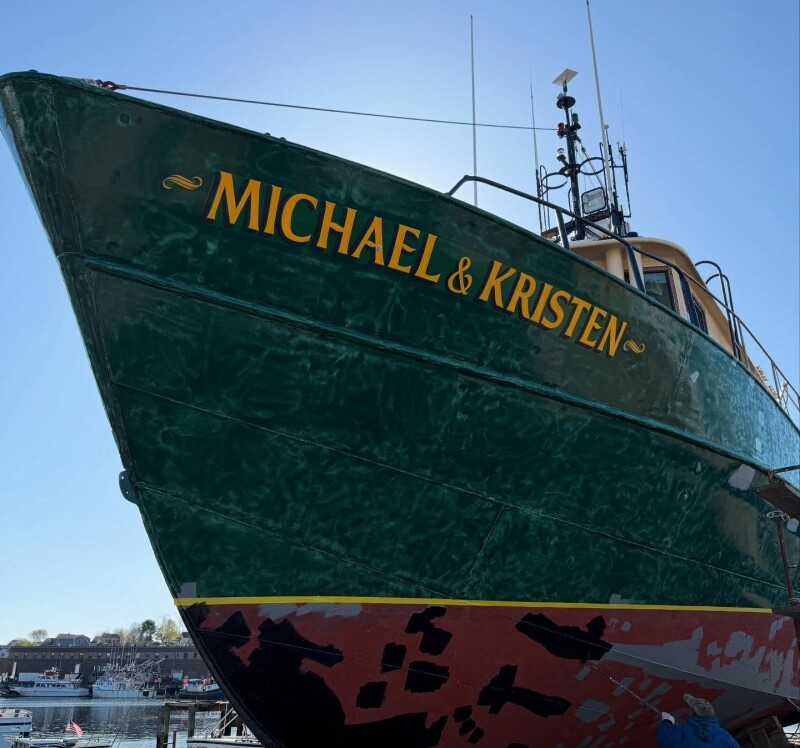
Rose Marine also does shafting work in its yard and drydock. “We have a 90-ton travel lift,” says Rose. “And a 400-ton Syncrolift, which is different from a drydock, because it doesn’t pump water out. It has four winches, one on each corner, and it lifts the boat up out of the water.
Right now, we have the Michael & Kristin on there, one of Joe Clancy’s boats, and we’re putting a new shaft in it. It’s a 65-foot offshore lobster boat, so we use Syncrolift.”
Rose notes, however, that the yard takes care of many types of vessels now—particularly Boston’s commuter ferries—and does a lot of CNC cutting for the biotech industry. “That work allows us to keep our machinery and technology up to date, and the fishing industry benefits from that.” He adds that the number of fishing vessels in Gloucester has gone from the hundreds to a handful. “If we didn’t diversify, we couldn’t keep the doors open,” he says.