

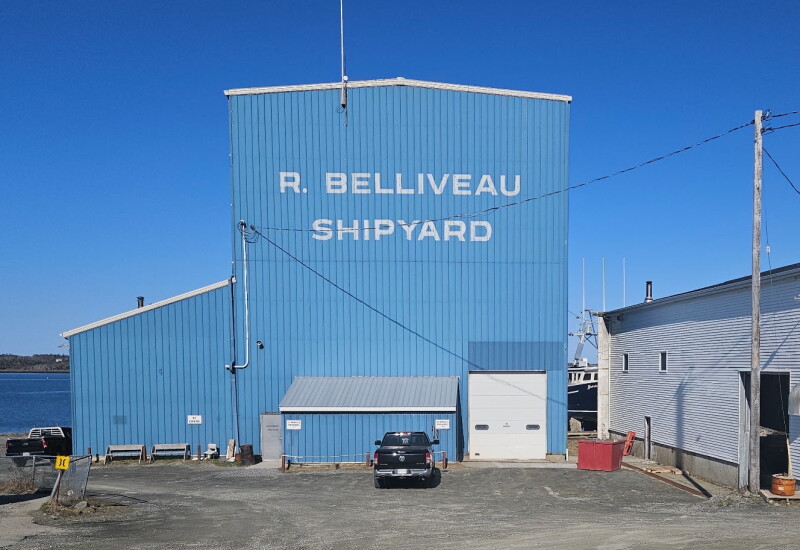
Down on the Southwest tip of Nova Scotia, in Lower East Pubnico, sits Belliveau Shipyard, one of the Province’s premier boat builders. Since 1987, when Ron Belliveau and Greg Amirault established the yard, it has been building and finishing boats and sending them all over the Canadian Maritimes and New England.
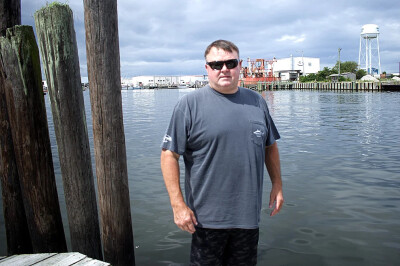
Troy Canning bought the yard from Belliveau and Amirault in 2020, after working there for seven years. “Before that, I worked 23 years at the Irving Shipyard in Halifax. I was glad to come here,” he says.
Canning continues to serve the commercial fishing industry in Nova Scotia and beyond, and is growing the business. “We have one mold,” he says. “The Rhino. The basic boat is 50 feet by 26 feet. But we can stretch it to 65 feet, and widen it to 30 feet, and right now we’re working on one 45 by 22 for a guy in Newfoundland. That’s as small as we can go with it. We’re trying to get that out the door for under a million ($730,000 USD).”
Belliveau Shipyard has a crew of 32 and does everything in-house. “That keeps the price down when we don’t have to contract out things like electric systems, hydraulics, and refrigeration,” says Canning. The yard boasts a 10,000-square-foot repair facility with a 52-foot-high door that can accommodate vessels up to 65 feet and get them in without removing any of the superstructure. “And we have a 4,000 square foot climatically controlled shop for laying up the hulls,” says Canning, noting that the weather doesn’t put a kink in production.
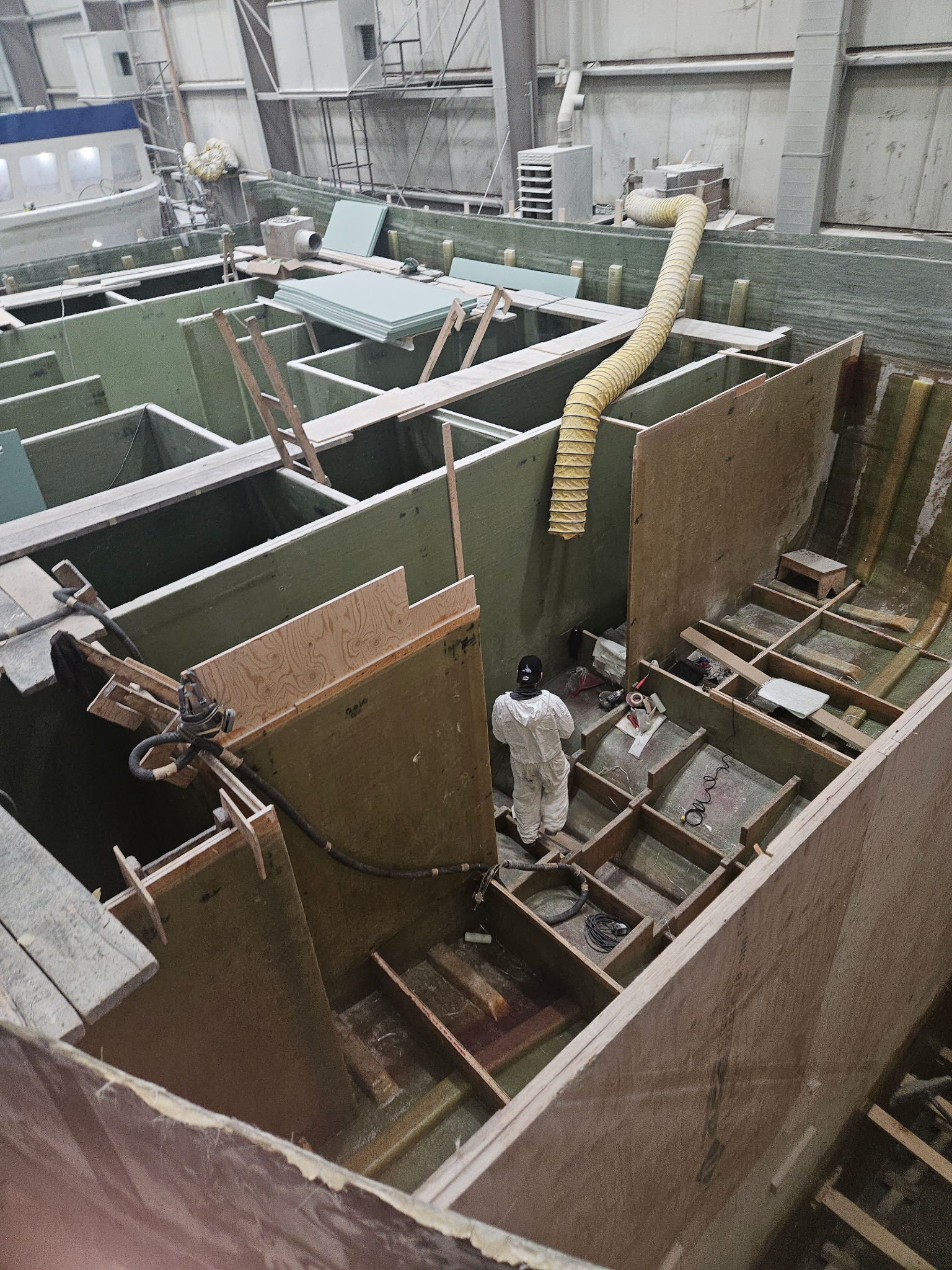
“It takes us about seven or eight months to get a standard 50 by 26 boat out. But when we give it to you your ready to go fishing. But every boat is different, so it depends on what it’s got on it.” Canning and one of the previous owners, Greg Amirault, do most of the design. “I like to talk to them about what they want, then take them around to look at some of the boats we’ve done and then we draw it up in AutoCAD. I try to keep them from asking for too many add-ons. If we need to bring in a naval architect, that adds to the cost.”
Canning notes that they install a lot of Mitsubishi engines and Hydro-Slave haulers. “But it depends on what the customer wants. The same with the electronics packages.”
The key selling point of Belliveau boats, Canning points out, is their strength and seaworthiness. “The thing is, it’s a displacement hull,” he says. “So, you’re not going to get up and plane. Our boats go nine and a half to ten knots. But they can handle the weather. When other boats are getting blown in, you’re heading out.”
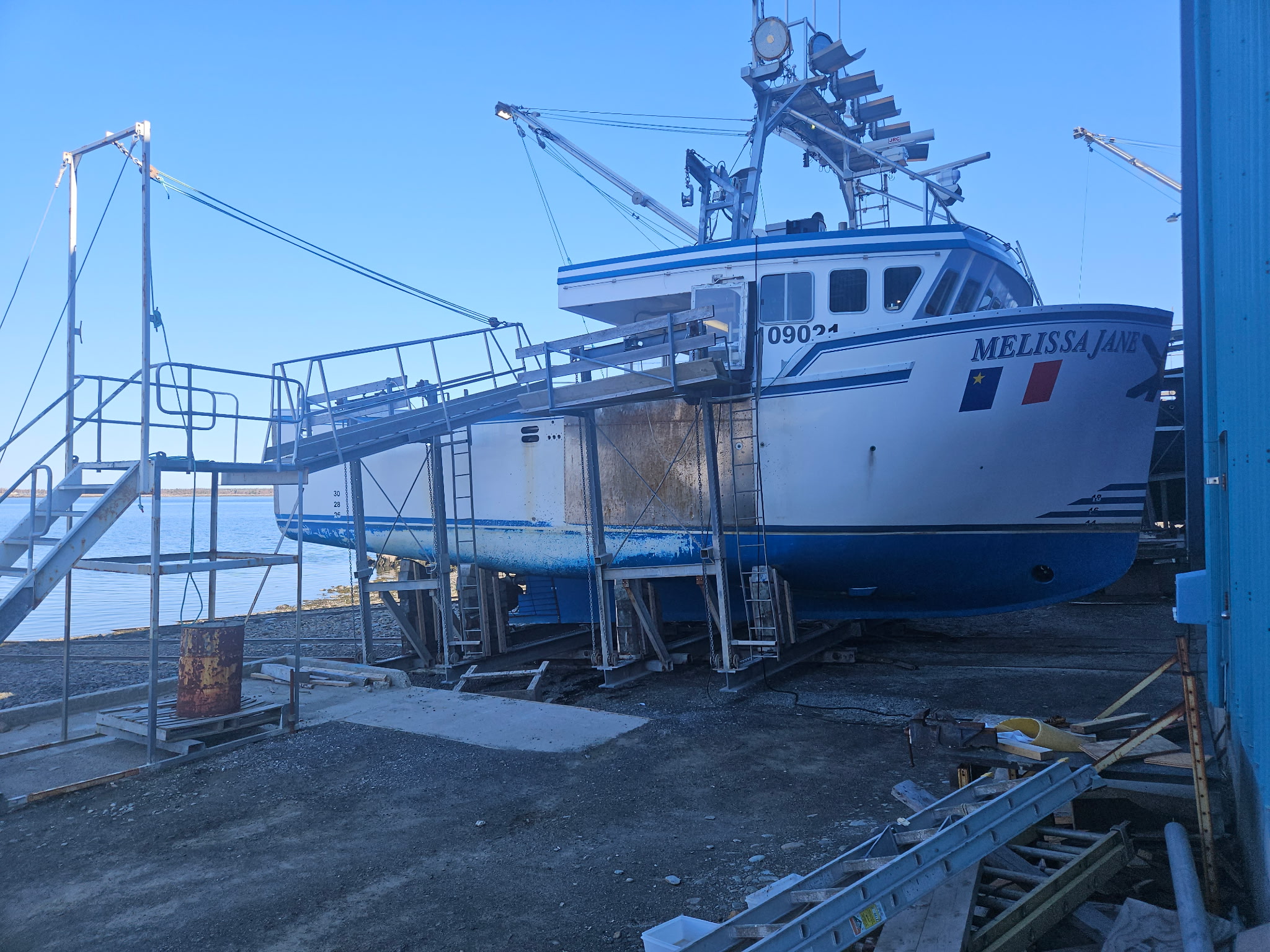
The Belliveau boats can also handle a big catch. “It depends on how deep you want the boat,” says Canning. “But most of the lobstermen here have four tanks with aeration, and they can hold 70 crates each, 280 crates in all. When we sell a boat to Maine or Massachusetts, we add refrigeration because it gets a lot warmer down there.”
Belliveau launches at least two boats a year, and a few of them head to the USA, giving fishermen the option of a versatile vessel for lobstering, scalloping, and other fisheries.