Given an Alaska Department of Fish and Game 2026 harvest prediction of 125.5 million salmon, down 36 percent from 197.4 million a year ago, forecasts on retail prices still remain a wild card.
The forecast for 56 million pink, 49.7 million sockeye, 17.2 million chum and 2.4 million coho compares with 2025 forecasts of 120 million pink, 52.7 million sockeye, 21.7 million chum and 2.7 million coho salmon.
While rumors are out there that salmon prices will rise because of the increased cost of fuel, nothing is settled yet, said Tito Marquez, manager at 10th & M Seafoods, a popular Anchorage seafood shop.
"We are still waiting to see how the season plays out for Alaska and Russia," said Simon Marks, a research analyst at McKinley Research Group in Juneau, Alaska. "We usually get information on Russian pinks much later in the year."
Current fisheries articles don't suggest that dramatic changes are said Gunnar Knapp, professor emeritus of economics at the University of Alaska Anchorage Institute of Social and Economic Research. While hardly definitive, it is an indication that nothing is going on that is either hugely positive or negative news, he said.
Still Knapp advised keeping a close watch on what happens with oil prices and diesel fuel prices. "If the Iran war situation continues and prices stay high, that could significantly affect costs of both fishermen and processors," he said.
Harvest volumes, the value of the U.S. dollar, increasing consolidation on the processing industry, consumer incomes, fuel prices and other data all will figure into wholesale and retail prices, others said.
Data gathered by the tax division of the Alaska Department of revenue for September through December from 2023 through 2025 show that at least last fall frozen sockeye prices were relatively strong. Average wholesale prices for frozen headed and gutted sockeye salmon rose from $3.23 a pound for that four -month period in 2023 to $4.71 a pound in 2024 and $5.46 a pound in 2025.
The reports are compiled from salmon price reports submitted by individual processors required to report by state statute.
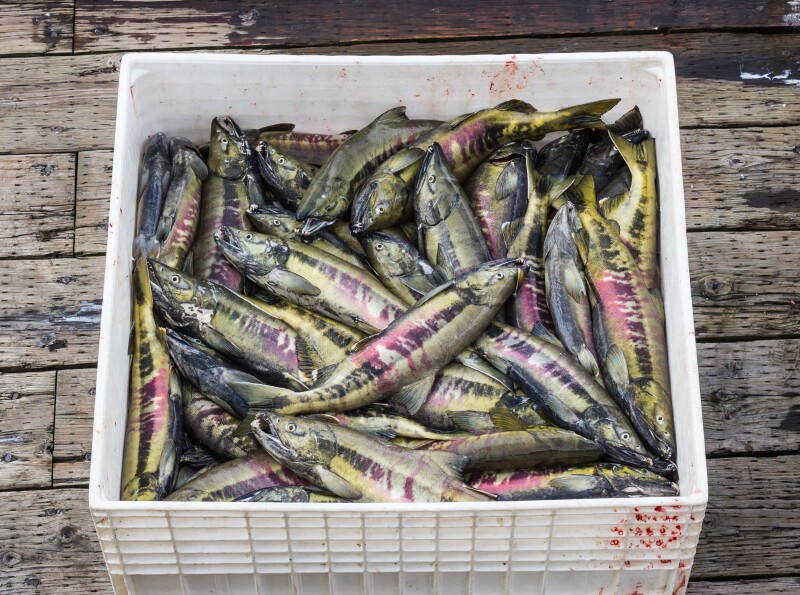
Pink salmon in this even year is predicted to be down 36% from a year ago, while Russia's pink runs are also anticipated to be relatively poor, with catches projected at roughly 204,000- 260,000 metric count, a significant decrease from the previous season, due to typically lower returns of these salmon during even-numbered years.